
Many founders feel intimidated by Red Oceans, markets already crowded with established competitors. They often think the only path to success is finding a completely untapped Blue Ocean.
In this episode of the ProductLed 100 series, Wes Bush talks with Patrick Thompson, CEO of Clarify.ai, and Esben Friis-Jensen, Co-Founder of Userflow, about why entering a crowded market can be the smartest move if you approach it the right way.
Patrick explains how he spent six months interviewing potential customers before writing a single line of code for Clarify, an autonomous CRM designed to compete with industry giants. Alongside Esben, he shares a practical framework for validating problems, using pricing and business model innovation to disrupt incumbents, and why chasing feature parity is not the goal.
If you are launching a startup or trying to claim your place in a competitive market, this episode is a masterclass in customer discovery, positioning, and go-to-market execution.
Why Patrick Spent 6 Months on Discovery Before Writing a Line of Code
When Patrick and his co-founder started Iterably, they took an approach most engineers would find extreme. They refused to write any code for six months.
Patrick explains, “We could build software, but what we really wanted to avoid was spending years building the wrong product that would not find product-market fit.”
During those six months, they interviewed hundreds of potential customers, tested their assumptions, validated their ideas, and even collected more than a dozen letters of intent before writing a single line of code.
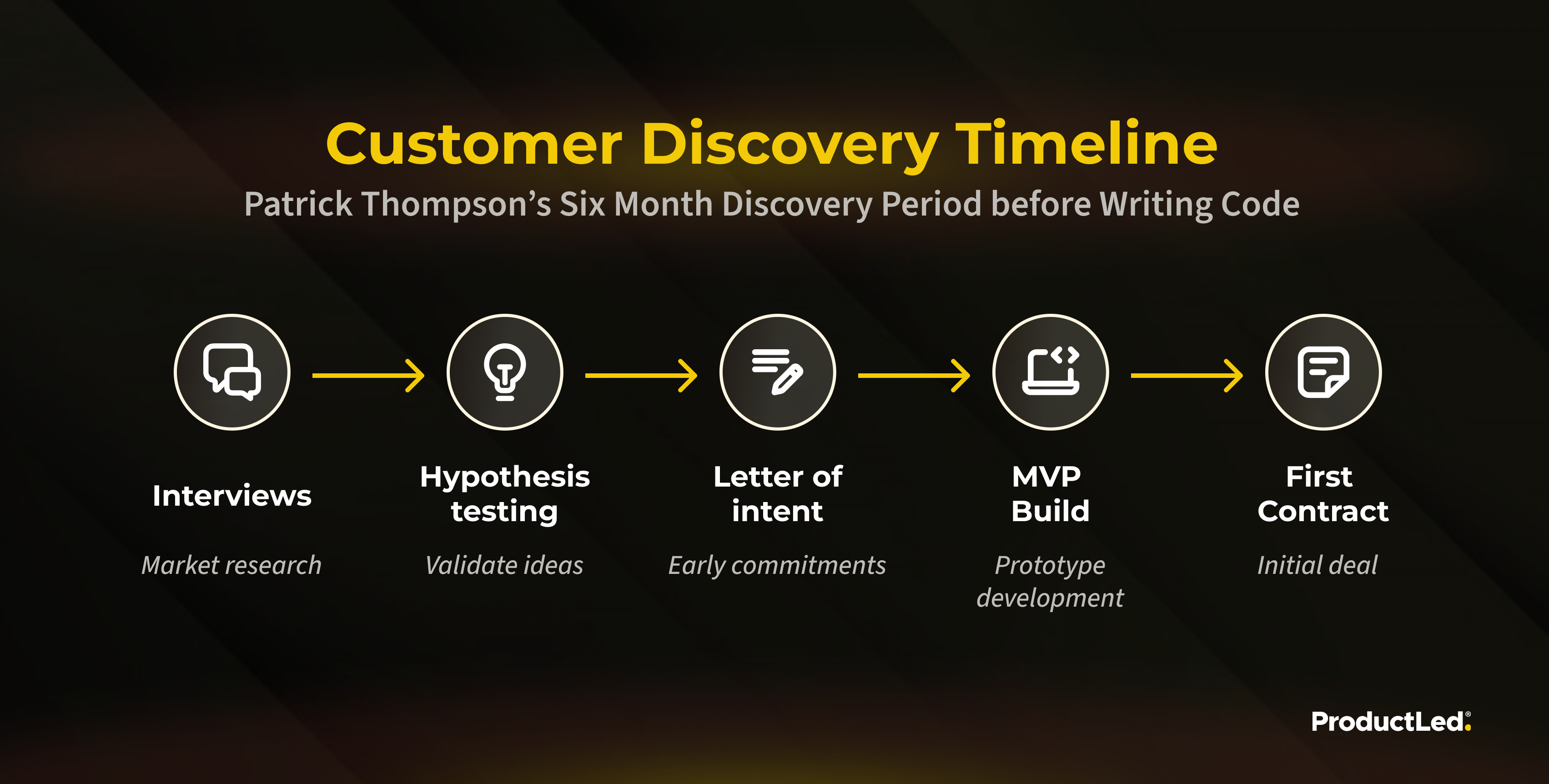
The results were impressive:
- They built their MVP in three months
- They secured their first enterprise contract immediately
- They raised venture funding
- They were acquired by Amplitude within a year
The lesson is simple. Writing code is not the hardest part of building a company. Talking to customers and developing deep product intuition is where real success comes from.
The Red Ocean Advantage: Why Crowded Markets Are Easier Than Blue Oceans
Many startup guides encourage founders to look for Blue Oceans, markets with no competition. Patrick and Esben argue the opposite. Crowded markets can actually be easier if you approach them strategically.
Patrick is now building another CRM in a market dominated by Salesforce and HubSpot. Rather than trying to create a new category, he focuses on building a product that customers genuinely want to use.
Red Oceans have advantages:
- People already know the category
- Budgets are already allocated
- You do not have to convince customers the problem exists
- Most customers are dissatisfied with current options
How to Differentiate When Features Are Commoditized
Patrick and Esben have both successfully entered markets dominated by large competitors. Their approach focuses on what really matters to customers.
Focus on the pain that everyone ignores
Userflow improved the onboarding experience where others failed. Clarify automates tedious CRM tasks with AI, solving a problem that most competitors overlook.
Disrupt the business model
Userflow simplified pricing and onboarding. Clarify charges for the AI features that add real value. This makes it harder for incumbents to copy without damaging their revenue.
Price with intention
Pricing should reflect the value you deliver. Too low and your product looks cheap, too high and it scares customers away. The right price gives you a competitive advantage.
Using Price and Ease of Use as a Wedge Against Incumbents
Patrick pairs smart pricing with frictionless adoption. Clarify provides one-click imports from HubSpot and Salesforce and assigns product specialists to help new customers migrate at no cost. The focus is on delighting customers rather than maximizing short-term revenue.
This combination creates a wedge against incumbents who cannot replicate it without harming their existing business.
The 3-Step Framework for Building What People Want: ICP, Channels, and Business Model
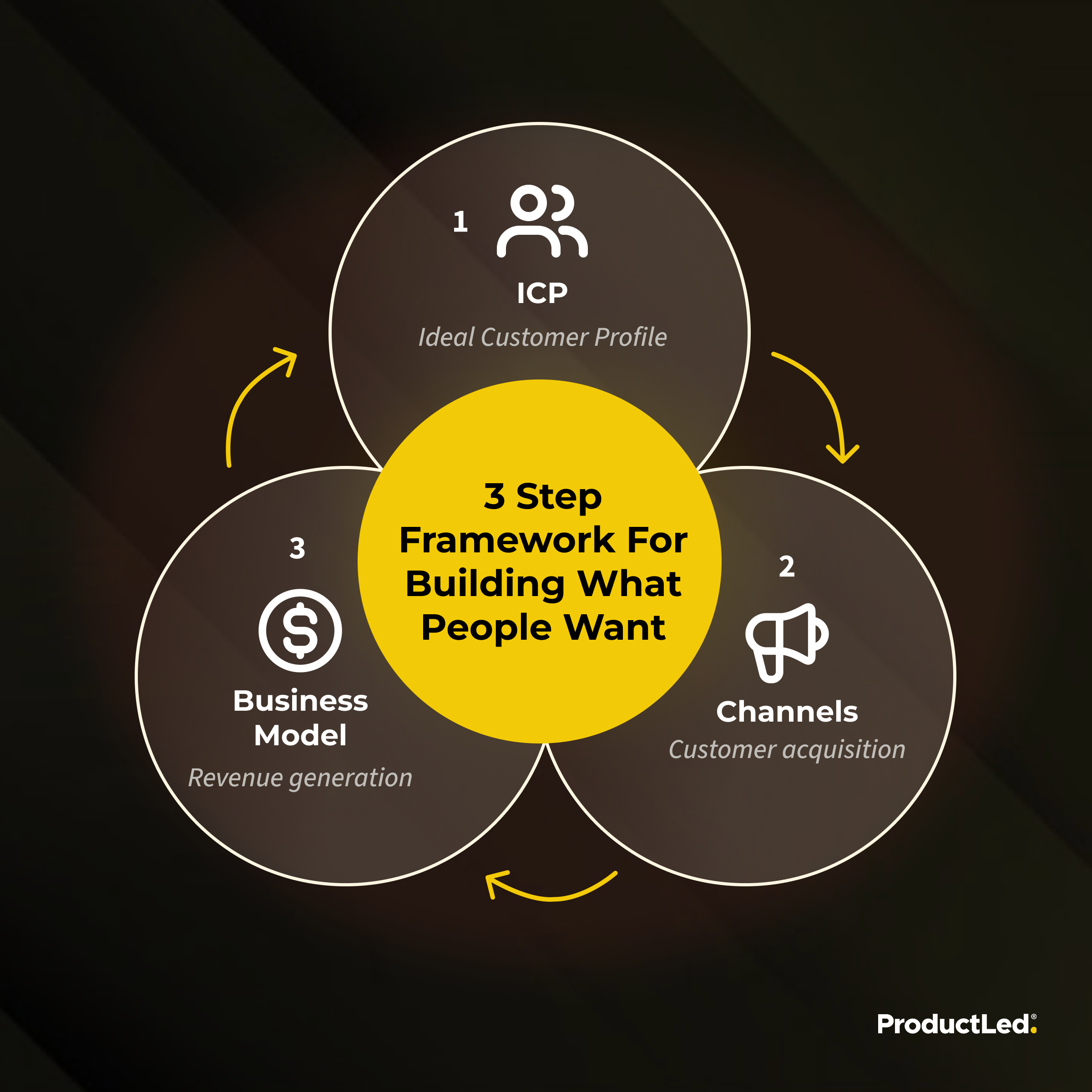
Patrick organizes product strategy into three steps:
1. Define who you love serving
Focus on a specific group with real problems. For Clarify, this means seed to Series B founders of venture-funded companies.
2. Find where they hang out
Identify the communities your customers already use. Provide value first, then offer your solution.
3. Build your business model after discovery and distribution
Most founders start with monetization, but without first understanding your customers and reaching them, you risk building on weak foundations.
Which Acquisition Channels Actually Worked For Clarify
Not all acquisition channels are equally effective. Patrick highlights the importance of founder-led marketing for complex products, paired with search engine marketing and word-of-mouth.
Userflow, for example, leveraged Product Hunt to find early customers and then focused on LinkedIn and Google Ads for consistent growth. Referrals and customer recommendations also became an essential source of traction, especially for products that delight users and are easy to talk about.
Why Complex Products Still Need Human Onboarding, Even in PLG
Patrick emphasizes spending time with customers in the early stages. Every sign-up is an opportunity to learn, help, and validate your assumptions. This approach also strengthens product development, as feedback directly informs improvements.
For Clarify, every new signup goes into a Slack channel for passive monitoring, and Patrick reaches out to interesting users to offer advice and guidance. He participates in over ten customer calls per week, ensuring he stays close to the market and continuously iterates on the product.
Early human involvement in adoption and onboarding is essential before automating processes. Observing customer behavior, answering questions, and addressing pain points ensures the next wave of users has a smoother experience.
How to Operationalize Customer Feedback for Engineering Teams
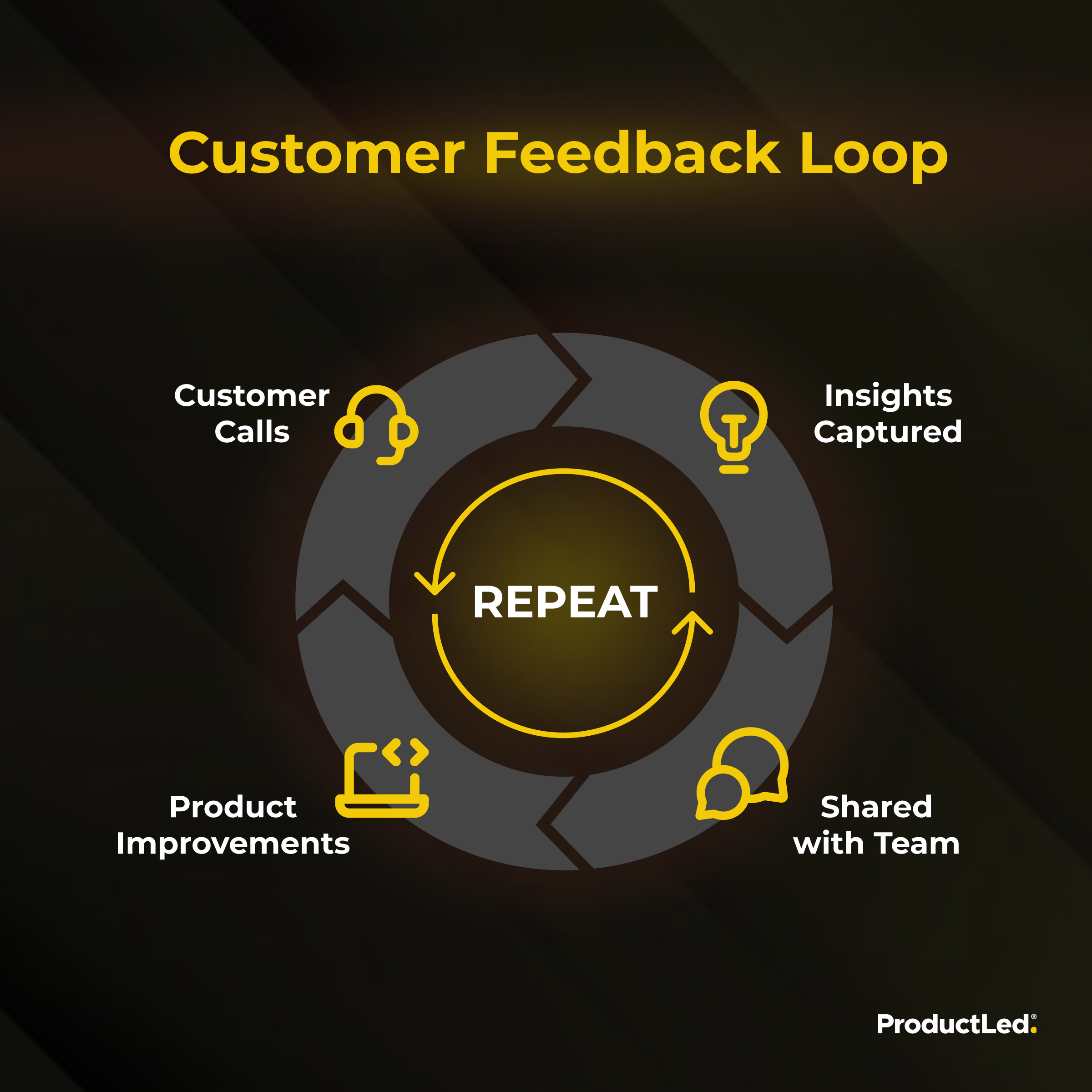
Patrick and Esben also stress the importance of sharing insights from customer calls with engineering teams. Feedback loops ensure the product evolves in line with real-world use cases rather than assumptions.
Simple practices like recording sessions, tagging feedback by feature, and reviewing trends weekly help teams prioritize the right fixes and innovations.
One Action for You This Week
Pick one habit to improve your customer discovery:
- Schedule five interviews with your ICP
- Watch ten session replays of users going through onboarding
- Join three communities where your customers hang out
- Analyze your last 20 customer calls for recurring patterns
- Build a simple system to capture insights
Resources
📧 Clarify.ai : The Autonomous CRM
💼 Connect with Patrick Thompson on LinkedIn
💼 Connect with Wes Bush on LinkedIn
📝 Founder Therapy : Patrick's Substack
💼 Connect with Esben Friis-Jensen on LinkedIn
Next Steps
Want to see how these insights apply to your business?
👉 Jump into a Free Growth Session and get hands-on guidance
👉 Check out the ProductLed PLG System for a clear, step-by-step plan to grow faster
👉 Become a Top PLG Operator with the ProductLed MBA™ as a practical blueprint for mastering product-led growth
👉 Get the ProductLed Playbook (Free) to master the fundamentals of PLG
👉 Sign up for our Newsletter for weekly tips and ideas to scale smarter