Most SaaS founders obsess over raising capital and building large teams.
Yasser Elsaid took a different approach.
As a first-time founder, Yasser built Chatbase from zero to $8 million ARR in just 2.5 years with only 18 people. Even more impressive? 11 of those 18 were engineers, proving that you don't need a massive go-to-market team when you have a product people actually love.
In a recent episode of the ProductLed 100 series, Yasser sat down with Wes Bush and Esben Friis-Jensen to break down exactly how he did it. Here's what we learned.
The 98 Out of 100 Rule: Why Yasser is Relocating His Entire Team to New York
When Yasser and his team sat down to identify their ideal customers, they made a list of 100 companies. The result? 98 of them were based in New York City.
That's not a coincidence. That's a signal.
So Yasser made a bold decision: move the entire team from Toronto to New York. Not just him. Not just sales. Everyone.
"I think it's a good idea for startups to be very close to their customers," Yasser explained. "Or the customers, the people that they want to be customers."
This kind of proximity isn't just about convenience. It's about understanding your market at a deeper level. When you're in the same city as your customers, you can have coffee meetings, attend their events, and truly understand the problems they're facing in real time.
The ChatGPT Moment: How Yasser Recognized the AI Wave Before It Went Mainstream
Timing isn't everything, but it's a lot.
Yasser started building Chatbase right as ChatGPT launched in November 2022. But here's the thing: he didn't just jump on the hype train. He saw what was coming before most people even understood what GPT could do.
"I recognized the potential of GPT models before mainstream adoption," Yasser said. "I built Chatbase in anticipation of the AI wave."
That first-mover advantage was critical. By the time everyone else realized that AI-powered customer support was going to be huge, Chatbase already had traction, users, and a product that actually worked.
The lesson? Don't wait for the market to tell you what's next. If you see the wave coming, start paddling.
The Iceberg Problem: Why AI Customer Support Looks Simple But Actually Requires Massive Engineering Teams
From the outside, AI customer support looks straightforward. You plug in GPT, add some training data, and boom... you've got a chatbot.
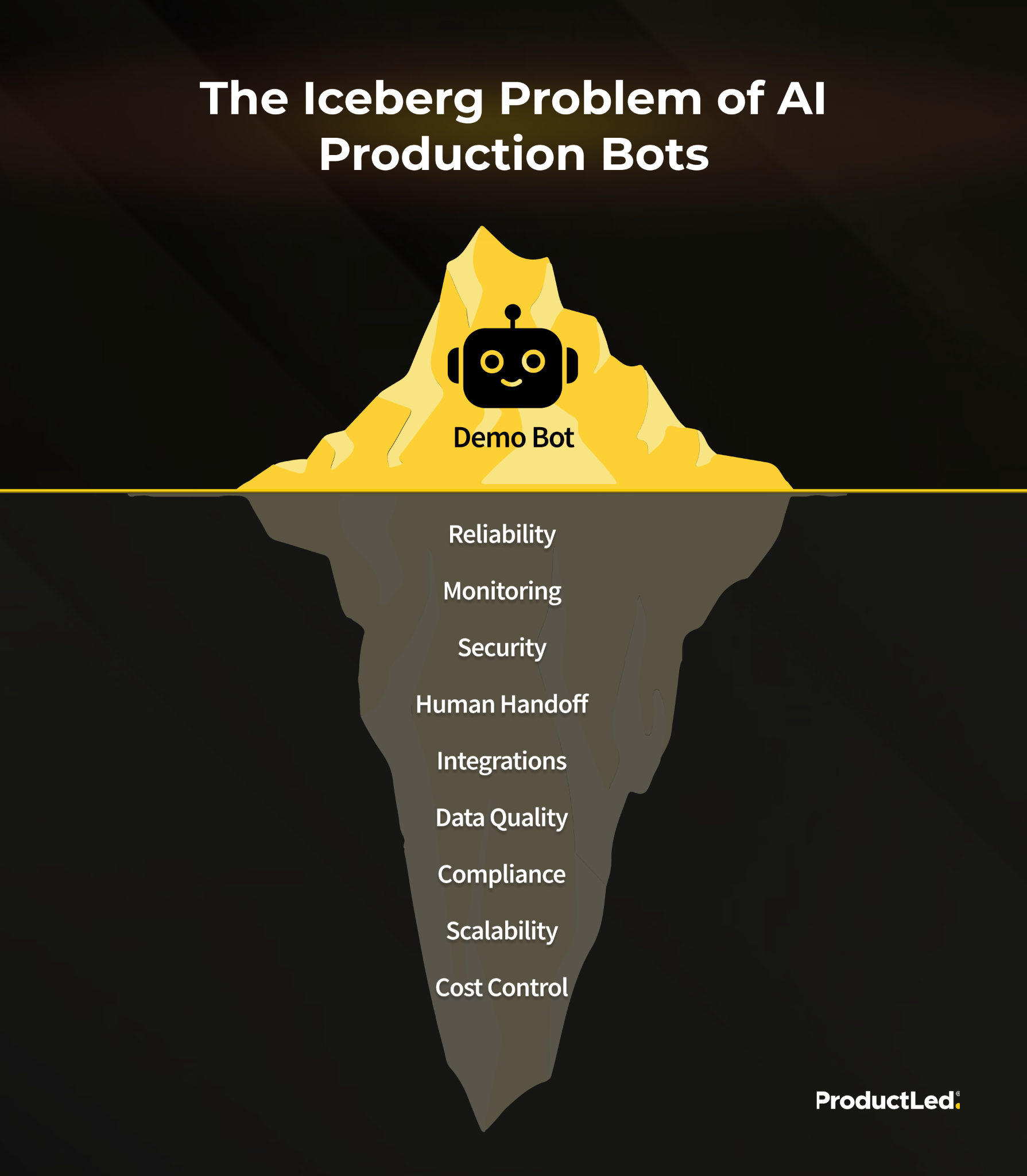
Not quite.
The Payment Pivot: Why You Should Get Users to Value Fast, Then Ask for Payment
Here's where Chatbase's onboarding strategy gets interesting.
Most companies make you jump through hoops before they show you any value. Chatbase does the opposite. They get you to the "aha moment" as fast as possible, then ask you to pay.
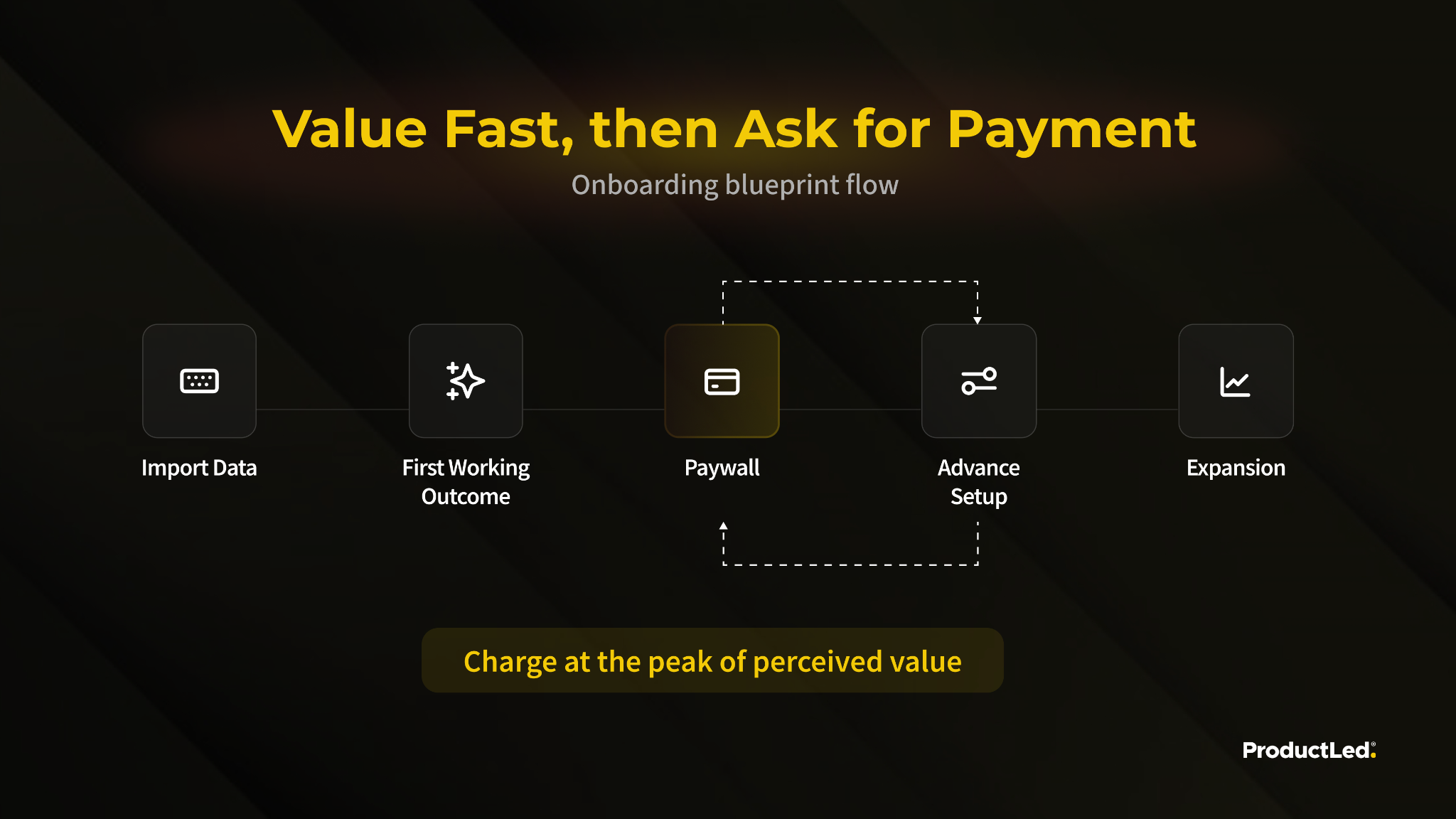
"We try to make you pay as soon as we show you the value," Yasser said. "You can decide not to, and then you won't have access to those features. But if you do pay, then we take you to the next version of the onboarding."
This is smart for two reasons. First, you're asking for money when the value is most obvious. Second, once someone pays, they're way more likely to put in the effort to explore the more complex features.
Wes Bush called this the "minimum viable first strike" from the bowling pin framework. Get that first pin down fast, then show them the rest.
First Hires Matter: Why Customer Support and One Engineer Were the Most Critical First Hires
When Yasser first launched Chatbase, he was overwhelmed. He was responding to customer emails from his personal inbox. It was chaos.
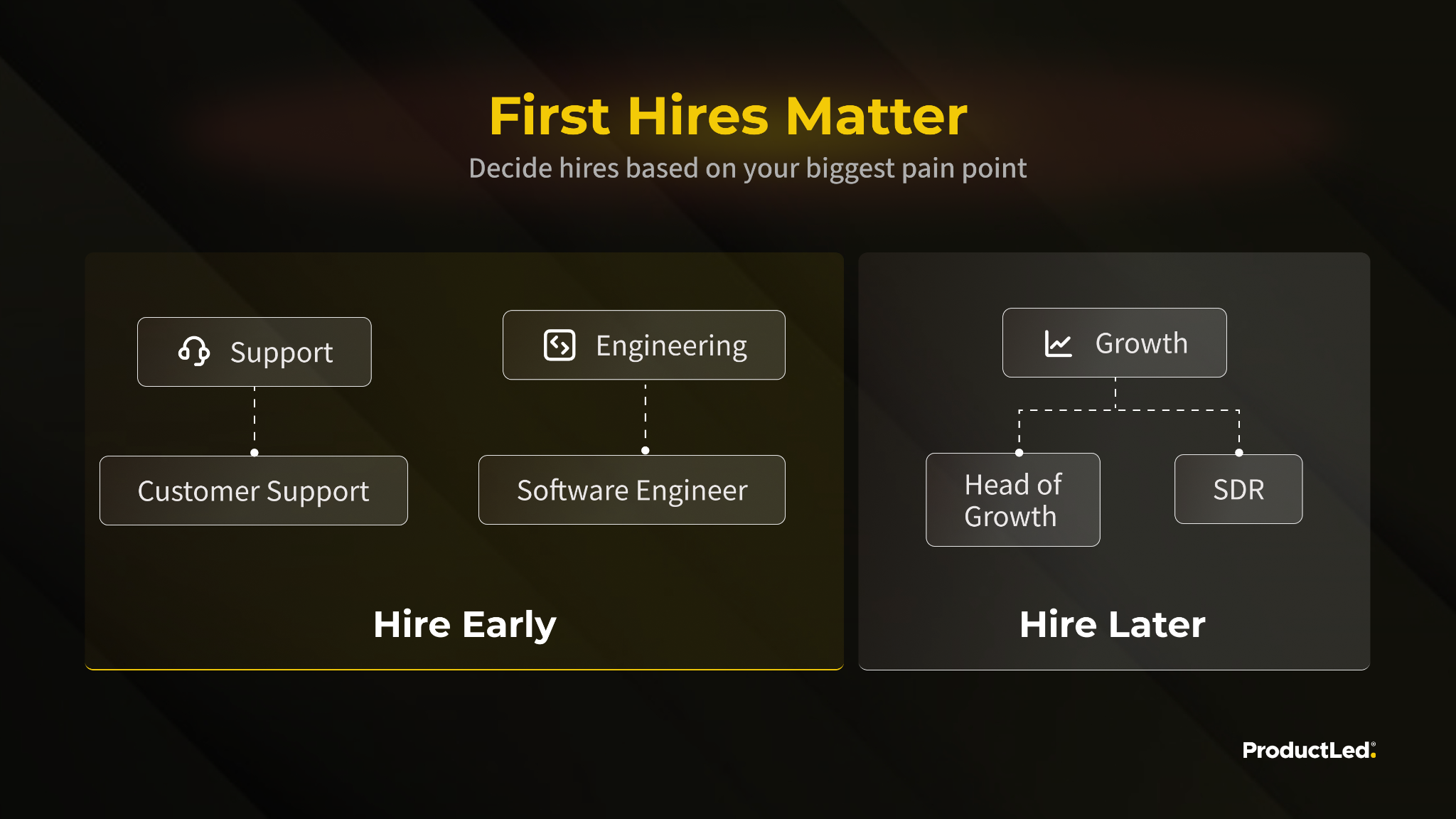
So his first two hires were customer support and an engineer (one of his friends).
"I didn't know. I was just replying to people on my personal email just to start," Yasser laughed. "It's crazy. And now we're doing a customer support product, but yeah, I had to build a product for myself."
The lesson here is clear: hire for the pain you're feeling right now, not the pain you think you'll feel later. Yasser needed help with customers and product, so that's where he invested first.
The 11-Engineer Reality: How Most of Chatbase's 18-Person Team at $8M ARR Was Still Engineering Focused
Even at $8M ARR with 18 people, Chatbase kept 11 of them in engineering.
That's not typical. Most companies at that scale have shifted resources heavily toward sales and marketing. But Yasser knew that his product was his moat.
"To actually have something good in production, you have to build an amazing product," he said. "And over time, I learned that the next few hires were also engineers."
Now that they've hit $8M, Yasser is shifting focus. His next hires? An account executive, an SDR, and a head of growth. But he only made that shift after the product was rock solid.
Features Are Commoditized: Why User Experience and Brand Are the Only Things You Can Actually Compete On
Here's an uncomfortable truth: your competitors can copy your features in weeks.
"It's very hard to compete on product because every company has the same features now," Yasser explained. "So I think the biggest things you can compete on are user experience and brand."
Think about it. How many AI chatbot companies are out there? Dozens? Hundreds? They all do roughly the same thing. So what makes one stand out over another?
Design. Ease of use. The feeling you get when you use it. The story behind the company.
That's it. That's the whole game now.
The Flex Test: You Need to Build Something So Good That People Want to Brag About Finding It First
Yasser has a test for whether his product is good enough: the flex test.
"You need to have a product that is impressive enough that a person wants to flex that they know about this product before other people," he said.
In other words, your product should be so good that people want to be the one who introduces their friends to it. They should feel smart for discovering it. They should want to be an early adopter who can say "I told you about this company before everyone else knew about them."
If your product doesn't pass the flex test, you don't have a distribution problem. You have a product problem.
Stop Thinking Small: Why Bootstrapped Founders Need to Act Like the Company They Want to Be
One of the most powerful moments in the conversation came when Yasser talked about mindset.
"I think some founders are reserved or shy about what they're building," he said. "I think it's all about mindset. You have to be just aggressive. You need to act as the company you want to be before you actually become that."
Too many bootstrapped or lightly-funded founders put themselves in a lower tier. They act like they're playing a different game than the well-funded startups.
But Yasser's point is this: if you act like it, if you're aggressive enough, if you execute well, you'll actually get close to what the big players achieve. And your definition of success is way more achievable.
The Unfair Advantage: Your Bar for Success Is Way Lower Than Competitors Who Raised $100M+
Here's the math that should get every bootstrapped founder excited.
A company that raised $100 million needs to be worth at least $1 billion (probably $10 billion) to be considered successful. But if you're bootstrapped or raised just a small seed round? Your bar is so much lower.
"For them to be successful, they need to be at least a billion dollar or $10 billion company," Yasser explained. "But for you, if you have that mindset, you'll actually get close to what they can achieve, but you'll be successful much, much earlier."
This is your unfair advantage. You can win at $10M, $20M, $50M ARR. They need to hit unicorn status just to justify their fundraising.
So stop competing on their terms. Play your own game.
The Bottom Line
A useful way to summarize why Chatbase could scale with such a lean team is the WARP Framework: Pervasive Pain, Win Preference, Activate Instantly, and Repeatable Leverage. These four forces help explain why some products can grow fast without scaling headcount at the same rate.
How Chatbase Hit Scale Through WARP
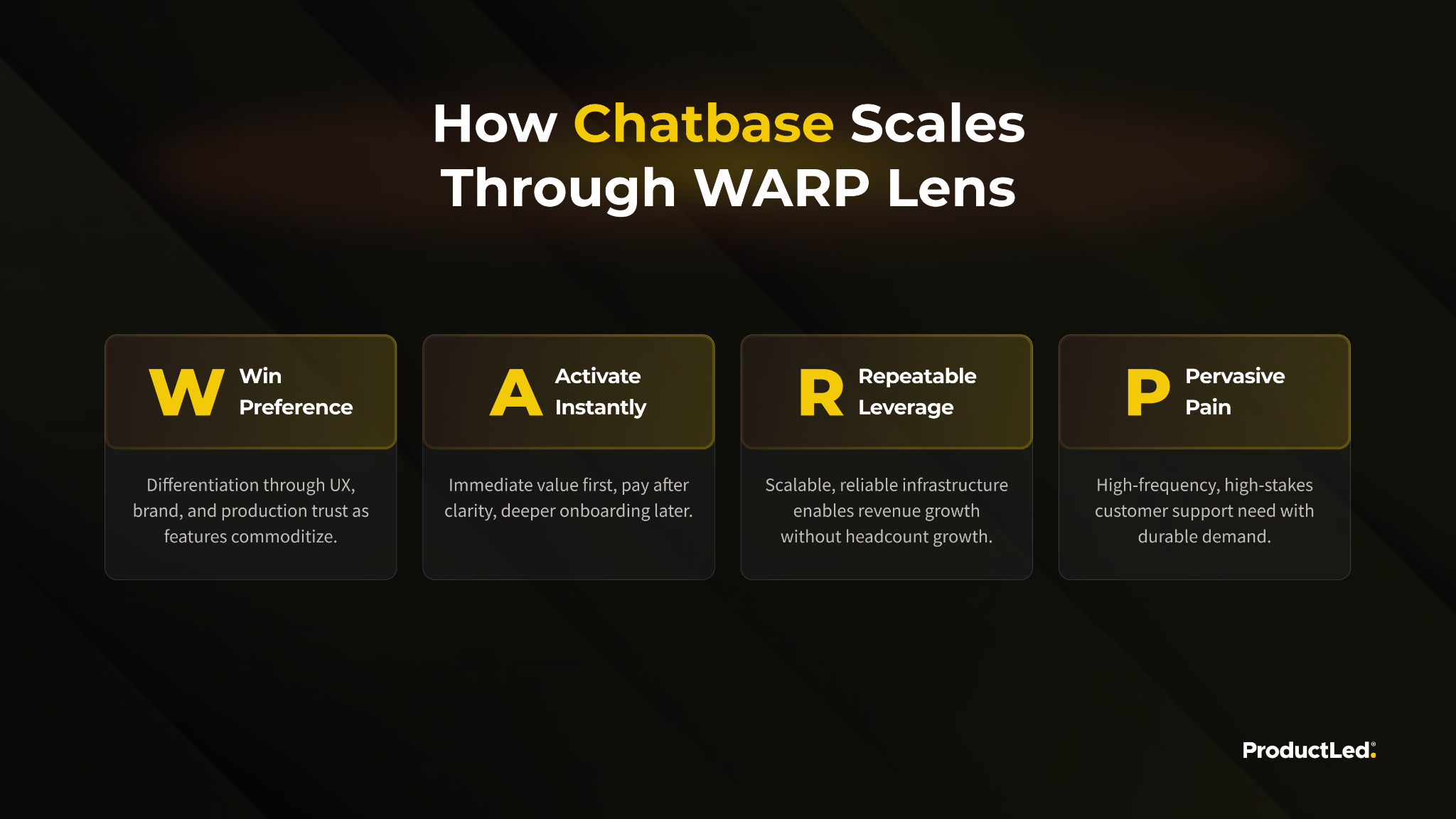
- Pervasive Pain: AI customer support is a high frequency, high stakes problem for many teams, which makes the demand durable.
- Win Preference: When features commoditize, the differentiation shifts to user experience, brand, and trust in production. That is what creates preference.
- Activate Instantly: Chatbase gets users to value quickly, then asks for payment when the value is clear, and only then expands onboarding into deeper features.
- Repeatable Leverage: The engineering heavy team composition supports scalable infrastructure and reliability, which lets revenue scale without proportional headcount growth.
When all four WARP forces are present, each one reinforces the others and the company compounds faster. That is the real lesson from Chatbase’s story, and it is something any lean team can apply.
Chatbase grew lean by letting the product carry the load, which is the whole idea behind Product-Led Growth: How to Build a Product That Sells Itself.
Resources:
- Check out Chatbase at chatbase.co
- Connect with Yasser Elsaid on LinkedIn
- Connect with Wes Bush on LinkedIn
- Connect with Esben Friis-Jensen on LinkedIn
Ready to Scale Your Product-Led Business?
If building a lean, efficient team and scaling to $8M+ ARR without massive funding sounds like the kind of growth you want to achieve, here's how to go deeper:
👉 Take the free ProductLed Assessment to find the one thing to fix first in your business
👉 Read the ProductLed Library to go deeper with Product-Led Growth and The Product-Led Playbook
👉 Become a Top PLG Operator with the ProductLed MBA™ as a practical blueprint for mastering product-led growth
👉 Get the ProductLed Playbook (Free) to master the fundamentals of PLG
👉 Sign up for our Newsletter for weekly tips and ideas to scale smarter