Most AI founders sprint straight to raising capital, hiring big, and spending even bigger.
Genspark did the opposite.
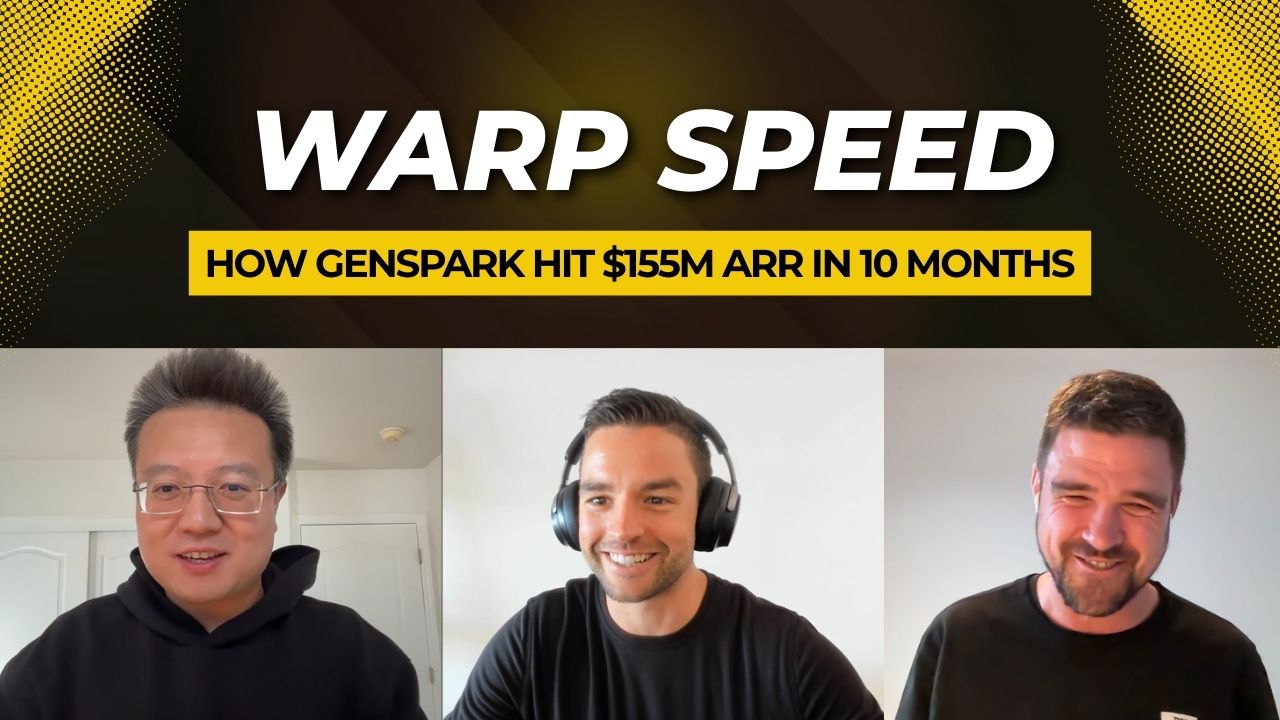
In the ProductLed Podcast, Wes Bush and Esben Friis-Jensen sat down with Wen Sang, CEO and co-founder of Genspark, the all-in-one AI workspace that hit $100M ARR in 9 months and reached $155M ARR by month 10 with a team of around 50 people.
In about 10 months, Genspark went from zero to $155M ARR with almost no marketing spend until after $100M ARR. They're one of 15 companies to grow at WARP speed on the ProductLed Top 100. The story is a masterclass in what happens when product, distribution, and operations are built for the AI era from day one. If you’ve been following the rise of AI startups scaling at WARP speed, this one might be the most extreme example yet.
Here’s what made it work.
How a team of tech veterans decided to rethink work from scratch
Genspark wasn’t born from a desire to make a slightly better chatbot.
It came from a bigger observation: most people do not look for information just to read it. They look for information because they need to complete something. A deck. A model. A brief. A decision.
So the goal shifted from “answer questions” to “finish work.”
That mindset shows up everywhere in the product. Instead of handing you another page of text, Genspark aims to deliver outputs you can actually use, across formats, without starting over each time.
The wildest growth timeline you'll hear this year
The growth arc feels unreal.
Zero to $100M ARR in nine months. $155M ARR by month ten. On top of that, more than 1,500 organizations came onboard in roughly ten weeks as the business offering rolled out.
What’s even more interesting than the numbers is how adoption happened.
It did not crawl from SMB to mid-market to enterprise over years. It showed up everywhere at once. Individuals started using it because it was useful quickly, and companies followed because they wanted to formalize something employees were already adopting.
That’s what “AI era” distribution looks like: bottom-up pull and top-down urgency happening at the same time.
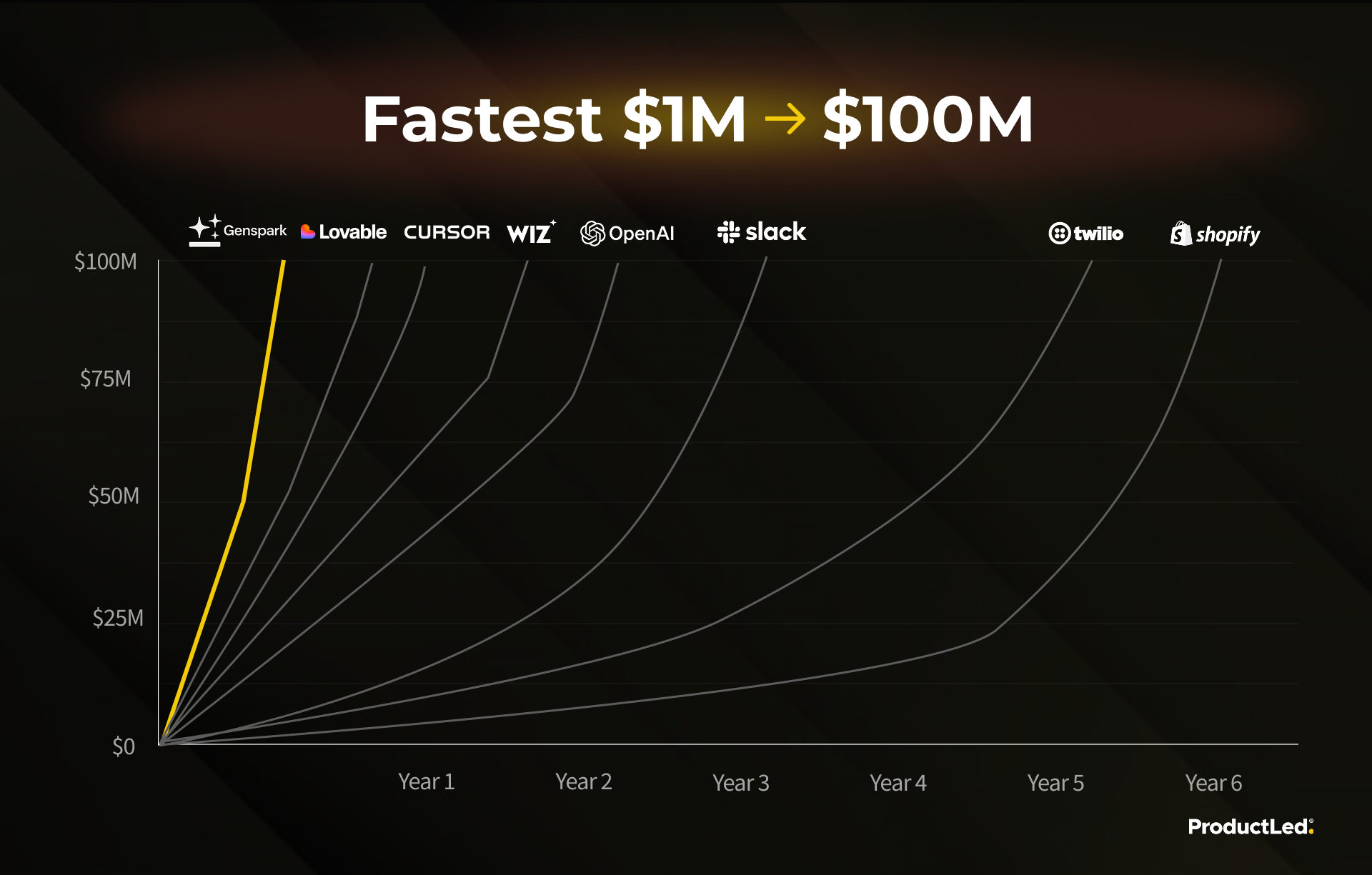
Why they refused to spend on marketing until $100M ARR
Most startups pour fuel on growth early.
Genspark waited.
The philosophy was simple: do not buy attention until the product earns it. Instead of spending on marketing, the energy went into shipping new agents, improving outputs, and making the product the reason people talked about it.
This is the part a lot of teams skip: marketing can hide product problems for a while. Genspark wanted clean signal. If it grew, it had to be because users were getting real value.
Only once they crossed $100M ARR did it make sense to scale spend with confidence.
How Genspark made a Super Bowl ad in 10 days (using Genspark)
Then came the polar opposite move: a Super Bowl ad.
Not a long-planned brand campaign. A last-minute opening that required speed, conviction, and a team willing to bet big.
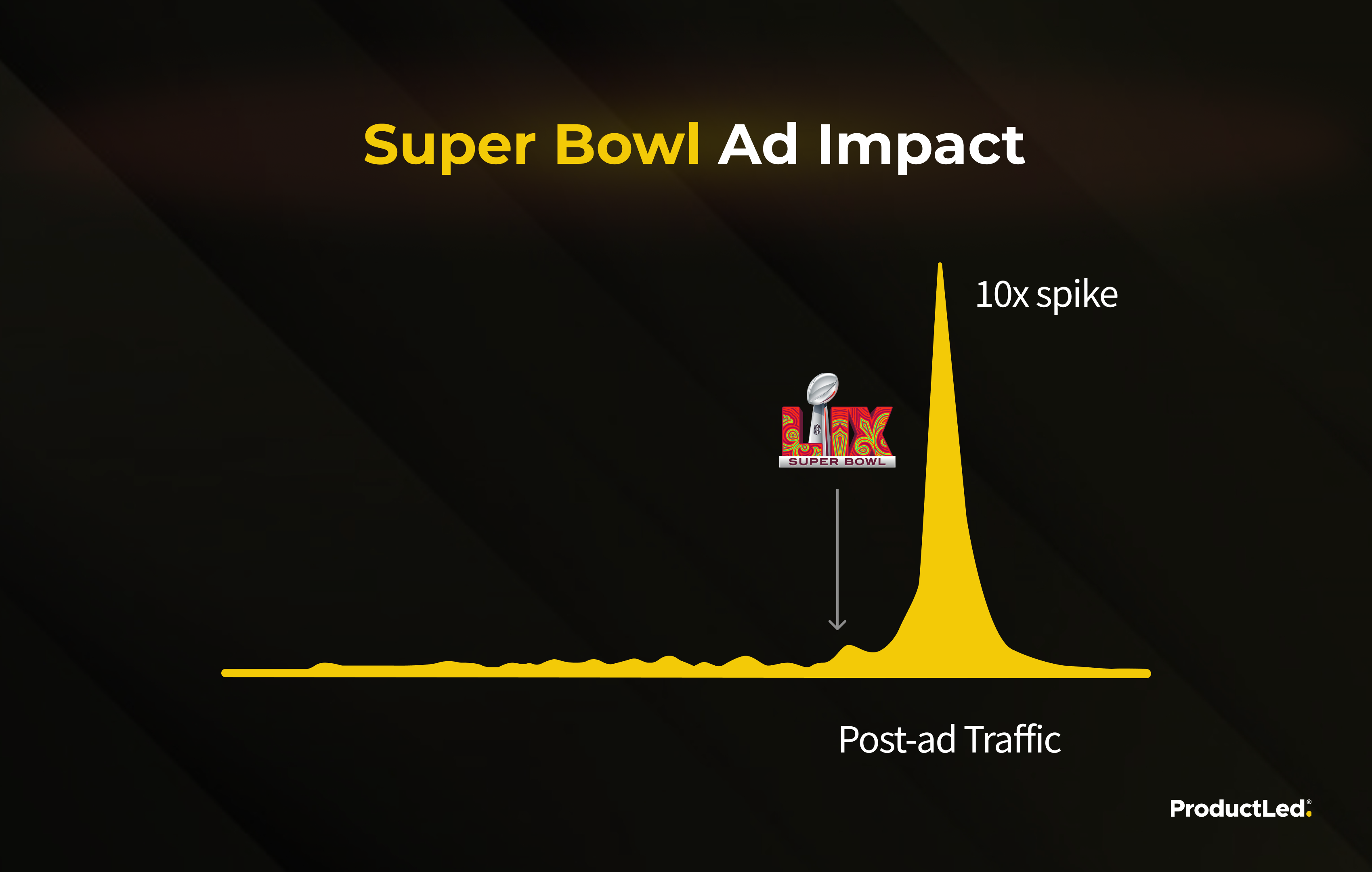
The creative was generated using Genspark, produced on a tight timeline, and shipped fast. The result: traffic jumped 10x overnight and the brand suddenly landed in conversations it had not been part of before.
The lesson isn’t “buy a Super Bowl ad.”
It’s that once product-market fit is real, a single high-leverage distribution swing can compound everything.
Why "just focus on one thing" is bad advice in the AI era
Classic Silicon Valley advice says: focus or die.
AI changes the math.
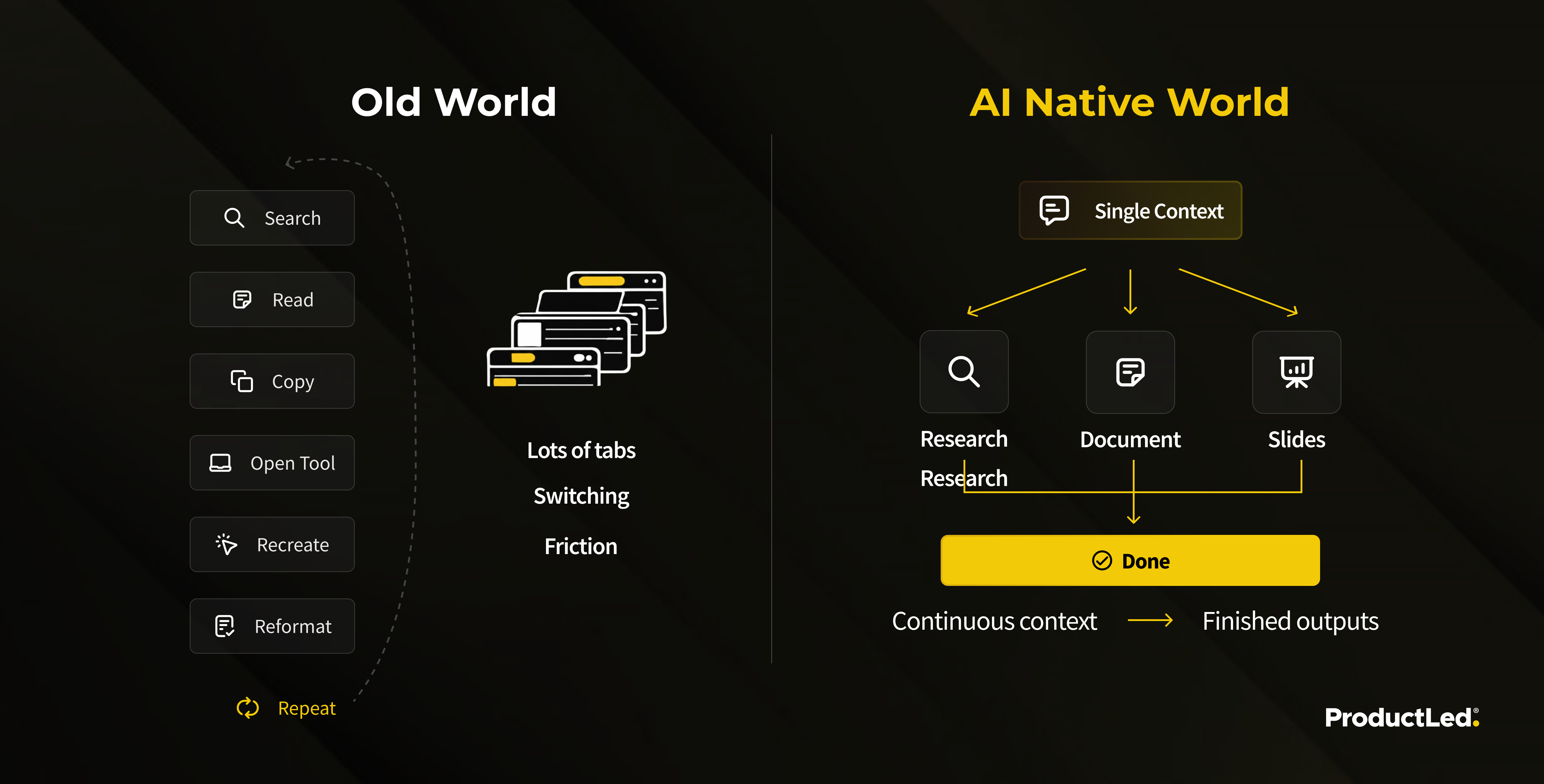
In the old world, building multiple products meant multiplying teams, coordination, and complexity. In the AI-native world, a strong orchestration layer can turn one shared context into many outputs.
That’s why Genspark bets on breadth: research can become a deck, a model, a memo, or a podcast without losing context along the way. The continuity is the advantage.
Point solutions still matter, but context switching is the hidden tax. Genspark is trying to eliminate it.
How 50 people ship like a team of 500
This is where the operating model gets interesting.
Over 90% of the code is AI-written. Releases happen weekly or biweekly. Ownership stays tight. Coordination overhead stays low.
Under the hood, the system is built as a platform, not a pile of disconnected features:
- A model orchestration layer across 70+ models
- 50+ internal tools that let models do real work
- A data layer grounded with paid and premium sources
That foundation is what makes breadth possible without hiring hundreds of people.
The real reason AI companies are growing so fast right now
AI adoption is coming from two directions at once.
Bottom-up, because individuals can get value immediately.
Top-down, because leadership teams feel the urgency to adopt AI now.
When both happen together, growth timelines collapse.
The other accelerant is outcome density. If a product can compress weeks of work into days, users do not need much convincing. The value shows up in deliverables, not in feature lists.
Why their website is basically just the product
Genspark’s “website” is mostly a doorway into the experience.
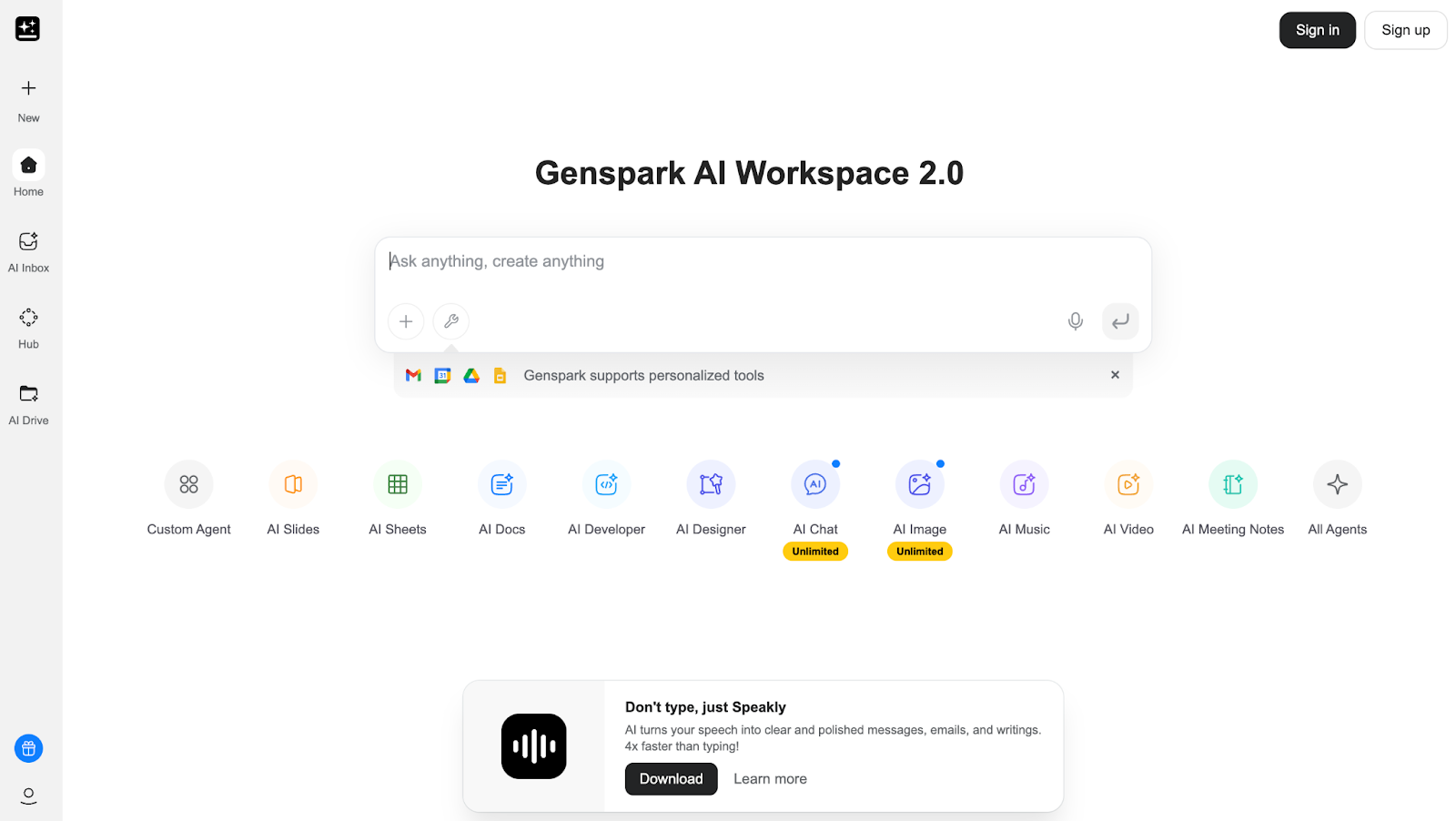
Instead of spending pages explaining the value, the product tries to prove it quickly. If someone can get a real output in five to ten minutes, the pitch becomes obvious.
This lines up neatly with the idea of activation velocity: shorten the time to first value, and you shorten the time to belief.
It also raises the bar for AI onboarding, because the product has to guide users to value fast without a ton of hand-holding.
The internal system that keeps their output quality ahead of everyone else
In AI, the product is only as good as the output.
And outputs are messy. Models change. Data shifts. User expectations rise.
Genspark’s answer is an automated recursive learning evaluation system that learns from user interactions and continuously improves orchestration. It routes tasks to the best model, uses tools appropriately, and pushes toward outputs that are immediately usable with less back-and-forth.
The goal is not “smarter writing.”
The goal is “work you can ship.”
All-in-one vs. best-in-class: which actually wins?
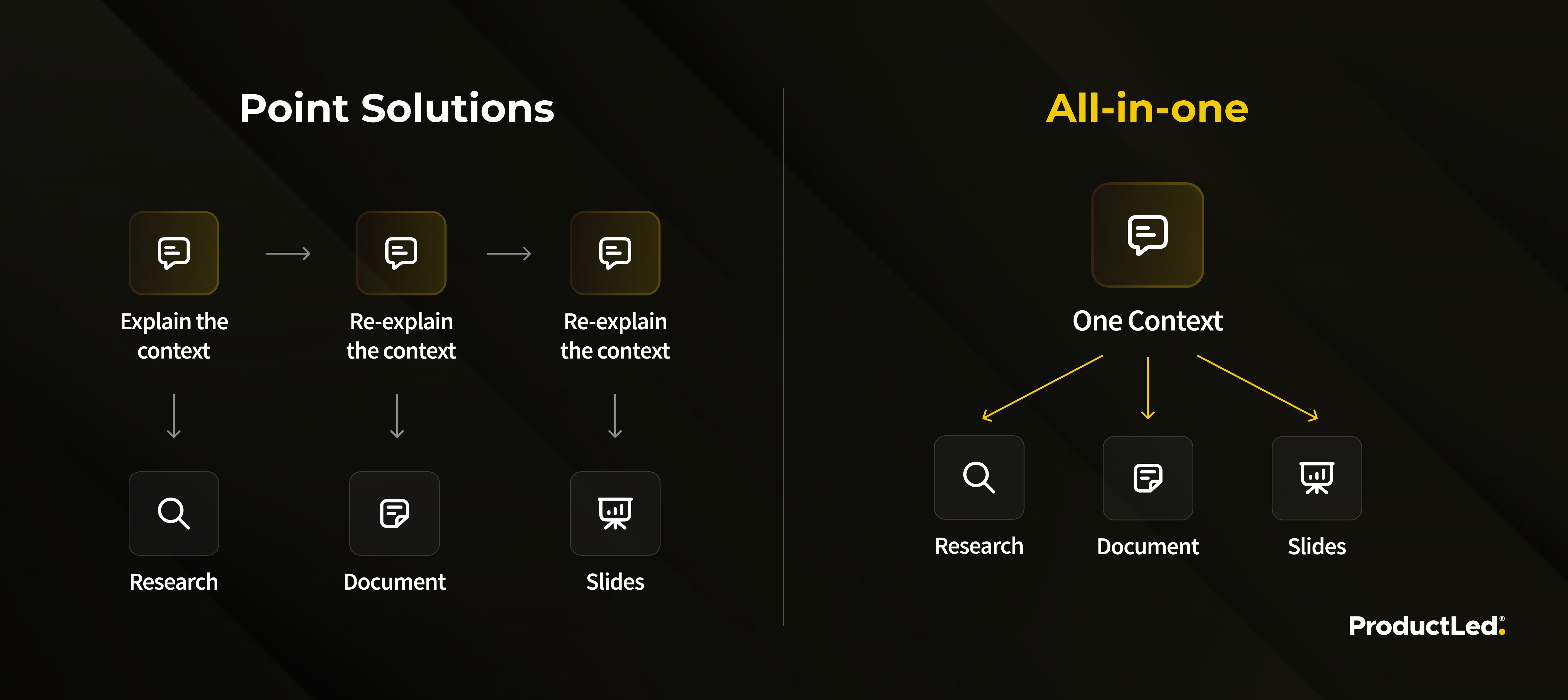
Best-in-class tools win when the job is narrow.
All-in-one wins when the workflow is connected.
Most knowledge work is connected. Research turns into slides. Slides turn into proposals. Proposals turn into follow-ups. Every handoff where context is lost creates drag.
Genspark is betting that context continuity will matter more over time than having the absolute best single feature in one corner of the workflow.
What Wen would tell every founder building in the AI era
The throughline behind the entire story is obsession with product quality.
Not feature quantity. Not flashy marketing. Not hiring sprees.
Output quality.
That obsession also fits a broader pattern showing up across AI product-led growth teams scaling to $100M ARR faster: teams that scale fast are the ones that get users to meaningful value quickly, then keep raising the quality bar week after week.
Resources
- 🚀 Genspark, all in one AI workspace: https://genspark.ai
- 💼 Connect with Wen Sang on LinkedIn: https://www.linkedin.com/in/wen-sang/
- 💼 Connect with Wes Bush on LinkedIn: https://www.linkedin.com/in/wesbush/
- 💼 Connect with Esben Friis-Jensen on LinkedIn: https://www.linkedin.com/in/esbenfriisjensen/
- 🧠 Sign up for the ProductLed Newsletter: https://www.productled.com/newsletter
Want to build your own product-led success story?
Wen’s story is a good reminder that product-led growth is not “no sales” or “no marketing.” It is building something so useful that users can feel the value quickly, tell other people about it, and pull it into their teams.
If you are ready to create your own product-led growth engine, one that works for your business and your life, we have resources to help:
👉 Book a Free Growth Session to get personalized advice on your biggest PLG challenges
👉 Join the ProductLed MBA™ and learn the proven frameworks that top product-led companies use to scale
👉 Download the ProductLed Playbook for free resources packed with PLG strategies you can implement today
👉 Subscribe to Our Newsletter for weekly insights on building smarter, not harder