There's something deeply uncomfortable about visiting a website that can't decide who it wants to be.
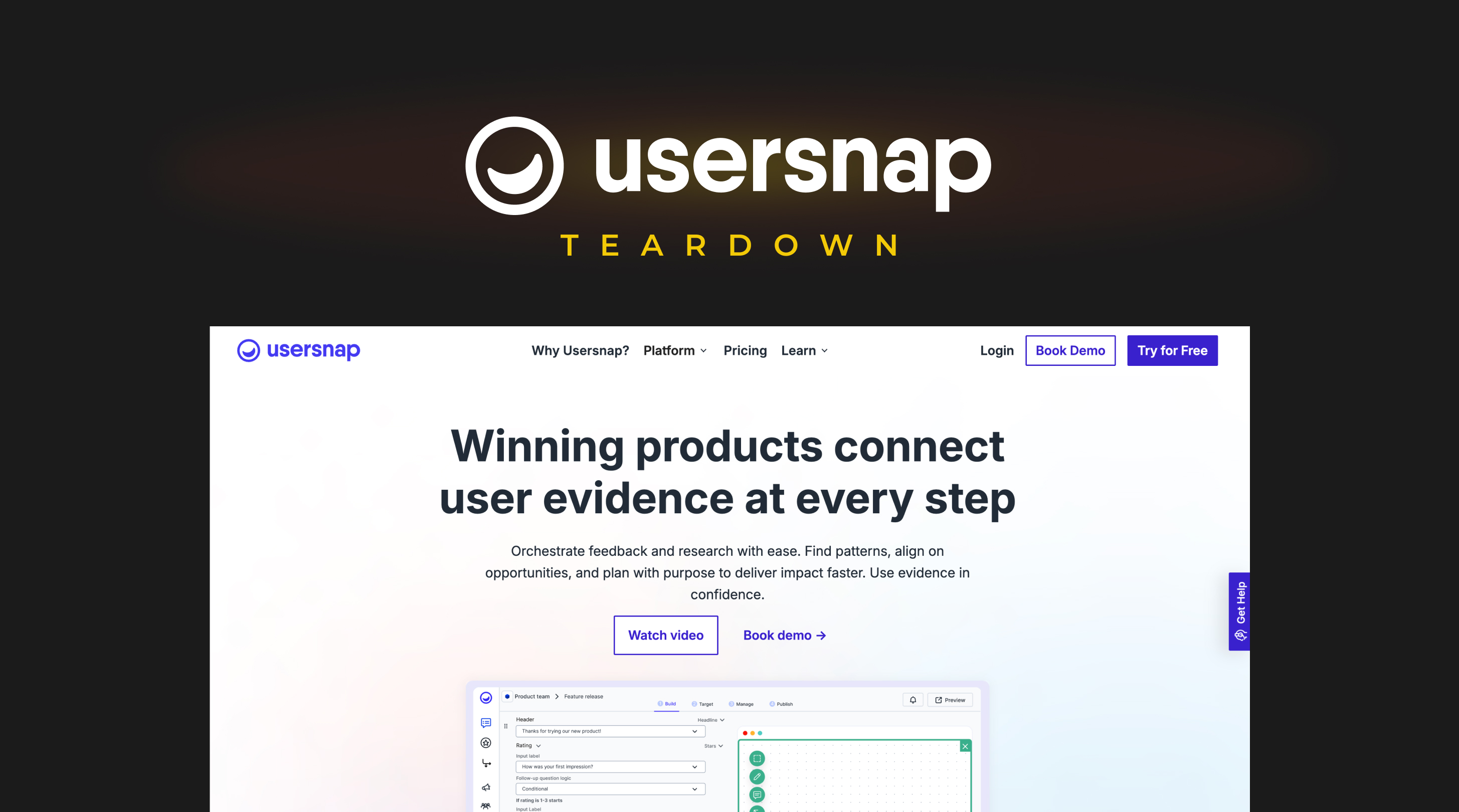
Usersnap is living this contradiction right now. Their homepage screams "serious Enterprise tool." The kind you'd present in a boardroom with pie charts and ROI projections. But click through to onboarding, and suddenly you're strapping into a digital space suit, being told to "Buckle up for liftoff" like you're about to play Fortnite.
The disconnect is jarring.
After recording a teardown of their user flow, I reached out to Ashley, their Head of Growth, to understand what was happening beneath the surface. Her response clarified everything. Usersnap is in the messy middle of a pivot. They're transitioning from a feedback collection tool into something far more ambitious: a user-led product workflow platform that helps PMs make confident decisions, not just hoard data.
The vision is solid. The execution? That's where things fall apart.
Right now, their product-led growth motion isn't supporting their vision. It's actively undermining it. Here are the five specific leaks I identified, and why they matter.
1. The "Aha!" Moment Lives in the Wrong Place
I have a strong belief: the "Aha!" moment should happen on the landing page itself, not buried three clicks deep.
Usersnap's current homepage video feels hyped up but lacks substance. It's all sizzle, no steak. What's missing is the output. The actual insights users will get. Show me the dashboard. Show me the decision being made. Show me the thing I'm supposed to care about.
A good homepage video doesn't build hype. It builds understanding. And right now, Usersnap's video does neither.
2. The "Inside Language" Barrier
Here's a simple test: if your copy forces someone to open a new tab and Google a term, you've already lost.
Usersnap uses acronyms like "PDLC" (Product Development Life Cycle) without explanation. Even as someone who's spent years in product, I had to pause and double-check what they meant. If I'm confused, your target user (who's probably less familiar with the space) is absolutely lost.
Jargon doesn't make you sound smart. It makes you sound inaccessible. Strip it out.
3. The "5-Second Test" Failure
I pulled up Usersnap's pricing page and tried to figure out which plan was right for me in five seconds.
I couldn't.
The page leads with features instead of value metrics. There's no clear hierarchy, no obvious fit. Users are forced to do mental math, comparing line items and trying to reverse-engineer which tier makes sense for their team size and use case.
In five seconds, a user should know exactly which plan fits them. Right now, they have to work for it. And most won't bother.
4. The "Commodity" Trap
Usersnap's free plan gates usage at "20 feedback items."
That's a problem. Not because the limit is too low, but because it positions Usersnap as a commodity. It tells users: "We're like every other tool, but with slightly different numbers."
Your free plan should give users a compelling reason to choose you over existing alternatives. It should showcase your unique value, not just ration your features. Right now, Usersnap's free tier doesn't differentiate. It just restricts.
5. The "Identity Crisis" in Onboarding
This is the big one.
The homepage sells an Enterprise tool for serious product teams. The onboarding sells a "Cosmic Adventure" complete with space suits and liftoff countdowns.
It's cute. It's playful. It's also completely inconsistent with the brand promise established thirty seconds earlier.
Inconsistent branding doesn't just feel awkward. It burns trust. When your product experience contradicts your positioning, users start to wonder if you know what you're building. Or worse, if you're building for them at all.
The Path Forward
Here's the thing: Ashley and CEO Shannon Vetts are directionally right. The pivot toward a user-led product workflow platform makes strategic sense. The vision is clear.
But to reach that new product-market fit, the entire product experience needs to align with that direction. The leaks I've outlined aren't small UX quibbles. They're fundamental misalignments between vision and execution.
The good news? They're all fixable.
Because at the end of the day, having an identity crisis isn't fatal. Staying in one is.
Ready to Fix Your Own PLG Leaks?
If spotting these misalignments and fixing them before they kill your growth sounds like the kind of work you want to master, here's how to go deeper:
👉 Jump into a Free Growth Session and get hands-on guidance
👉 Become a Top PLG Operator with the ProductLed MBA™ as a practical blueprint for mastering product-led growth
👉 Get the ProductLed Playbook (Free) to master the fundamentals of PLG
👉 Sign up for our Newsletter for weekly tips and ideas to scale smarter