SaaS onboarding is the process that takes a new user from signup to the first time they get the outcome they came for, and then to using your product regularly. At ProductLed, we call that first win the First Strike. A strong product onboarding process is a straight line: the fewest steps a new user needs to reach it. Wes Bush's Bowling Alley Framework then adds bumpers, like checklists, empty states, tooltips and emails, that keep people on that path instead of dropping out.
Below is the six-step process ProductLed uses, the best practices that sit inside it, the numbers that tell you it's working, and a checklist you can run on your own product this week.
What is SaaS onboarding, and what is the product onboarding process?
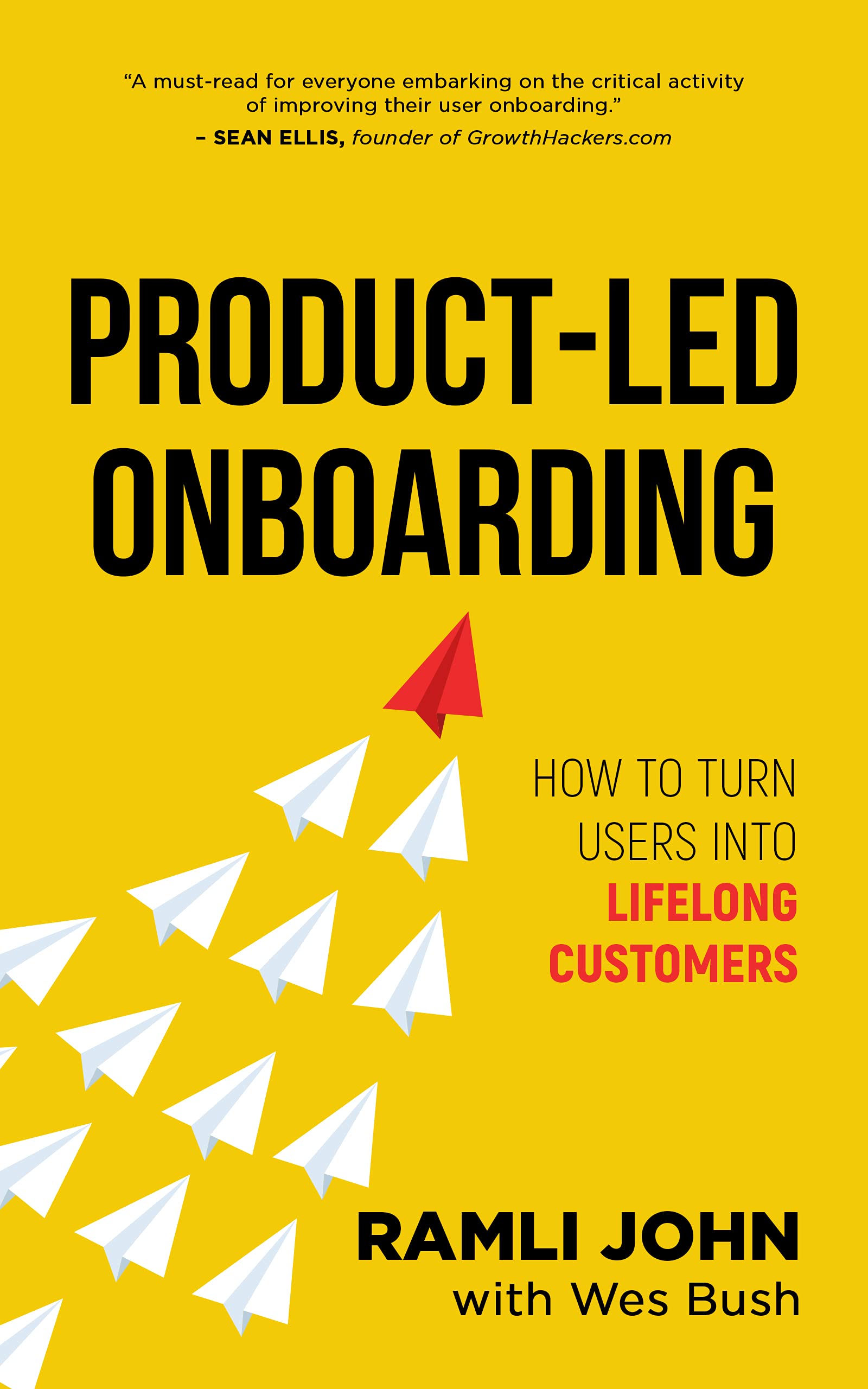
SaaS onboarding is everything between signup and the point where a new user has built your product into their work. It isn't a product tour or a training program. Those are tools you might use along the way. In Product-Led Onboarding, Ramli John breaks onboarding into three value moments. The product onboarding process is how you move people through them on purpose, instead of hoping they find their own way.
- Moment of Value Perception: the user first pictures your product in their own situation. This usually happens before they sign up.
- Moment of Value Realization: the user first gets the outcome they came for. This is the First Strike.
- Moment of Value Adoption: the user starts using the product regularly and builds it into their workflow.
Slack is the example from the book. Value Perception is grasping how Slack helps a team share information better than email. Value Realization is sending a first message to a colleague. Value Adoption is a team that has sent 2,000 messages. Getting someone to the First Strike once isn't enough. Onboarding ends when the habit sticks.
Which onboarding model fits your product?
How much human help you add depends on your product and price point. ProductLed's guide to low-touch customer onboarding compares three models:
| Model | How it works | Trade-off |
|---|---|---|
| Low-touch (product-led) | The product guides users to value with little or no help from a rep | Cheaper and easier to scale, but conversion and activation suffer if the product can't get people to value on its own |
| Mixed | Self-serve for most users, with human help for high-value accounts or users who get stuck | Helps the accounts that need it without slowing everyone else down, but needs clear rules for who gets help and when |
| High-touch | A support or success team walks most or all customers through onboarding | Rich feedback and help with complex setup, but expensive to scale, and a forced demo adds friction for people who just want to try it |
Whichever model you pick, the process below is the same. The only difference is how many of your bumpers are people.
Why does SaaS onboarding matter?
Onboarding is where most of your signups are won or lost. In The Product-Led Playbook, Wes Bush writes that you typically lose 40-60% of your users at the First Strike step of the user journey, which is why that stretch is the best place to start. Outside benchmarks point the same way. Userpilot's 2025 SaaS Product Metrics Benchmark Report, cited in its November 2026 onboarding guide, puts average user activation at 37.5% across 62 B2B SaaS companies.
The math is simple, as Wes puts it in his post on AI onboarding: faster time to value means better activation, and better activation usually means less churn and more paid users. Retention, trial-to-paid conversion and expansion all sit downstream of that first win. If people never reach it, no pricing page or nurture sequence will fix it.
What does a strong product onboarding process look like?
A strong product onboarding process gets new users to the First Strike in as few steps as possible, then keeps them on that path. ProductLed's version has six steps, drawn from Wes Bush's Bowling Alley Framework and Ramli John's EUREKA framework: name the First Strike, map the path, straighten it, add bumpers, segment by job, then measure and repeat.

[WES INPUT: In one minute, how do you explain Straight-Line Onboarding and the Bowling Alley Framework, and how do they fit with EUREKA? Your answer goes here, in your words (brief question 3).]
1. Name the First Strike
Pick the outcome a new user signed up for, the one that tells you they're likely to stay. It's not a login and it's not a finished tour. For Slack, it's sending a first message to a colleague. If product, marketing and sales don't agree on it yet, agree on it first. EUREKA calls this refining your onboarding success milestones.
2. Map every step from signup to that outcome
Sign up for your own product like a brand-new customer and write down every step until the First Strike. Include every form field and every button, even an "OK." Teams skip this because of what Wes Bush calls the Fish Tank Problem: your team knows why every onboarding step exists, so it can't see what a new buyer sees. ProductLed starts its consulting work the same way, by signing up and finding the exact spot where buyers give up.
3. Straighten the path
Label each step. Keep the ones users need to reach the First Strike, delay the ones that can wait until after it, and make the rest easier. ProductLed's time-to-value guide uses three lenses for this: Necessity, Ease and Simplicity. Expect to cut a lot. In Product-Led Onboarding, Ramli John writes that in his experience well over 30% of onboarding steps are superfluous. That's the idea behind Straight-Line Onboarding.
4. Add bumpers that keep people on the path
Even a straight path has gutters. Product bumpers live inside the app: welcome messages, product tours, progress bars, checklists, tooltips and empty states. Conversational bumpers reach people outside it, from emails and in-app messages to a knowledge base, community, training and specialists. Add a bumper only where users are actually dropping off. More bumpers isn't better onboarding. The user onboarding framework post walks through both types.
5. Segment by job or role
People sign up to get different jobs done, so one generic tour won't fit everyone. Ask one or two profiling questions at signup, then send each person to the part of the product they care about most. Chapter 7 of Product-Led Onboarding shows the Bowling Alley split into one lane per job.
6. Measure, then repeat
Track how many new users reach the First Strike and how long it takes them. Ship the change most likely to move that number, measure it, and go again. That's the last step of EUREKA: apply the changes and repeat.
What are the SaaS onboarding best practices?
The best SaaS onboarding practices all serve one goal: getting a new user to the First Strike faster, then keeping them coming back. Speak to the outcome, cut signup friction, show progress, welcome people, use bumpers to drive action, design empty states, trigger messages from behavior, and keep onboarding going after the first win. Each one is a way to run steps 3 and 4 of the process above.
Speak to the outcome, not the feature
Most onboarding copy labels buttons. Good onboarding copy reminds people why they signed up. Every signup screen, tooltip and email is a chance to speak to the result they want, calm the worry that stops them and show the next step. If a line only says what a feature does, rewrite it to say what it does for them.
Cut signup friction
Ask only for what you need before the First Strike. Everything else can wait. Single sign-on with Google or Apple saves a step. Email verification that blocks access before value can kill conversion, since those emails land in spam or arrive late and people forget to come back.
Show people their progress
Progress bars and checklists tell people how far they've come and how little is left. An unfinished list creates a pull to complete it, known as the Zeigarnik effect. The Product-Led Playbook suggests partly filling a checklist before the user sees it. Keep every item tied to the First Strike. Userpilot's same 2025 report puts average checklist completion at just 19.2% across 188 companies, so a long list of setup chores won't get finished.
Welcome new users and set expectations
A short welcome message is a chance to say hello, restate your value and tell people what happens next. A personal note or a short video from the founder makes it feel like someone cares whether they succeed. Skipping the welcome is like a host who never greets you at the door.
Use bumpers to drive action, not to label the interface
A tour that says "Click here to change the font" teaches nothing. A tour that asks users to do the next step toward their outcome gets them there. Tours usually beat a blast of tooltips, because people learn by doing, not by memorizing. And watch for tours used as a bandage. If you need a 10-step tour to explain the path, fix the path first. Chapter 5 of The Product-Led Playbook covers when each bumper is worth it.
Design empty states that point to the next action
A dashboard full of zeros is a dead end. Use the empty state to show what the screen will look like once it's working and give one clear action to get there. Be careful with dummy data. Fake numbers raise questions like "Where did this come from?" and "What am I supposed to do here?" Use sample data only when it teaches people how the product works.
Trigger messages from behavior, not the calendar
An email on day 3 because it's day 3 rarely moves anyone. An email triggered because someone created a project but never invited a teammate does. Send messages based on what users have or haven't done. For sequences and examples, see ProductLed's guide to SaaS onboarding emails.
Keep onboarding going after the first win
The First Strike is the start, not the finish. Onboarding ends at the Moment of Value Adoption, when the product is part of someone's routine. Keep guiding people to the next valuable use, and treat each new feature as another chance to onboard. ProductLed's post on aha moments covers how to find those next moments.
How do you know your SaaS onboarding needs work?
Look at what users do, not what they say. Your onboarding needs work if people don't finish signup, don't come back after the first session, take too long to reach the First Strike, don't upgrade, or leave right after the first invoice. The common trap is treating logins or checklist completion as success when nobody has reached the outcome they came for.
| Sign | Number to watch | What it usually means |
|---|---|---|
| People start signup and quit | Signup completion rate | Too many steps or fields before any value |
| People sign up and never come back | Day 1 and Day 7 retention | They didn't reach the First Strike in their first session |
| People take days to get value | Median time to the First Strike | The path isn't straight yet |
| Active users don't upgrade | Trial-to-paid conversion | The value they got isn't tied to the paid plan, or they haven't adopted the product yet |
| New customers leave after the first invoice | Early churn | They reached a first win but never built a habit |
Activation rate tells you how many people reach the First Strike. Time to value tells you how long it takes. ProductLed's post on activation velocity makes the case for tracking how each cohort activates over time instead of relying on one average.
[WES INPUT: When a founder tells you "our onboarding isn't working," what do you look at first, and what's the most common mistake you see? And which onboarding metric do you trust most, and which one do teams over-trust? (brief questions 1 and 5)]
How should AI products handle onboarding?
AI products raise the bar. In his January 2026 post on AI onboarding, Wes Bush sets the new standard at 60 seconds to a meaningful output. Instead of teaching users your interface with tooltips, you teach the AI what the user wants and let it do the first piece of work. Wes describes four levels: Inform, Guide, Execute and Orchestrate. Most products stop at Guide. The leverage is in Execute.
His three signs a product is getting AI onboarding right:
- 60 seconds to value or less. You have about a minute to show something useful.
- Low input, great output. Users want a strong result for as little effort as possible.
- A shareworthy first strike. The first output is good enough that people want to show someone.
[WES INPUT: How should an AI product onboard a new user differently from a classic SaaS dashboard product? What have you seen work, and what should teams stop doing? (brief question 4)]
Example from a ProductLed client
Enzuzo, a data privacy app for Shopify stores, worked with ProductLed to relaunch its freemium model with a focus on onboarding. The team used Straight-Line Onboarding to streamline signup. Instead of asking users to upgrade within the first 7 days, Enzuzo now asks them to choose a plan when they install. Onboarding went from Install, Free, Upgrade to Install, Paid, and the Enzuzo case study reports that signup-to-paid conversion doubled.
Other ProductLed clients describe similar wins on the ProductLed results page. Christopher Gimmer, CEO of Snappa: "We saw a 20% boost in our MRR almost overnight by implementing just a couple of recommended changes in our onboarding process." Kristi Gibson, Product Marketing Manager at 7shifts: "We were able to reduce seven steps in our onboarding, which increased our activation rate."
[WES INPUT: One onboarding fix you or the ProductLed team made for a client: what was broken, what you changed and what happened after. Tell us which client to feature, and confirm it's OK to name them here or whether to anonymize them (brief question 2).]
A SaaS onboarding checklist
A SaaS onboarding checklist turns the six-step process into an audit. Go through your own signup as a brand-new user and check each line below. Any line you can't check is where to start.
- The First Strike is defined, and product, marketing and sales agree on it.
- Every step from signup to the First Strike is mapped, with a screenshot of each.
- Each step is labeled, and anything not needed for the First Strike is removed or delayed.
- Signup asks only for what you need right now, offers single sign-on, and email verification doesn't block value.
- One or two profiling questions send people down the right path for their job or role.
- Progress is visible, and every checklist item leads to the First Strike.
- Every empty state has one clear next action.
- Tours and tooltips ask users to do something, not just label the interface.
- Emails and in-app messages trigger from behavior, not a calendar.
- Activation rate and time to the First Strike sit on a dashboard someone reviews every week.
Want to see these in real products? Browse ProductLed's SaaS onboarding examples. For the full method, read Product-Led Onboarding free online.
Where should you start?
Start with the First Strike. Name it, map the path to it and cut what doesn't belong. Wes Bush puts it plainly in The Product-Led Playbook: the First Strike step is where you lose the most users, so it's where improvements have the biggest impact.
Not sure where your buyers drop off? Take the free ProductLed assessment. We read your home, pricing and signup pages and tell you what to fix first. Start my free assessment →
If you'd rather have ProductLed's team work through your onboarding with you, here's how our product-led growth consulting works.