Most founders who want to build a meaningful SaaS company assume they need one of two things: venture funding or a growing headcount.
Jeremy Clarke’s story points to a very different path.
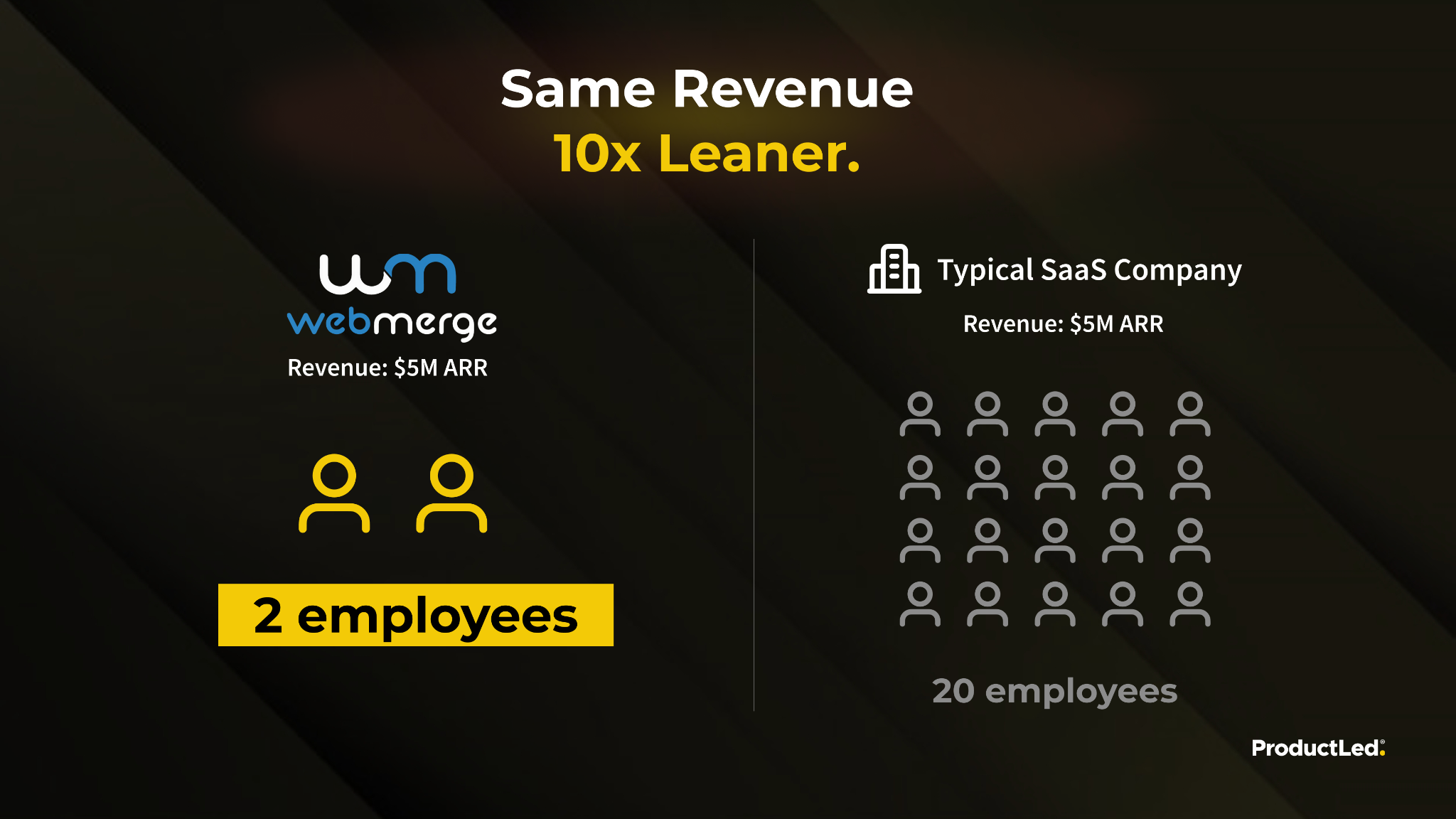
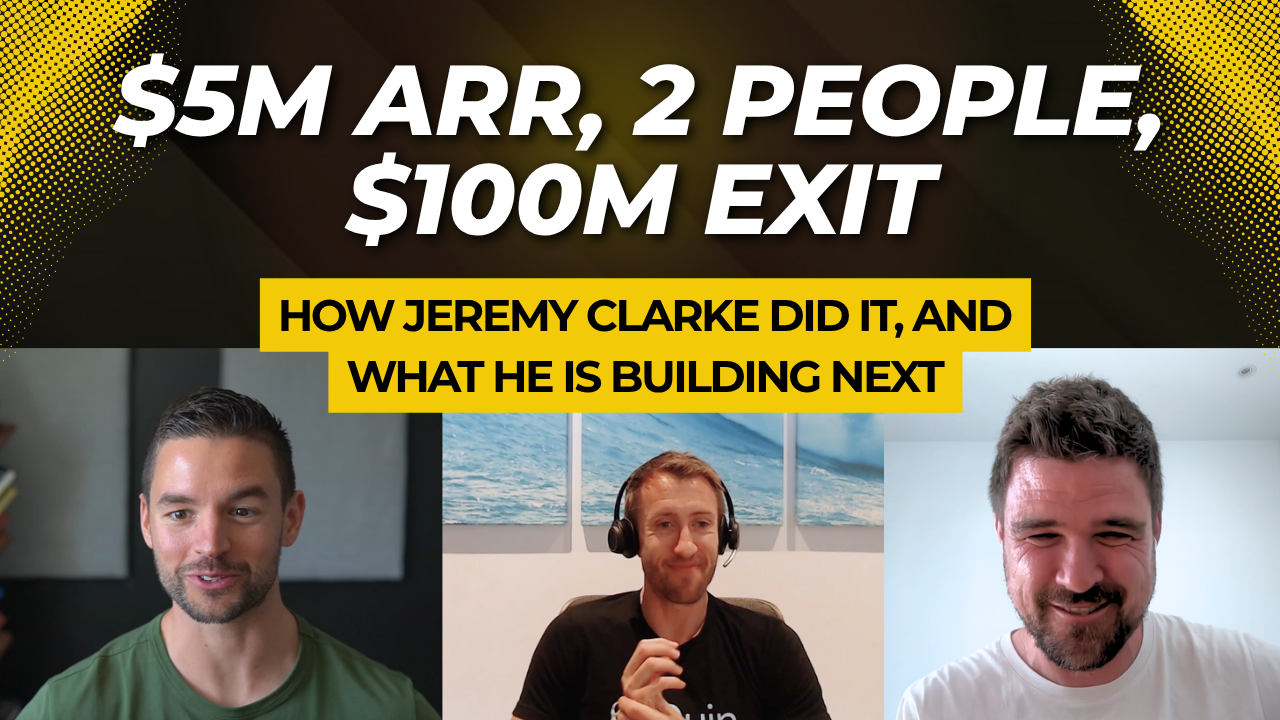
WebMerge grew into a multi-million dollar business with an incredibly small team of just 2 people, reaching roughly $5M in revenue before being sold at a total value of $100M. What makes the story especially useful is that it was not fueled by hype, a giant launch, or a bloated go-to-market machine. It was built through a tight product, strong integrations, close customer contact, and a relentless focus on efficiency.
Now, building Quin in a very different AI market, Jeremy has a sharper view of what made WebMerge work and what has changed. The result is a practical lesson in lean company building, customer-driven product development, and the tradeoffs of building in AI today.
From WebMerge to Quin
One of the clearest takeaways from Jeremy’s journey is how different the software landscape looks today.
WebMerge benefited from a model many SaaS founders would envy. Margins were extremely high, and every new customer added meaningful profit. That meant the business could grow without constant pressure to squeeze efficiency out of every activation, support interaction, or free account.
Quin is a different kind of business. AI products come with real usage costs, which changes the economics from day one. New users are not automatically profitable. In many cases, they need to be carefully onboarded, supported, and converted before the numbers make sense.
That shift has forced a more disciplined approach to growth. It also highlights something important for founders building today: a good product still matters enormously, but distribution, pricing, and margin structure matter much more when every customer has a direct cost attached.
The WebMerge growth playbook
WebMerge started with a simple problem: generating documents from data.
The first product lets users create PDFs with merge tags and email them out. It solved a specific pain point well, and that was enough to get initial traction. Over time, customers asked for more document types, more delivery options, and better connections with the tools they were already using.
That is where integrations became the growth engine.
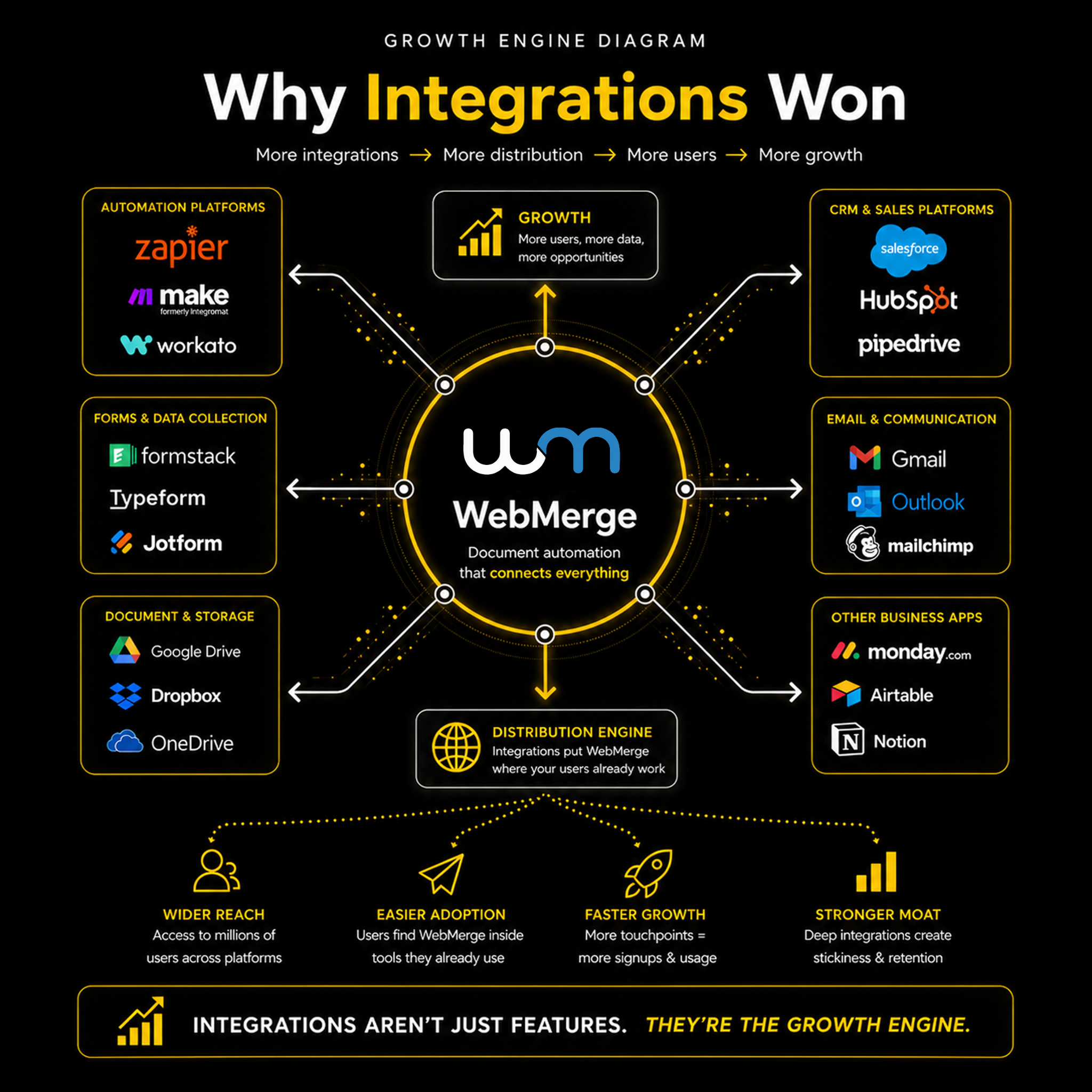
The core product did not need constant reinvention. What expanded was the number of places data could come from and the number of workflows WebMerge could fit into. Integrations increased product value, but they also became a distribution channel. Being an early Zapier integration helped a lot, and direct integrations with other platforms created both stickiness and reach.
Later, a strategic hire helped push this even further. The role blended partnerships and sales, especially inside ecosystems like Salesforce, where consultants and implementation partners could influence adoption.
This is a useful reminder that for many SaaS companies, growth does not come from adding random features. It comes from making the product fit naturally into more workflows.
How WebMerge really got off the ground
WebMerge did not explode overnight.
Its early growth came from a slow, targeted start. The idea emerged from work Jeremy had already seen while at Formstack, where customers were asking for ways to generate PDFs from form submissions. Once WebMerge was built, the first users came from reaching out directly to people who had already expressed interest in that exact problem.
That first customer base was seeded manually, not magically.
From there, the business compounded. Growth was steady rather than flashy. Early percentages looked big because the base was small, but the real story was consistent doubling over time. It took years to reach scale.
There is something reassuring in that. A durable software business does not need a viral launch if it solves a real problem, keeps getting better, and grows through compounding demand.
Why Jeremy bootstrapped from day one
Bootstrapping was partly practical and partly philosophical.
At the beginning, it was not obvious that WebMerge was a venture-scale opportunity. It looked like a good business, but not necessarily one that needed outside capital. Just as important, Jeremy wanted control. He preferred building on his own terms over raising money and taking on outside pressure.
That preference still shows up in how he builds today.
There is a strong founder lesson here: not every promising software product needs to be framed as a giant outcome from day one. Sometimes the better move is to stay focused on customer value, keep ownership, and let the business reveal its ceiling over time.
How to reach $5M with almost no team
WebMerge did not start with a grand plan to stay tiny forever. It just kept working without requiring many people.
A big reason was the nature of the product. Most support demand showed up early in the customer lifecycle. Once users understood how WebMerge worked, many stayed for a long time without needing much help. That meant revenue could compound faster than operational burden.
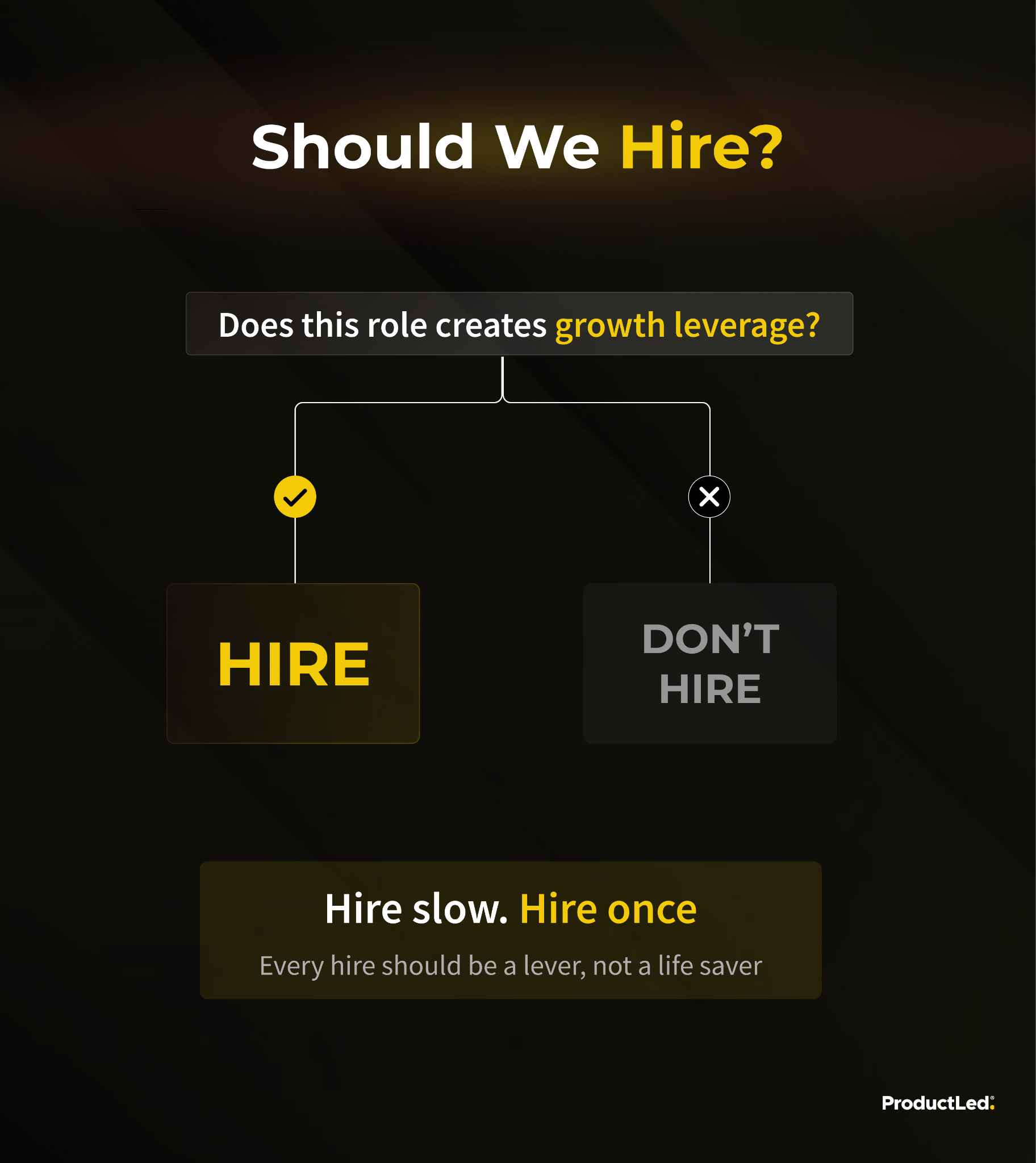
Jeremy also had a high bar for hiring. He did not want new people simply to absorb tasks. He wanted hires that would create a real inflection point. The strategic partnerships and sales hire fit that standard because it expanded distribution in a meaningful way.
This mindset is worth studying. Lean companies often stay lean because the founder treats each hire like a growth lever, not a relief valve.
Why founders should stay close to support
Support was one of WebMerge’s biggest advantages.
Being close to support creates a tight feedback loop between customer pain and product decisions. When the builder sees the same confusion or request repeatedly, the incentive to fix it inside the product becomes very strong. Over time, this leads to better UX, better onboarding, and fewer repeated issues.
It also helps with speed. Fast responses build trust, and small moments of responsiveness can leave a lasting impression. In the early days, quick support and rapid feature iteration helped turn customers into long-term fans.
There was another smart tactic here too: professional services were occasionally used to fund product improvements. If a customer needed help setting something up, that work could surface product gaps and justify building features that later benefited everyone.
For product-led founders, support is often dismissed as reactive work. In practice, it can be one of the best product research channels you have.
Why he sold a highly profitable business
Selling WebMerge was not a simple case of chasing an exit.
The business was highly profitable, but a few pressures were building. Hiring was starting to feel unavoidable. There was also platform risk, since some of WebMerge’s functionality could have been absorbed by larger software ecosystems over time. And there was a personal question in the background: whether continuing to scale the company would require becoming the kind of manager Jeremy did not really want to be.
The sale offered a chance to de-risk, take some chips off the table, and join a larger story. In hindsight, holding the company might have created even more upside financially, but the deal worked out well and fit the moment.
That honesty matters. Founders do not always sell because growth stalled. Sometimes they sell because the next chapter of the business asks for a version of themselves they are not excited to become.
What still wins in a crowded AI market
Even though the market has changed, the most durable lessons from WebMerge still apply.
Customer focus still matters. Fast support still matters. Word of mouth still matters. Trust still matters.
In fact, these may matter more now because software is easier to build and easier to copy. Features alone are a weaker moat than they used to be. The difference often comes from how well the team supports the customer, how quickly the product improves, and whether users feel confident recommending it.
That is why word of mouth stands out as a major priority. Paid acquisition is expensive, noisy, and often unreliable. A trusted recommendation cuts through that noise much more effectively.
The broader founder lesson is simple: building has become easier, but finding product-market fit has not. Plenty of teams can ship features quickly. Far fewer can build something people want badly enough to keep using and recommending.
Resources
- 🚀 Quin: AI assistant for busywork and follow-through: https://www.heyquin.io
- 💼 Connect with Jeremy Clarke on LinkedIn: https://www.linkedin.com/in/clarkejj/
- 💼 Connect with Wes Bush on LinkedIn: https://www.linkedin.com/in/wesbush/
- 💼 Connect with Esben Friis-Jensen on LinkedIn: https://www.linkedin.com/in/esbenfriisjensen/
- 🧠 Sign up for the ProductLed Newsletter: https://www.productled.com/newsletter
Want to build your own product-led success story?
Jeremy’s story is a great example of what can happen when a founder stays close to customers, hires carefully, and builds with efficiency in mind from the start.
If you want to build a product-led business with stronger activation, better retention, and a growth model that does not depend on a huge team, ProductLed has resources to help:
- 👉 Book a Free Growth Session to get personalized advice on your biggest PLG challenges
- 👉 Join the ProductLed MBA™ and learn the frameworks top product-led companies use to scale
- 👉 Download the ProductLed Playbook for free resources you can apply right away
- 👉 Subscribe to the newsletter for weekly insights on building smarter