Most founders do not fail because they lack ambition. They fail because they stay committed to an idea long after the market has already voted no.
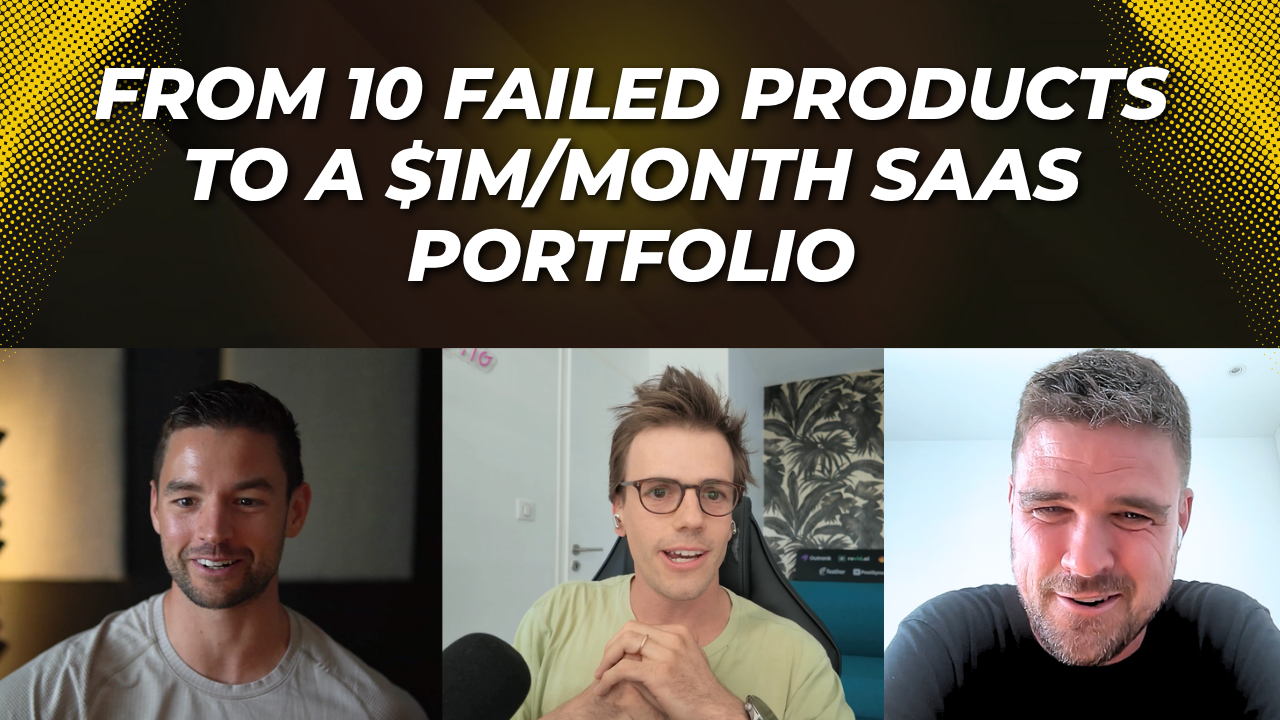
That was one of the clearest lessons from Tibo Louis-Lucas’s journey. Before building breakout products like Tweet Hunter and Taplio, he spent years working on startups that never truly validated. The cost was not just money. It was time, energy, and momentum.
That pain forced a complete reset.
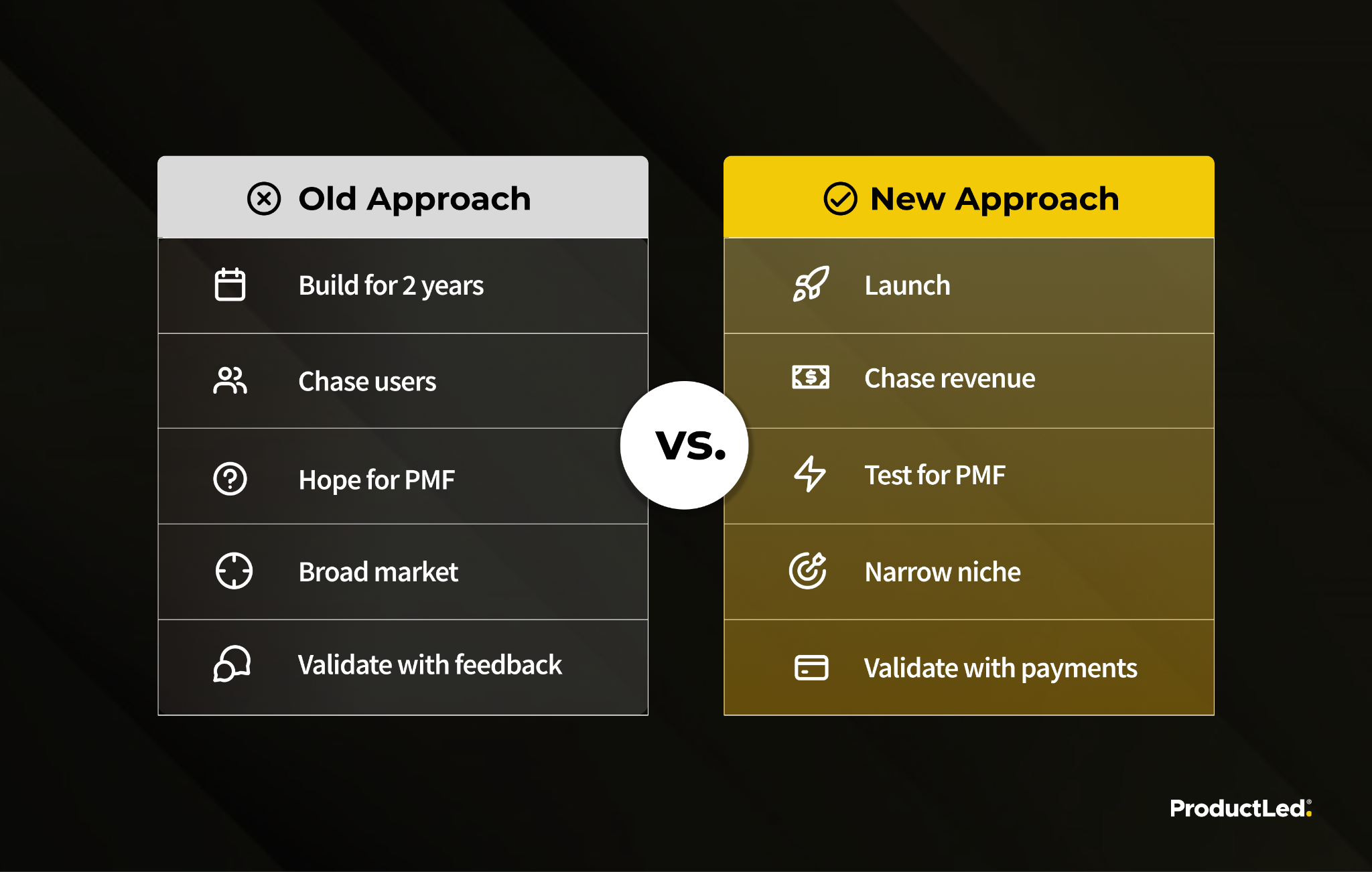
What followed was a much sharper operating model: validate through revenue, move fast, go deep on a narrow use case, build distribution into the product from the start, and stay close to paying users. That approach helped him build successful product-led SaaS companies and grow a portfolio that now generates more than $1M per month in payouts.
For product-led founders, there is a lot to learn here, especially if you are tempted to spend months polishing before charging, or chasing broad markets before earning focused demand.
Why Two Failed Startups Changed Everything
The first major shift came from frustration.
After spending two years on one unvalidated product and then repeating the same mistake again on a 2nd startup, Tibo made a simple rule: never spend years building something without proving people want it.
That kind of lesson hits hard because it usually comes after a long stretch of optimism. A founder sees usage, some encouraging comments, maybe a few active users, and assumes progress is happening. Then reality shows up much later.
The deeper insight is that validation is not a philosophical exercise. It is a constraint. It forces better decisions earlier.
This also changed how he thought about markets. Instead of chasing a giant blue ocean idea and trying to invent something completely new, he became much more comfortable entering proven markets. That meant starting where demand already existed and finding a better angle inside it.
For many founders, this is the mindset shift that matters most. A crowded market can actually be a gift. It means buyers already understand the problem and already spend money to solve it.
Revenue Is the Only Validation That Counts
One of the sharpest takeaways from this conversation is that usage is not validation. Revenue is.
That distinction matters a lot in product-led growth.
It is easy to confuse signups, free users, or activity with momentum. A product can have thousands of users and still have no real business underneath it. Tibo experienced this firsthand with an earlier product that reached around 15,000 monthly users but had almost no paying customers.
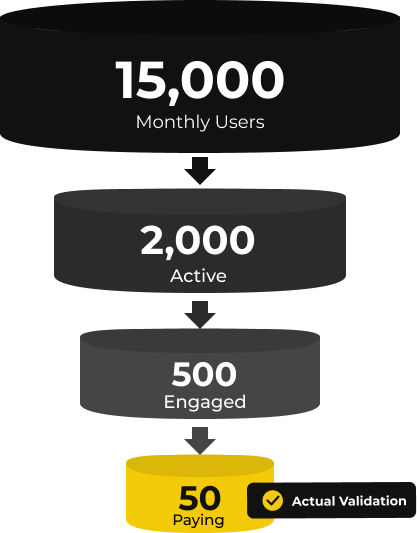
That kind of traction can feel exciting, but it can also be misleading. Free users often give the most feedback, demand the most attention, and influence the roadmap the most, even when they contribute very little to sustainability.
The better signal is much simpler: are people willing to pay, and are they willing to pay early?
That became the test. Instead of building for long stretches, he and his co-founder decided to do a “build-a-product-a-week” challenge and shipped product after product until something stuck. Some ideas made a few hundred dollars a month. That was useful, but it did not feel like a breakout.
They build 10 failed products in 4 months and then came Product number 11: Tweet Hunter, which felt different almost immediately. It reached roughly $1K in MRR within the first two weeks. People were willing to pay for the promise and the value behind it right away.
That is the kind of early signal founders should pay attention to.
How Tweet Hunter Won a Crowded Market
Tweet Hunter did not win by trying to be a better version of every social media scheduler.
It won by narrowing the problem.
The scheduling market already had plenty of established players, but most of them were built for brands and enterprise teams. Their value proposition was breadth: support as many platforms as possible. The tradeoff was shallow functionality on each one.
Tweet Hunter took the opposite route. It focused only on Twitter and went deep.
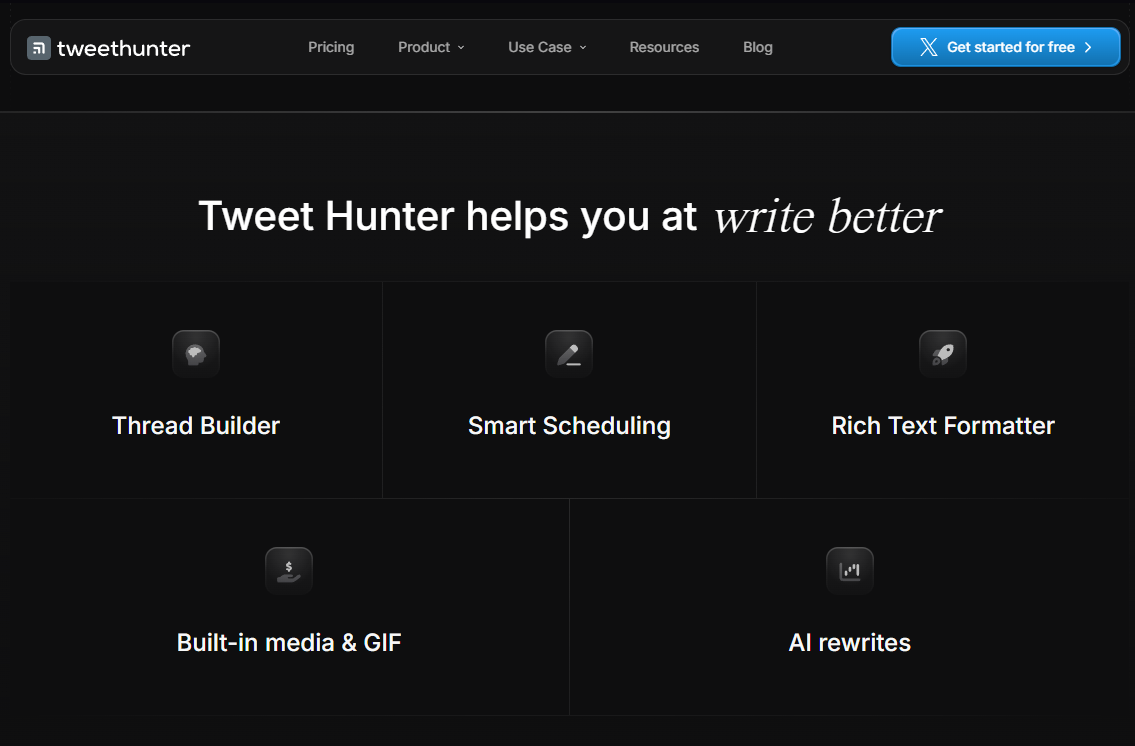
That meant supporting the platform more fully, building workflows and automation that only made sense for Twitter users, and serving creators rather than marketing departments. This was especially well-timed as the creator economy was gaining momentum and individuals were looking for tools built for how they actually worked.
That depth created preference.
This is a useful lesson for PLG teams. You do not need to dominate a category by serving everyone. You can win by becoming the obvious choice for a smaller, sharper use case.
In many cases, the fastest path to product-market fit is not adding more surface area. It is becoming dramatically better for a specific user with a specific job to be done.
The Distribution Deal That Fueled Growth
Validation is only step one. Distribution decides whether the business compounds.
One of the most interesting parts of this story is how Tibo approached growth after finding traction. For Tweet Hunter, he partnered with a Twitter creator who became the head of distribution for the product.
The deal structure was unusual. Instead of a normal affiliate setup, the creator received a 25% share of the product’s profits and a 25% share of a potential exit. The agreement lived at the product level rather than the broader company level.
Why did this work so well?
Because the incentives were real and the alignment was strong. The creator was deeply embedded in the exact audience the product served and was already teaching the same methods the product supported. Promotion was not forced. It made sense.
That is a powerful reminder that distribution works best when it feels native to the product and the audience. The closer the fit between partner, message, and user pain, the stronger the leverage.
Later, the same logic shaped the decision to build a separate product for LinkedIn rather than stuffing LinkedIn into Tweet Hunter. Going deep on one platform was important, but so was matching each product with the right distribution partner and audience.
The Creative Investors Growth Engine
The creator-partner model was only one part of the playbook.
Tibo also built a group of 17 “creative investors,” each receiving 0.1% of the product. These were influential Twitter users who could help amplify launches, updates, and product announcements.
This worked because the structure was simple and psychologically smart.
There was no heavy obligation to promote. The agreement basically said: if you want to support the product, great. If not, you still keep your share. That made it easy to say yes. And because these creators were treated more like investors than affiliates, the relationship felt different.
Instead of generic promo asks, they received investor-style updates with meaningful business metrics and progress. That made them feel connected to the upside, not just recruited for distribution.
The result was strong amplification. Around 80% of the group actively helped spread the word.
For founders, the bigger lesson is to think beyond standard affiliate tactics. If someone can materially shape your distribution, structure the relationship so they care like an owner.
Why Selling Wasn’t the Dream Outcome
A lot of founders fantasize about selling their company.
Tibo’s experience is a good reminder that exits can be messier than they look from the outside.
Tweet Hunter and Taplio were sold, but the deal came with a long transition period and a heavy earnout structure. About 75% of the acquisition price depended on hitting aggressive revenue milestones after the sale.
That changed the emotional experience completely.
Before the acquisition, every growth milestone felt like upside. After the deal, missing a target felt like losing money that had already been mentally counted. Add in high churn, platform risk, and uncertainty around Twitter and LinkedIn policy changes, and the pressure only increased.
The takeaway is not that selling is bad. It is that founders should understand the terms, the psychology, and the post-acquisition reality. A headline number can hide a very different day-to-day experience.
That experience also reshaped his long-term strategy. Today, the focus is much more on building and holding rather than building to sell.
Building an Indie Hacker Software Stack
The next chapter is not about one product. It is about a portfolio.
What makes Tibo’s thinking interesting is how he organizes that portfolio. He is not trying to dominate one vertical like video editing or CRM. He prefers building around a persona.
In his case, that persona is the indie hacker, solo founder, or very small team.
The goal is to create a stack of software that helps this type of person run different parts of their business. That lens shapes product selection, acquisitions, and partnerships.
It also explains why he is comfortable operating multiple brands instead of forcing everything into one umbrella. Some of that comes from ownership structure, since different products involve different co-founders. Some of it comes from the belief that different jobs deserve focused products.
There is no rigid master plan behind every move. Some products were built. Some were acquired. Some came from reacting quickly to opportunities where his product instincts and distribution strengths could add leverage.
That flexibility matters. It keeps the portfolio strategy grounded in real opportunities instead of abstract theory.
No Calls, More DMs, Better Feedback
One of the clearest operating choices in this conversation is the no-call policy.
Tibo does almost all customer interaction through DMs rather than scheduled calls. That is partly a lifestyle decision and partly an operating advantage.
Calls fragment time. DMs preserve it.
More importantly, DM-based conversations still create closeness to users. He uses them to onboard people, understand pain points, ask about workflow, and gather direct feedback from paying customers.
That last part is key. He strongly prefers feedback from users who have already paid. Paid users are usually clearer about the problem, more serious about outcomes, and more useful when making roadmap decisions.
For product-led companies, this is a strong reminder that “talk to customers” does not always mean calendar-heavy interviews. What matters is fast, direct learning loops.
How AI Changed the Way He Builds
AI has completely changed the pace of building.
Before, the challenge was having too many ideas and not enough time to implement them. Now, the implementation bottleneck is much smaller. The backlog gets cleared quickly, and the harder question becomes deciding what is worth building next.
Tibo describes himself now less as a coder and more as a QA layer in the loop. AI handles most of the code generation. He reviews, corrects, steers, and keeps things moving.
That creates a new problem: feature creep.
When almost anything can be built quickly, discipline matters more. Teams need a stronger filter for deciding what belongs in the product and what should stay out.
AI is also reshaping how he runs the portfolio operationally. He uses dashboards and AI-assisted systems to monitor performance, spot changes, generate ideas, and automate workflows across products. The long-term goal is not just to build faster. It is to create systems that let the portfolio scale without requiring him to be deeply involved in every detail forever.
The final advice here is especially relevant in the AI era: use the time AI saves to talk to more customers, not to scroll more feeds.
That might be the most practical lesson of all.
Resources
- 🚀 Revid AI: https://www.revid.ai/
- 💼 Connect with Tibo Louis-Lucas on LinkedIn: https://www.linkedin.com/in/tibo-the-maker/
- 💼 Connect with Wes Bush on LinkedIn: https://www.linkedin.com/in/wesbush/
- 💼 Connect with Esben Friis-Jensen on LinkedIn: https://www.linkedin.com/in/esbenfriisjensen/
- 🧠 Sign up for the ProductLed Newsletter: https://www.productled.com/newsletter
Want to build your own product-led success story?
Tibo’s story is a strong example of what happens when founders stop confusing activity with validation and start designing their business around revenue, speed, and tight feedback loops.
If you want to build your own product-led growth engine, here are a few next steps:
- 👉 Book a Free Growth Session to get personalized advice on your biggest PLG challenges
- 👉 Join the ProductLed MBA™ and learn the frameworks top product-led companies use to scale
- 👉 Download the ProductLed Playbook for free resources you can apply right away
- 👉 Subscribe to the newsletter for weekly insights on building smarter