
SaaS is in a strange place right now.
On one hand, the category is more mature than ever. Buyers are more skeptical, pricing pressure is real, and many products that felt differentiated a few years ago now look interchangeable. On the other hand, AI has created a huge new wave of opportunity for teams that can move fast and rethink how value gets delivered.
That tension sits at the center of this conversation.
Looking across 3,000+ subscription businesses, one pattern stands out clearly: SaaS is not dead, but the old playbook is under pressure. Customers expect more value, faster outcomes, and a much smoother experience. Founders are being pushed to sharpen their products, embrace AI internally, and rethink where their real advantage comes from.
For companies building in SaaS today, the lesson is simple. The market still rewards strong products. It just has much less patience for friction, weak differentiation, and slow execution.
AI Startups Are Still Buying SaaS
One of the more surprising takeaways is that many AI startups are still buying traditional SaaS products and still using fairly traditional SaaS pricing.
There is a common assumption that AI-native companies will immediately move to pure usage-based billing and abandon classic subscriptions. In practice, that has not fully happened. A large share of newer AI companies are still selling flat-rate subscriptions, sometimes with overages layered in.
That matters because it challenges a lot of assumptions about where the market is headed. Subscription pricing is still alive, even among some of the fastest-moving startups in tech. Predictable pricing still has appeal, especially in B2B, where customers want clarity and finance teams want stability.
It also suggests something broader: the future may be more hybrid than extreme. Usage-based pricing is growing, and support for metered billing will matter more over time. But many companies are blending models rather than replacing one with the other overnight.
For SaaS founders, this is a useful reminder not to overreact to hype. The market often changes more unevenly than LinkedIn makes it seem.
Why SaaS Has Had Its Hardest 3 Years
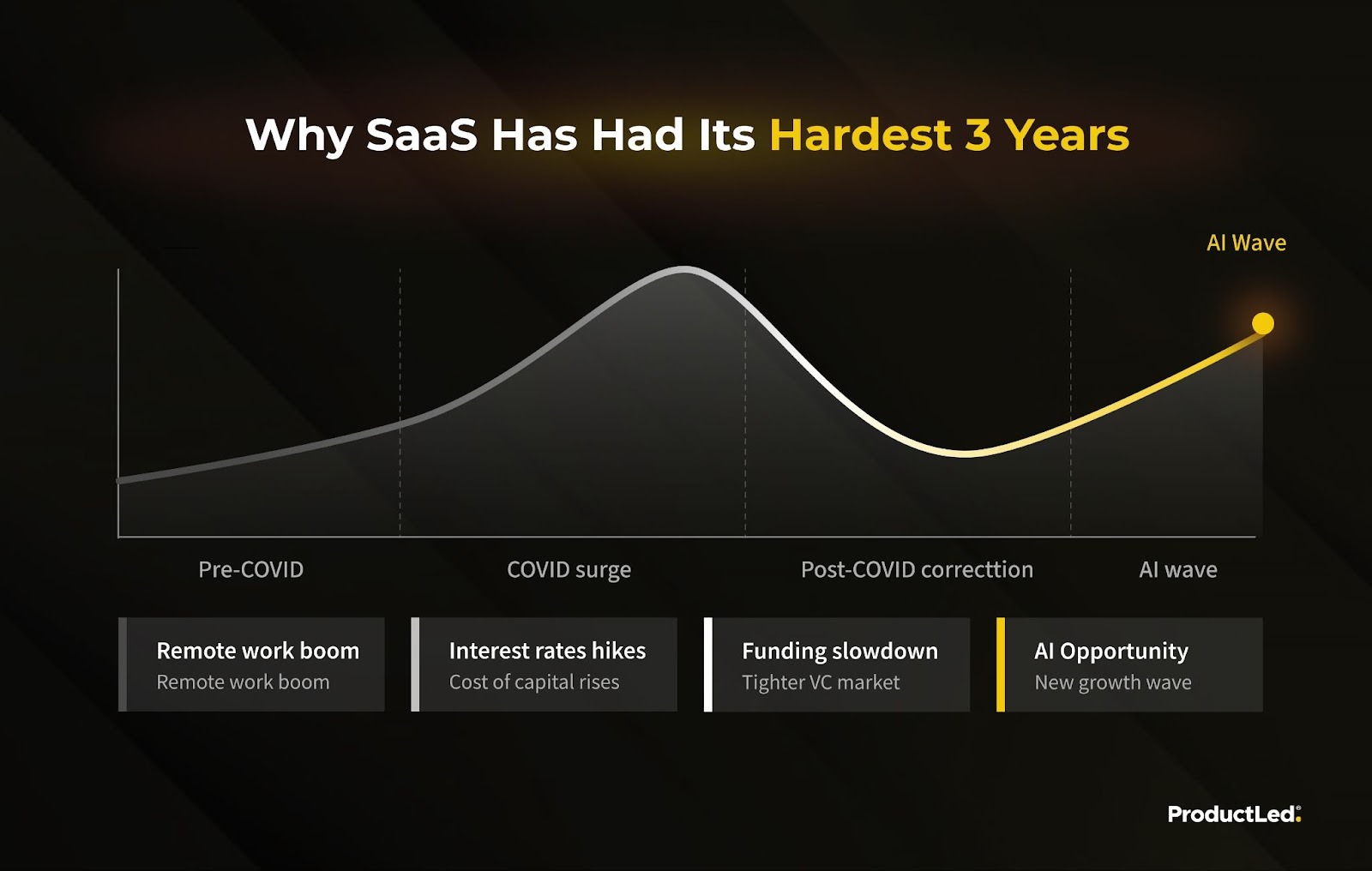
The last three years have been unusually disruptive for SaaS.
First came the long arc of SaaS adoption, where companies were steadily moving from on-prem software to cloud tools. Then Covid compressed that transition. Businesses that had delayed adoption were suddenly forced to move faster because remote work made digital tools essential.
That created a surge. Then the environment changed again.
Post-Covid demand normalized. Interest rates rose. Venture funding became tighter. The easy growth environment disappeared. Many SaaS companies that had benefited from the previous wave found themselves in a much tougher market, where buyers were more careful and investors were less forgiving.
That combination helps explain why so many teams feel pressure right now. It is not just AI disruption. It is the overlap of market maturity, funding changes, buyer caution, and a new technology wave arriving all at once.
Still, there is a strong case for optimism. SaaS is not going away. The companies that adapt and use AI well may come out of this period much stronger.
More Value, Less Money, Faster Delivery
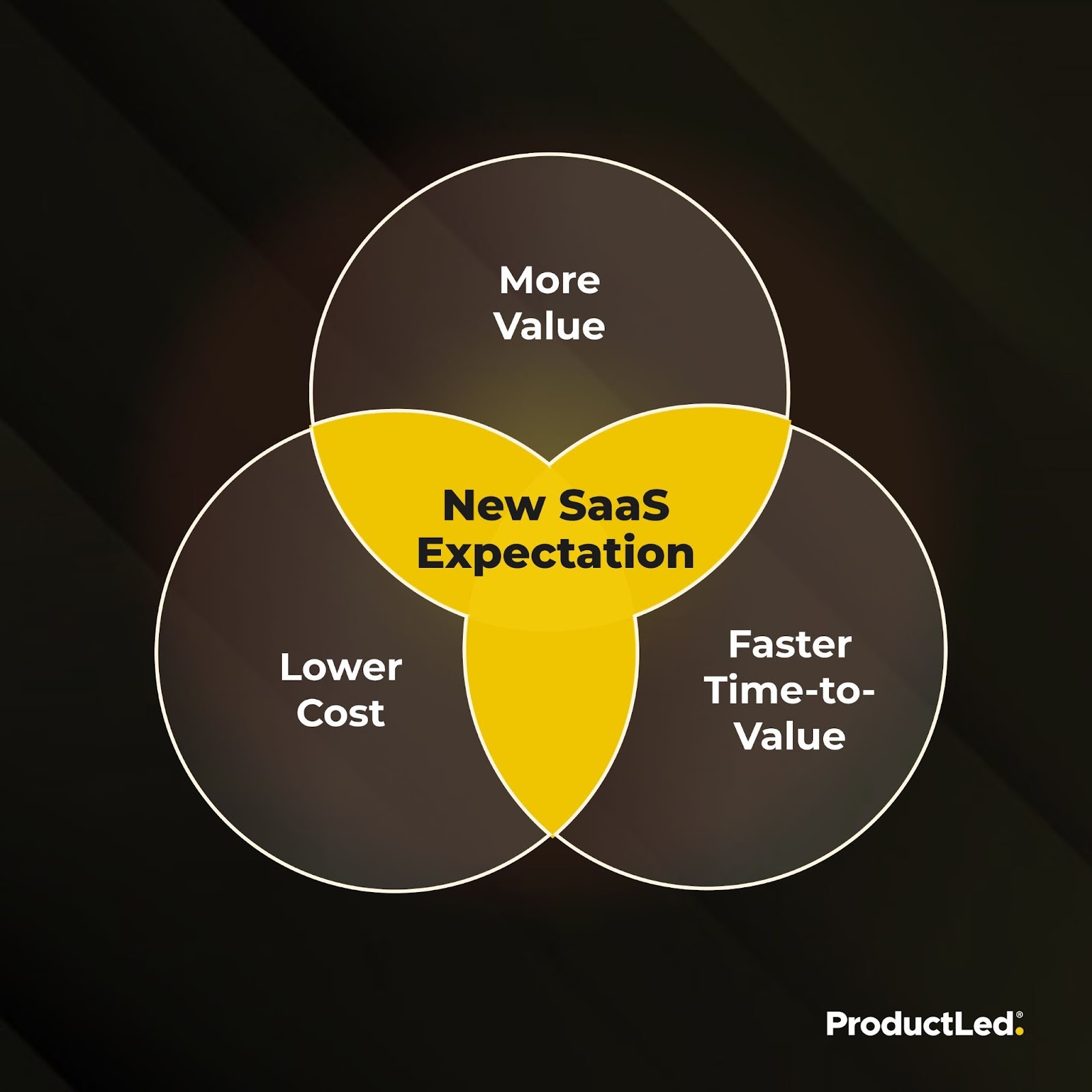
The biggest shift in customer expectations can be summed up in three demands: more value, lower cost, and faster time to value.
That expectation was already building before the current AI wave, but AI has accelerated it sharply.
Users are no longer willing to do a huge amount of setup and interpretation just to experience value. They want software to do more of the work for them. They want outcomes sooner. They want to feel progress quickly.
This changes how SaaS products need to be designed.
Basic functionality is not enough. A dashboard that simply displays information is less compelling than it used to be. Customers increasingly want help understanding what matters, where to focus, and what action to take next.
This is also one reason more SaaS companies are expanding from narrow point solutions into broader platforms. When customers expect more value from fewer tools, platform depth becomes more attractive. That creates pressure on smaller products that solve only one isolated problem.
The bar has risen. Products that feel slow, fragmented, or overly manual are going to struggle more each year. That is exactly why reducing time-to-value and rethinking onboarding around AI matter so much now.
Why ChartMogul Went Multi-Product
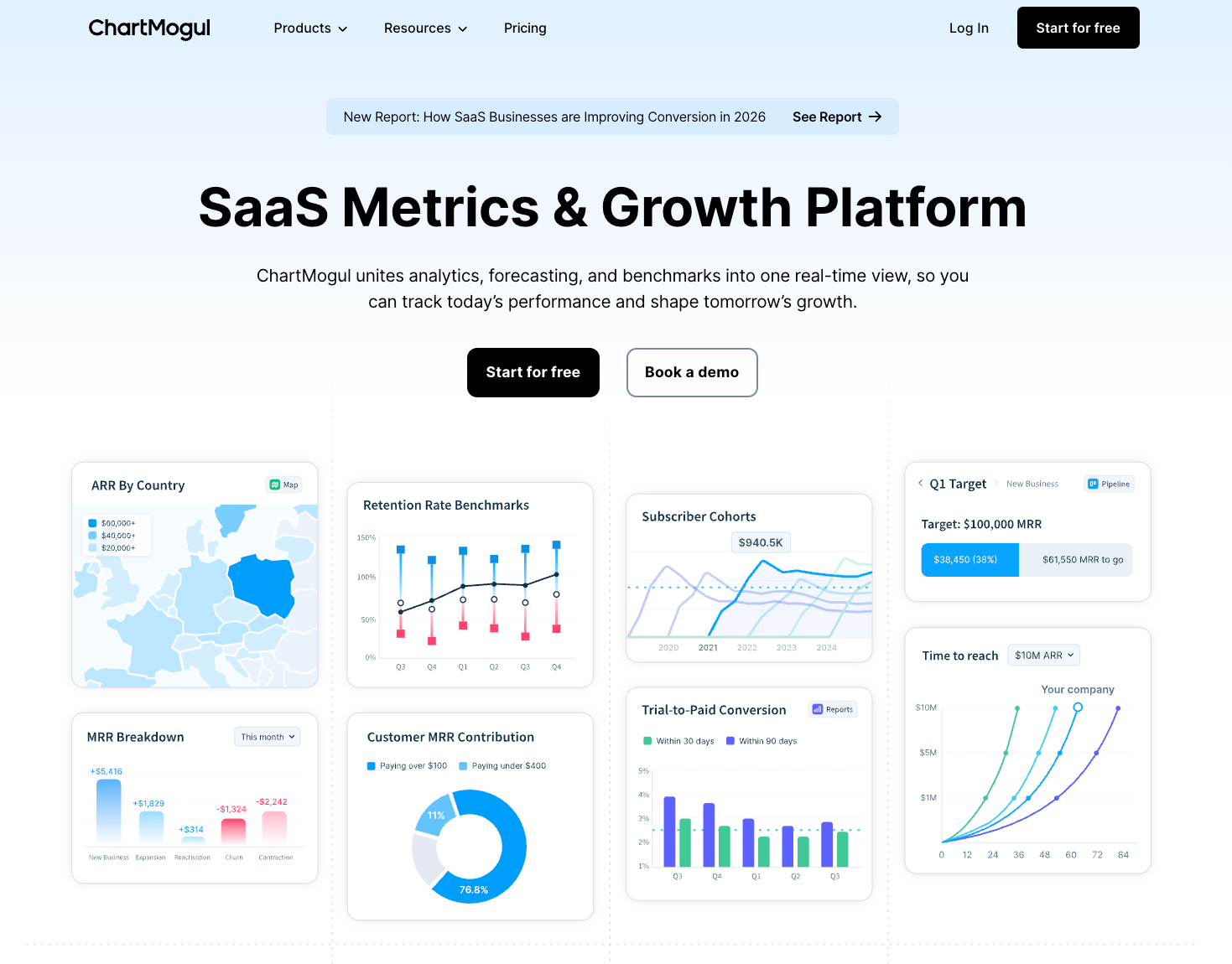
One of the clearest strategic responses to this shift is moving beyond a single product.
In this case, that meant expanding from subscription analytics into CRM. The reasoning is compelling. Revenue data tells part of the story. Customer conversations, notes, call logs, deal history, and account context tell another part. Put those together in one system, and the quality of insight improves dramatically.
For subscription businesses, that combination is especially powerful.
You can see what happened before the sale and after the sale in the same place. You can connect churn, upgrades, billing history, expansion patterns, and sales context without stitching together fragmented tools. That opens the door to better analysis and better decisions.
This is where platform strategy becomes more than a bundling exercise. The point is not simply to add more modules. The point is to create context that would be hard to produce if the systems stayed separate.
That kind of integration can become a real advantage, especially in B2B subscription businesses where revenue history and customer history are tightly connected.
How AI Can Unlock Deeper Analytics
AI may make analytics tools more valuable, not less.
A big problem in analytics today is that many products are powerful but underused. They contain lots of functionality, but most users only scratch the surface unless they are making a high-stakes decision. Deep analysis often requires several steps, lots of filters, exports, and manual interpretation.
AI can improve that experience.
Instead of digging through charts and building custom views, users can ask better questions in plain language. Why is churn rising in this segment? Why is one plan underperforming? Which customer group looks healthiest right now? That interface is more natural, and it helps users reach the value buried inside complex analytics systems.
The deeper opportunity is not just summarization. It is helping people surface signal from a complicated data stack faster and more confidently.
That is where analytics products can evolve from being reporting tools into decision-support tools. It also lines up with the broader shift described in The Evolution of Product-Led Growth: PLG x AI.
Can LLMs Replace Subscription Analytics Tools?
This is the big strategic question.
If language models can connect directly to billing systems, CRMs, warehouses, and product data, why would anyone still need a dedicated subscription analytics platform?
The answer comes down to data quality, domain expertise, and execution.
Subscription analytics sounds simple until you deal with the messy reality of actual businesses. Data needs to be normalized across billing systems. Records need to be cleaned and audited. Subscriptions need to be stitched together when systems change. Metrics need to be calculated consistently. Segmentation needs to handle edge cases like multi-currency, add-ons, plan hierarchies, and mixed billing structures.
That complexity is where specialized products still matter.
A model can only reason well if the underlying data layer is reliable and the tools exposed to it are well designed. If the input is fragmented or poorly structured, the output will be weaker too. That is why domain-specific infrastructure still has real value, especially in categories with a lot of nuance.
The likely future is not generic LLMs replacing vertical tools entirely. It is vertical tools becoming the intelligence layer that LLMs plug into.
Why Vibe Coding Won’t Replace SaaS
AI-assisted coding is real, useful, and getting better fast. But that does not mean every company should start rebuilding its own internal versions of Slack, Notion, or HubSpot.
Most founders will get far more leverage by using AI to accelerate their own roadmap than by trying to recreate mature software categories from scratch.
That is an important distinction. AI lowers the cost of building software, which means competition may increase and incumbents need to move faster. But it does not automatically make buying software irrational.
Software still needs maintenance, usability, onboarding, standards, and shared conventions. If every company creates hyper-custom internal tools, they also create training and support burdens for themselves.
The best use of AI for most SaaS teams is to ship better products faster, not to waste energy rebuilding commodity tools that already work well. That idea closely matches ProductLed’s argument in WARP Speed: the winners are not just building faster, they are delivering immediate value in ways users prefer and will stick with.
Moats, Benchmarks, and the Bloomberg of SaaS
Defensibility in SaaS has always been tricky, and AI makes it even trickier.
Traditional moats are hard to build. Still, some advantages do compound over time.
One is benchmarking data. When you work with thousands of subscription businesses, you can offer comparative insights that are difficult for a new entrant to replicate quickly. Another is domain-specific content and analysis. A strategy described as the “Bloomberg of SaaS” captures the idea well: use proprietary data, expert interpretation, and consistent publishing to become a trusted source for the industry.
There are also quieter forms of defensibility that matter a lot.
Long-term customer trust matters. Partner networks matter. Implementation support matters for larger customers with messier systems. A product-led motion works beautifully for simpler use cases, but more complex businesses often need human help and integration expertise. That support layer can become part of the moat too.
Still, one principle stands above the rest: keep customers happy over a long period of time. Durable businesses are often built less on abstract moat theory and more on repeated customer satisfaction.
The New “Wow” for Analytics Products
Years ago, the wow factor in analytics came from simply seeing metrics that were previously hard to access.
That is no longer enough.
Billing providers now include their own basic reporting. Core visualizations are becoming table stakes. So the next wave of product differentiation will come from helping users understand what matters, not just showing them more charts.
That means better benchmarking, better forecasting, stronger product experiences around context, and more proactive guidance. It also means AI features that help users identify what deserves attention inside a noisy business.
The future wow factor for analytics is likely to come from relevance. Show me what changed. Show me why it matters. Show me where to focus. Help me make the next decision with more confidence.
That is a much stronger promise than basic visibility alone. In ProductLed terms, it is the move from a merely functional experience toward something closer to a minimum lovable product.
What Keeps Nick Building After 10+ Years
There is one final idea that ties the whole conversation together: durable motivation.
Building a company for more than a decade requires more than financial upside. It requires genuine attachment to the product, the team, the customers, and the craft of building something that lasts.
That long-term orientation shows up in the broader strategy too. There is no obsession with shortcuts. No rush to chase every trend blindly. Just a steady focus on making the product better, serving customers well, and staying relevant as the market changes.
That mindset may be one of the more underrated advantages in SaaS right now.
In a market filled with noise, the companies that keep compounding are often the ones that stay close to the customer, keep improving the product, and adapt without losing their core discipline.
Resources
- 🚀 ChartMogul: Subscription analytics platform: https://chartmogul.com
- 💼 Connect with Nick Franklin on LinkedIn: https://www.linkedin.com/in/nickfranklin/
- 💼 Connect with Wes Bush on LinkedIn: https://www.linkedin.com/in/wesbush/
- 💼 Connect with Esben Friis-Jensen on LinkedIn: https://www.linkedin.com/in/esbenfriisjensen/
- 🧠 Sign up for the ProductLed Newsletter: https://www.productled.com/newsletter
Want to build your own product-led success story?
This conversation is a strong reminder that product-led growth is changing, but the fundamentals still matter. Customers want value faster. They want more clarity. They want software that helps them make progress, not software that gives them more homework.
If you are building in SaaS right now, that is the opportunity. Use AI to move faster. Build for real outcomes. Stay obsessive about product quality. And keep improving in the places customers actually feel.
If you are ready to sharpen your own product-led growth strategy, here are a few ways to go deeper:
- 👉 Book a Free Growth Session to get personalized advice on your biggest PLG challenges
- 👉 Join the ProductLed MBA™ and learn the frameworks top product-led companies use to scale
- 👉 Download the ProductLed Playbook for free resources packed with PLG strategies you can apply right away
- 👉 Subscribe to the newsletter for weekly insights on building smarter