
Foreword and introduction.
Foreword by Wes Bush
The best products in the world turn you into a superhero. They give you abilities you never had before. They keep you accountable.
They raise the bar for what you thought was possible. Yet, in every hero’s journey, there’s a predictable storyline. The main character faces a challenge and has to overcome it before they can become a true superhero that saves the day. It’s predictable, and the odds of success for a hero to succeed in a movie hover around 99.9% the last time I checked.
Yet, most products only turn a small fraction of their users into superheroes who are able to wield the new abilities of the product.
In fact, 40-60% of all new users to products won’t even bother to come back a second time to use the product after they sign up. And out of the remaining new users who check out the product a second time, even fewer will ever pick up the superhero-like abilities that your product could have granted them.
And this isn’t because your product can’t grant these users, “superhero-like abilities.” Or that the person signing up for the product doesn’t want these new abilities.
In fact, this is often never the case. Who wouldn’t want to be able to be more productive, make better decisions, or even lose weight?
The problem is there’s a challenge ahead for every user that they must overcome.
For some, it might be motivation.
For others, it might be that complexity is their kryptonite. While others are just so busy that they simply forget to use your product without a prompt.
Regardless of the user, everyone has their own unique challenges they must overcome if they’re ever going to acquire those “superhero-like abilities” your product grants them.
Once you pinpoint this challenge and help your users overcome it, they level up in a big way.
If your product is a to-do list, your user is now much more productive.
If your product is an email marketing tool, your user can now build a personal relationship with thousands of contacts. Or if your product is a fitness application, your user can now have more energy throughout the day.
Regardless of the product, the end goal is to help your users level up.
In this book, we’re excited to show you how.
Introduction
Think back to the last time you discovered a software product when that incredible realization washed over you: life is never going to be the same again.
It felt like you had just gained an exciting new superpower. Tasks that were once hard or tedious are now easier, cheaper, faster… better.
For me, this happened when I discovered Calendly for the first time, an app for scheduling meetings.
Gone were the days of checking my calendar multiple times to figure out when I was available. No more having to go back and forth with colleagues, clients, or podcast guests through email to decide on the best time for an appointment.
No longer did I need to send three different availabilities or adjust my schedule to fit various time zones.
It’s... magic.
When this struggle-to-superpower experience is seamless, it’s easy to feel an incredible sense of enchantment. When magic happens, it’s hard to revert to the way tasks used to get done. The relationship created with that product is set for life. When another comes along with newer, flashier, and sexier features, it’s not even an option.
The Cost of Neglecting User Onboarding
Unfortunately, for most software products, this experience is anything but seamless. The signup and onboarding flow for new users are often afterthoughts to the “core” features of the software. The Product team is preoccupied with releasing new features, while the Marketing and Sales teams are consumed with acquiring more customers.
Everyone is busy, so most new users fall through the cracks; for most software products, 40% to 60% of users will sign up once and never come back.
When a product’s onboarding is neglected, it’s like throwing a massive party with balloons, fireworks, and a bouncy castle in your backyard, yet no one can get past the front door. It’s a waste of time and resources for everyone involved:
- The Product team may have spent days and hours planning and building the most exciting party in town.
- The Marketing team may have spent ad dollars to promote it.
- The Sales team may have focused their time and energy on providing a customized party experience to everyone invited.
The irony in all of this is that user onboarding is usually the only aspect of a product that every single user will experience, including those who decide it isn’t right for them.
So, the million-dollar question is: are you wasting the investment in the Marketing, Sales, and Product teams with an experience that neglects the needs of first-time users? Or are you honoring that investment with a seamless first-product experience?
You can’t afford to neglect your user onboarding experience; your product’s success depends on it. Get it right, and new users will quickly experience the value of a product. In the end, they experience a “Eureka!” moment and embrace the product into their lives and become raving fans.
On the other hand, if you get onboarding wrong, it’ll have a snowball effect on growth, including user retention, revenue growth, and customer acquisition cost.
The EUREKA Framework
At ProductLed, we’ve worked with hundreds of product-led companies like Mixpanel, Ubisoft, Outsystems, and more to improve their user onboarding experience. As a result, we’ve developed a simple but effective framework that delivers an exceptional first impression. It ensures every new user experiences the true value of your product, shaping them to be happy customers for years to come.
The backbone of this book is the six-step EUREKA framework. It draws on fields of growth marketing, UX design, customer psychology, and copywriting for a step-by-step approach to improving your own user onboarding experience. Included are real-life examples of how this framework has been applied to fast-growing companies.
The strategies covered are relevant to anyone working to improve their user onboarding experience. It encompasses:
- Building a cross-functional onboarding team.
- Identifying your onboarding success criteria.
- Minimizing the time it takes for users to experience the value of a product.
- Simplifying the signup process and designing the first product experience for new users.
- Creating behavior-based onboarding emails, in-app messages, and additional communication methods.
- Involving Sales and high-touch support in the onboarding process.
Whether you’re creating a new onboarding flow or improving an existing one, my goal is for you to absorb and apply the strategies outlined in this book. In doing so, new users will thrive with your product. They won’t just experience the EUREKA moment with you—they’ll become lifelong customers and champions for your product.
Let’s get started!
Who Is This Book For
Most of the concepts and frameworks discussed in this book would be more applicable to those looking to improve an existing user onboarding experience. In several parts of this book, I assume that you have product and user data. If you are working on building a user onboarding experience from scratch, most of the concepts in this book still apply. For now, you can skip over the parts where I ask you to review the product and user data.
How To Use This Book
At the end of each chapter, you’ll find a few bulleted takeaways. Review them, jot them down in your notebook and share them with your colleagues. This book is best read as a team so you can talk about and implement the concepts.
If you’re looking to improve your product’s user onboarding experience, I’ve also included an Action Items to Improve Your Onboarding section to help guide you through the next steps.
How This Book is Organized
Chapters 1 to 3: I cover the fundamentals of user onboarding; the first step to improving user onboarding is to understand what it is and why it’s so important to your company’s growth.
Chapters 4 to 9: I expand on each of the six steps in the EUREKA framework:
- Establish your onboarding team.
- Understand your users’ desired outcomes.
- Refine your onboarding success milestones.
- Evaluate your onboarding path.
- Keep new users engaged.
- Apply the changes and repeat.
Chapters 10 to 11: I share the next steps, including how to involve the sales team in the user onboarding process.

Ramli John
Ramli John is the author of Product-Led Onboarding, focused on helping SaaS companies improve onboarding, activation, and retention.
Go all in on product-led growth.
Get three complementary playbooks to turn your product into your biggest growth engine. Read or listen anywhere, on your own or with your team.
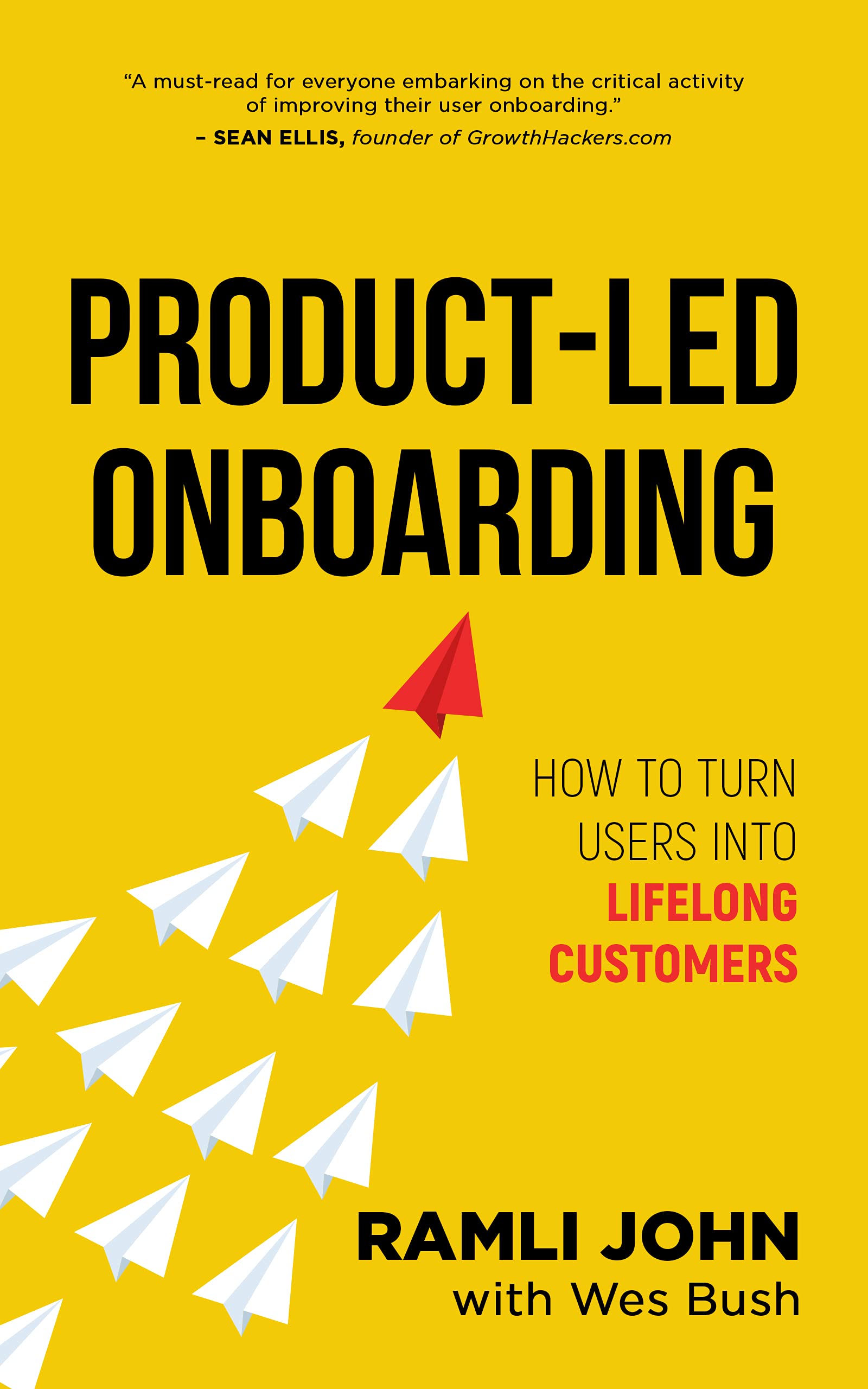
Take {book} with you.
- Download the PDF and EPUB
- Listen to the full audiobook
- Read or listen on your preferred device
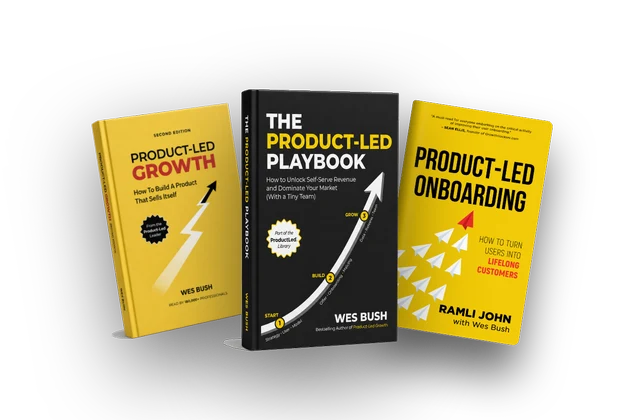
Get the complete ProductLed Library for $10 more.
- Product-Led Growth
- The Product-Led Playbook
- Product-Led Onboarding
- All three as PDFs, EPUBs, and audiobooks
- Wes Bush AI to help you apply what you learn
For individual use.
Get all three books
Give your team a shared playbook for growth.
- Everything in the three-book bundle
- Access for everyone on your team
- Each teammate chooses how to read or listen
- Wes Bush AI for every teammate
One purchase. Unlimited teammates.
Get the team bundlePrefer print? Get a paperback on Amazon →