
Teamwork makes the dream work, but a vision becomes a nightmare when the leader has a big dream and a bad team.
John Maxwell
“Bond. James Bond.”
From the first time I saw a James Bond movie, I’ve been a big fan. One weekend, I binge-watched all 24 films, starting with the first 1962 film Dr. No with Sean Connery, to the most recent 2015 one starring Daniel Craig in Spectre.
What’s fascinating about James Bond is that he’s invincible. No matter how many villains, bullets, and grenades are thrown at him, he escapes every seemingly impossible situation – all without a drop of sweat on his forehead. He’s a one-person killing machine taking on multiple criminals alone. It’s too good to be true, isn’t it?
If Bond was real, it’s estimated that he would have died within seven minutes of the movie Skyfall. After all, a uranium depleted shell penetrated his chest. Medics and nurses who reviewed the film concluded that this, “would have turned his lungs inside out and killed him.”
Being a hero looks great in the movies. But in real life, it rarely works out.
The reason I bring this up is to warn you of the number one pitfall I see companies make when trying to improve their user onboarding. Instead of working across multiple functions, there is usually one person or department (typically the product team) who works in a silo from the rest of the company to do it. Much like a James Bond movie, it looks great on the surface level. But in reality, it’s a recipe for disaster.
User onboarding should not be a solo effort but rather a team sport. You can’t approach it as James Bond does. It’s important to build a dream team like Marvel’s Avengers by bringing together the “superpowers” of different departments or functions. This way, you’re taking a holistic approach, which allows you to deliver an effective, immersive, and seamless onboarding experience for new users.
The Importance of a Cross-Functional Onboarding Team
Cross-functional collaboration is the key to product growth. One of the damaging effects of departmental silos is how they slow innovations that drive growth.
The ability to collaborate in networks is more important than raw individual talent. But only 25% of senior executives [we surveyed] would describe their organizations as effective at sharing knowledge across boundaries, even though nearly 80% acknowledged such coordination is crucial to growth.
Authors of McKinsey Report
Often, this is exactly what happens within companies. Marketing works on a few onboarding and product marketing emails. Product focuses on UI tweaks in the signup process and first-use workflow. The sales team touches base with users once in a while, trying to convince them they need an upgrade. Support waits until a user needs help.
Every team is contributing to the user onboarding experience, but they’re all doing it in isolation.
Every great user onboarding experience starts with many hands working collaboratively to make it happen. Before auditing your current onboarding flow, redesigning the first user experience, and rewriting onboarding emails, it’s imperative to establish a cross-functional onboarding team. This is the first step in the EUREKA framework.
In this chapter, we’ll examine the roles and responsibilities of onboarding teams. And also, who should own it and how to get started with establishing an onboarding team.
The Roles
The process to improve user onboarding works best when it’s a team effort, ideally from across different functions within a company. Each team involved in the user onboarding experience holds a piece of the puzzle and can bring a unique perspective on how to best onboard new users. Ideally, teams need to be engaged from the get-go: from Acquisition to Revenue in the Pirate Metrics Framework.

The specific makeup of an onboarding team varies from company to company and also from product to product. The size of the team will also vary widely, as does how narrow or broad-ranging the scope of their work is. At this stage, it’s important to identify which teams contribute to the success of new users.
This could include the following roles:
Product Managers
Product managers typically orchestrate the in-app user onboarding experience with designers and engineers: from the signup to the first-use workflow. They oversee implementing any triggers inside your product. This includes (but is not limited to) progress bars, product tours, and checklists that help guide new users to their desired outcomes.
The role of an in-app user onboarding experience is critical because all new users are lazy, vain, and selfish in the first 15 seconds. They don’t have the patience to read directions, especially if the learning curve is high. They also only care about their own desires and needs. A product manager’s job is to minimize the time it takes for new users to experience the value of a product as quickly as possible.
In most product-led companies, product managers are well suited to lead the onboarding team. In large part, this is because most product managers typically work cross-functionally with the marketing, user research, engineering, and UX design teams.
Marketers
Marketers communicate the value of a product. They use tools, resources, and content to educate new users to become effective, regular users. This could include crafting and managing lifecycle email campaigns, templates, case studies, and helpful tips – each designed to draw the user’s attention to the core actions of a product.
Marketers are critical in the user onboarding process because no matter how good the in-app user onboarding experience is, 40% to 60% of users will sign up once and never come back. By using external triggers such as onboarding emails, browser notifications, SMS messages, direct mailers, or retargeting ads (normally the job of a marketer), you can remind users how the product improves their lives.
Furthermore, great marketing builds trust and creates a personal, emotional connection. This hits every touchpoint: from ads, blog posts, and landing pages all the way to onboarding copy, in-app messages, and emails. A marketing team needs to create a cohesive and consistent content strategy that amplifies the need for a product or the pain of their situation to help them overcome their anxieties and objections.
Customer Success
Those responsible for customer success and happiness should lend a huge hand in the onboarding process. Understanding a user’s wants and needs is crucial during onboarding. Customer success teams are usually equipped with the empathy and product know-how necessary to show users immediate value.
When users stumble during the user onboarding process, it's up to customer success to reach out and measure how they feel as they progress. Since they’re the first point of contact for issues and problems new users face, they can provide invaluable user feedback for the business. Every support question and survey response should be recorded and relayed to where it's needed to enhance the user onboarding experience.
Sales
With hybrid or sales-assisted onboarding, it’s the sales team who reaches out to potential customers to ensure they're receiving a ton of value from a product. Salespeople tend to take special care of individual users while laying out expectations for further features of the product to motivate them to build a deeper, more frequent habit with a service, such as premium features or subscription benefits.
Using product engagement data from the product and marketing teams, sales teams often use demos to provide customized walk-throughs of the product. This is how two teams can work hand-in-hand: the sales team can build on the relationships first initiated by the marketing team.
The Onboarding “A” Team
It’s important here to emphasize that who should be included on the onboarding team depends on what exactly is involved in the early stages of the new user’s journey. For example, someone
from the marketing team may be involved in the onboarding because of the way a company’s CRM tools are interconnected.
For an internal product that’s used only by employees within a company, the onboarding team might just be a few product managers and a marketer. But for products sold to small and medium-sized businesses or enterprise companies, the onboarding team could consist of many teams: marketing, sales, product, design, and customer success.
Here’s a summary of the roles that could be in an onboarding team.

For your onboarding, decide on who should be involved and what their primary responsibilities are. If you’re wondering who should be in your onboarding team, ask yourself which team or person is responsible right now for:
- Defining your product’s positioning and messaging.
- Running acquisition campaigns.
- Creating and maintaining onboarding communication such as emails, in-app messages, external notifications, or direct mail.
- Designing and implementing the user experience for the signup and first use workflows.
- Converting the free users to paying customers.
- Supporting new users if they get stuck during the user onboarding process.
Who Owns Onboarding?
This is the one question I’m always asked: who should “own” onboarding?
My response is this: it’s not about owning but more about championing user onboarding within an organization. It depends on which team is the closest to the customer and has the best ability to pull in people from different departments to focus on delivering an immersive and seamless experience for new users:
- At Drift, it’s the product team that champions user onboarding.
- At Jungle Scout, it’s the customer success team.
- At Sprout Social, it’s a cross-functional team led by marketing.
- At Facebook, it’s the growth team.
The key is that whoever owns user onboarding needs to ensure it’s a cross-functional effort.
Leadership Buy-In
Due to the nature of a cross-functional onboarding team, it’s important that a high-level executive is given responsibility for the team. This ensures everyone has proper authority to cross the bounds of established departmental responsibilities.
Improving user onboarding can’t be a side project. It requires attention and continuous improvement—a product’s growth depends on it. As discussed in Chapter 2, it’s a retention lever and revenue multiplier, and works to increase profitability by reducing your CAC.
Without a clear commitment from leadership, an onboarding team will find themselves battling bureaucracy, inefficiency, and inertia. Whether it’s the founder, CEO, VP of Product, or VP of Growth, someone from executive leadership needs to champion onboarding to assure sustained success.
Getting leadership buy-in is much easier said than done. Everyone doesn’t just magically understand the need for an onboarding team. There is a lot of internal influence and buy-in from the highest levels of leadership, even for smaller companies.
I’ve created Chapter 2 with the sole purpose of explaining the benefits of improving the user onboarding experience, as well as describing the costs associated with neglecting it. You can download the PDF version of it at productled.com/eureka-chapter-2 and share it with your team.
If you want to take it a step further, create the retention curves for users who did and didn’t complete your current onboarding process. I cover this in more detail in Chapter 6.
Getting The Team Started
Once you’ve gotten leadership buy-in and identified your onboarding team, the next step is to come to a common understanding of what onboarding means within your own company. Everyone needs to be aligned. Ask your team the same questions we discussed in the first section of this book:
- How do you define user onboarding?
- Why is user onboarding important to your product’s growth?
- When does user onboarding start? Is it after a user has already signed up for your product?
- When does user onboarding end? How do you define a successfully onboarded team or user? (We’ll discuss this in detail in a later chapter when I’ll help you define your onboarding success metric and criteria.)
- What are the biggest opportunities and challenges in your product’s onboarding?
The best way to iron out these details is to start with a kick-off meeting. Discuss the common goal of the onboarding team, who the core team members are and their functions, and why it is critical to the growth of the company. Define what success looks like and put it all in writing.
The Next Step
The next step of the EUREKA framework is understanding your user’s desired outcome, where you'll gather qualitative and quantitative data about your users, such as:
- Who are your best customers? What do they do early on in the user onboarding process?
- How many new users sign up for the product and never come back? What are some reasons why?
- Why did new users sign up for your product? What triggered them to sign up?
- Where are users getting stuck and dropping off in the user onboarding journey? Why?
Before wrapping up the kick-off meeting, determine who is going to take charge to gather this data and decide when everyone is going to meet next.

Go all in on product-led growth.
Get three complementary playbooks to turn your product into your biggest growth engine. Read or listen anywhere, on your own or with your team.
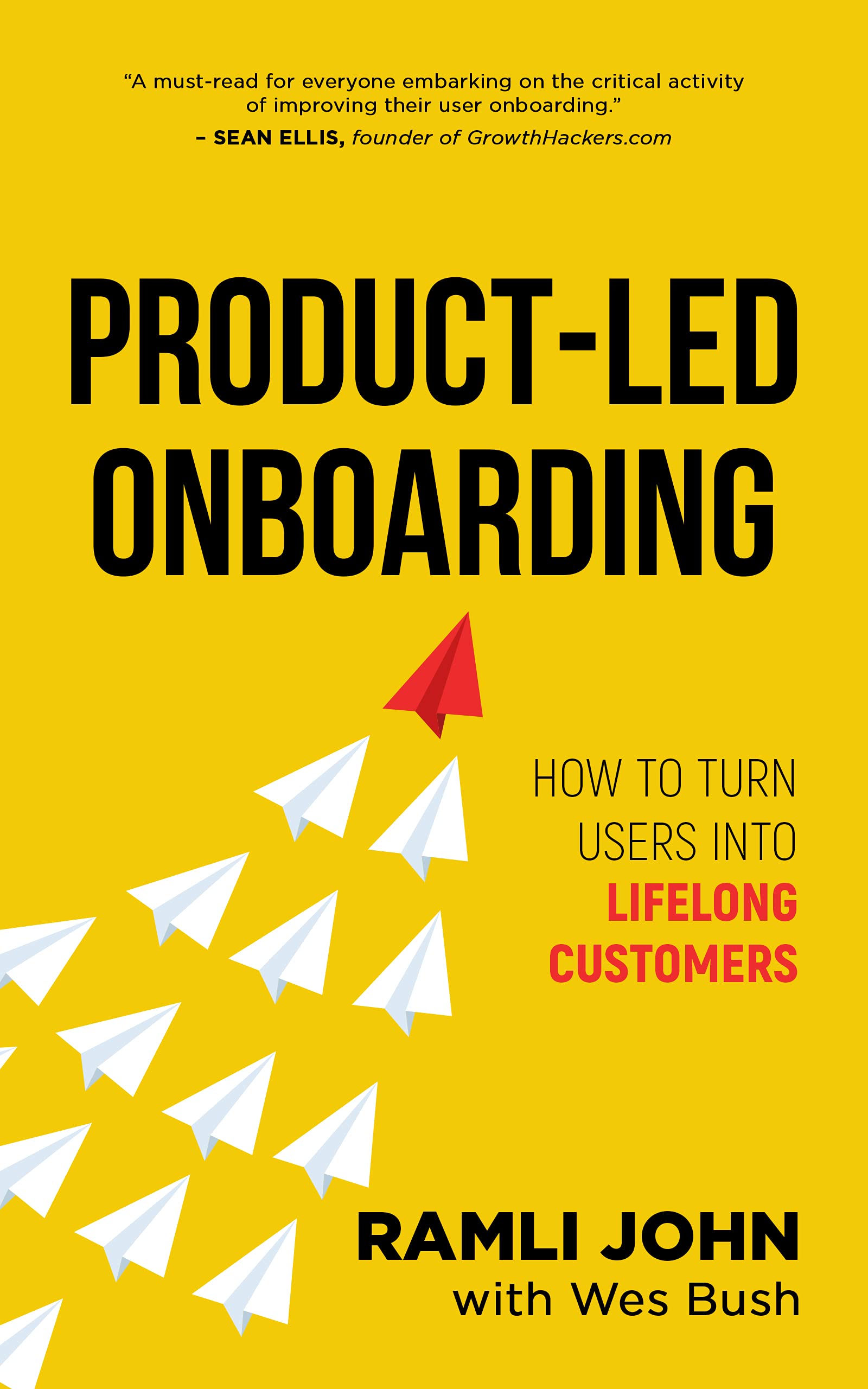
Take {book} with you.
- Download the PDF and EPUB
- Listen to the full audiobook
- Read or listen on your preferred device

Get the complete ProductLed Library for $10 more.
- Product-Led Growth
- The Product-Led Playbook
- Product-Led Onboarding
- All three as PDFs, EPUBs, and audiobooks
- Wes Bush AI to help you apply what you learn
For individual use.
Get all three books
Give your team a shared playbook for growth.
- Everything in the three-book bundle
- Access for everyone on your team
- Each teammate chooses how to read or listen
- Wes Bush AI for every teammate
One purchase. Unlimited teammates.
Get the team bundlePrefer print? Get a paperback on Amazon →