
Think about the last time you walked through an airport duty-free section.
Perhaps you passed the cologne counter and a scent caught your attention. You stopped, sprayed it on your wrist, and smelled it. And in that moment, the product was doing all the selling. Nobody gave you a slide deck on the fragrance notes. Nobody asked you to book a demo. If you liked it, you might have bought it.
That’s product-led growth.
PLG is a go-to-market strategy where your product is the primary way you acquire, activate, and retain customers.
People experience value before they pay. You’ve already experienced it firsthand. Calendly lets you schedule meetings without an account. ChatGPT proves itself before asking for a dollar. Slack became indispensable before anyone talked about pricing. In every case, the product earned the sale.
That sounds simple. While the concept is, the execution is where it gets hard.
The Core Shift
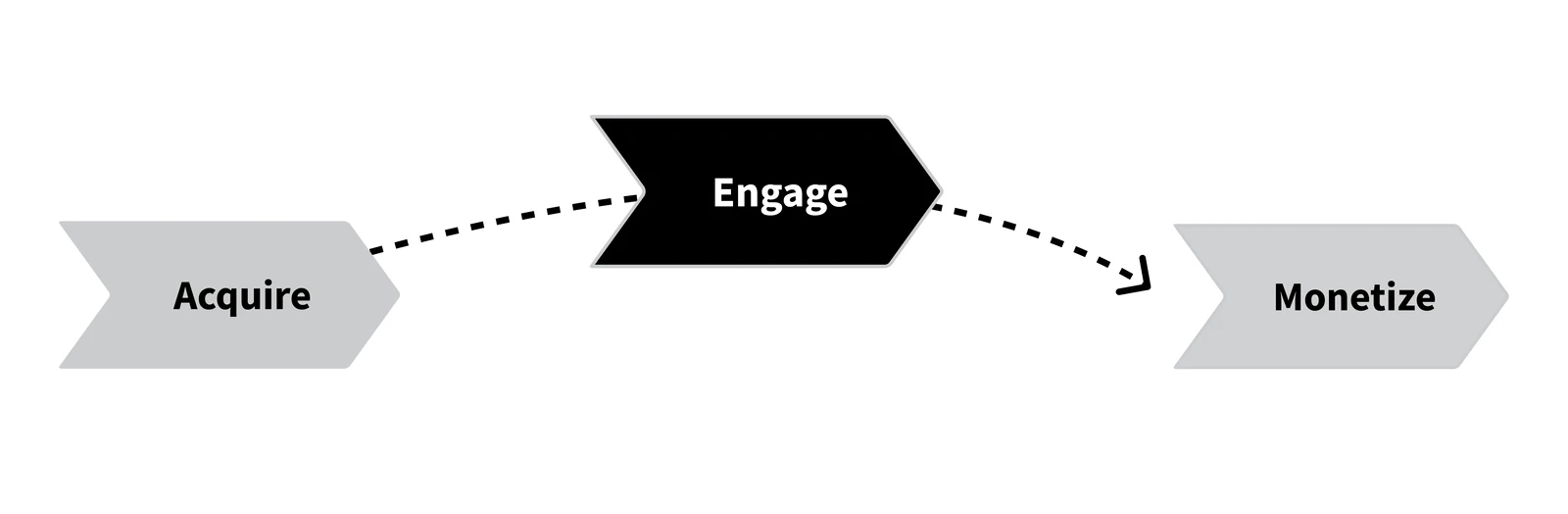
In the typical sales-led growth model, the customer acquisition process follows a specific sequence: acquire the customer’s attention, monetize them, and then deliver the product experience.
In a PLG model, the order flips. Engagement comes before monetization.
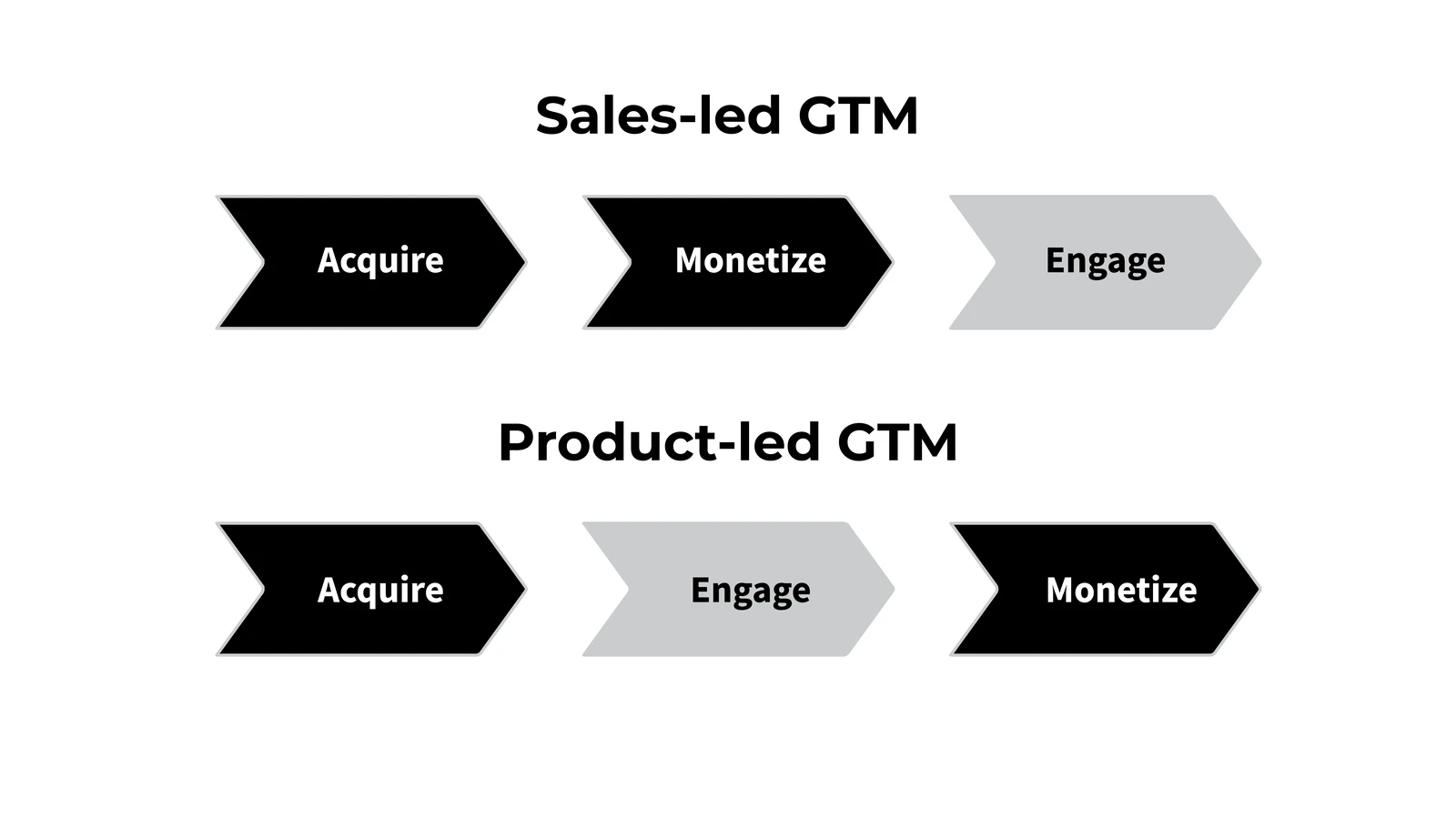
By offering a free trial or a freemium version of your product, you allow customers to engage with your value proposition before you monetize them. In a successful product-led business, users upgrade as a result of getting value from your product.
Since customers are solving a real problem with your product and can’t imagine going without it. The upgrade feels obvious, not forced.
That single shift changes everything about how you build and grow a company.
In a sales-led model, you spend money to convince someone that your product is worth buying. In a product-led model, you let the product prove it. One is persuasion, the other is proof.
PLG Is the Motion. Becoming Product-Led Is the Transformation.
Understanding the core shift is the first step. But most companies fail at PLG because they treat it as a tactic rather than a transformation.
After working with more than 430 companies, I’ve seen the same pattern time and again. The companies that saw groundbreaking results weren’t the ones that slapped a PLG motion onto their existing business. They designed the entire business to be product-led.
Their teams understood PLG and wanted it. Their metrics tracked product-led outcomes, not just the sales pipeline. PLG wasn’t a growth hack bolted onto the side. It was how they operated.
One Series B company with $12M ARR launched a freemium tier and saw signups spike, but conversions stalled. The product didn’t deliver enough value, and nothing internally changed. The issue wasn’t freemium.
It was misalignment.
PLG is the GTM approach. Becoming product-led is the real transformation. When the entire organization aligns around the product, that’s when PLG stops being a funnel optimization and starts being a competitive moat. This is the part most teams struggle to do on their own. That’s exactly what we help companies do at ProductLed.
Keep that distinction in mind as you read the rest of this book. Every framework, every strategy, every example is designed to help you build a product-led organization, not just add a PLG tactic to your existing business.
Why PLG
When PLG works, something remarkable happens. People sign up for your product, get to value on their own, and upgrade without ever talking to your team.
I call this Effortless ARR.
I saw this firsthand with a company I worked with early in my career. They had a 14-day free trial and were getting 300 to 400 signups every month.
My job was to get more people to sign up. After a few months, I noticed something. The free-to-paid conversion rate was remarkably consistent, around 25%. Every month, roughly 100 of those signups would upgrade on their own.
By the 15th of each month, I could open the ChargeBee dashboard and forecast the rest of the month with about 95% confidence. If the numbers looked strong, I didn’t need to do anything more. No frantic outreach or last-minute sales pushes. The product was converting users because it delivered real value during those two weeks.
That’s what Effortless ARR feels like. You’re not calm because you’re ignoring the numbers. You’re calm because the numbers are predictable. The product is doing the work.
If I was below target, the fix wasn’t "call more people." It was "get more signups." The conversion engine was already built. I just needed to feed it.
Effortless ARR doesn’t mean building the product was effortless. Getting to this point takes real work. You have to design an onboarding that gets users to value fast. You have to build a free model that proves your product’s worth. And you have to make the upgrade path feel like the obvious next step, not a sales pitch. Most teams understand this in theory but struggle to connect all the pieces in practice.
But once you build that engine, growth starts to compound without linearly adding headcount. In a sales-led company, if you want to double revenue, you typically need to double your Sales team. In a product-led company, the product does the heavy lifting.
Userflow hit $4.6M ARR with just three employees. That’s not because they were working 20-hour days. It’s because they built a product that users could sign up for, experience value from, and upgrade on their own.
Or look at Midjourney—$200M in revenue with fewer than 40 employees. Or Genspark AI with $200M+ with 50 employees. That kind of revenue per employee is only possible when the product is doing most of the work.
This is what Effortless ARR looks like in practice. Your revenue grows, your team stays small, and your profit margins get better every year. The product builds a moat that gets deeper over time because every improvement to the product experience compounds. Better onboarding means more users reach value. More users reaching value means more upgrades. More upgrades mean more revenue to reinvest into making the product even better.
Here’s the trade-off most founders don’t think about.
Sales-led growth is easier to get started, but harder to scale. You hire a sales rep, they close deals, and you see revenue. It works. But scaling means hiring more reps, managing a bigger team, and watching your margins thin out.
Product-led growth is harder to get started, but far easier to scale. You have to invest upfront in building a product experience that sells itself. That’s not trivial. But once you’ve built it, growth compounds instead of adding cost.
The question for every founder is simple: how do you want to scale?
What Happens When You Try PLG Without Understanding It
I learned this the hard way at Vidyard. I told you earlier about the free trial that bombed and the Chrome extension that took off. But I didn’t tell you the full story of what went wrong.
We treated PLG as a product initiative. Could we generate more leads with a trial vs a demo request?
We added a free trial to the website and expected it to work on its own. But we hadn’t made it easy for users to get to value. And nobody was really that focused on optimizing this experience.
When I tried to rally other teams to fix it, the answer was that the company had other priorities. It wasn’t on the roadmap.
That’s the difference between adding a free trial and building a product-led business. One is something you bolt onto your existing sales-led business. The other is how your company operates. The Chrome extension succeeded because it was designed from the start to deliver value immediately. The free trial failed because we treated it as a bolt-on.
As Michael Litt, CEO of Vidyard, later put it: "Treating product-led growth as just a product initiative rather than a company-wide strategy is a recipe for failure."
This book will show you how to build it the right way. But first, I need to address the most common objection I hear when I talk about PLG.
"That sounds great for software companies. But my business is different."

Go all in on product-led growth.
Get three complementary playbooks to turn your product into your biggest growth engine. Read or listen anywhere, on your own or with your team.
Take {book} with you.
- Download the PDF and EPUB
- Listen to the full audiobook
- Read or listen on your preferred device
Get the complete ProductLed Library for $10 more.
- Product-Led Growth
- The Product-Led Playbook
- Product-Led Onboarding
- All three as PDFs, EPUBs, and audiobooks
- Wes Bush AI to help you apply what you learn
For individual use.
Get all three books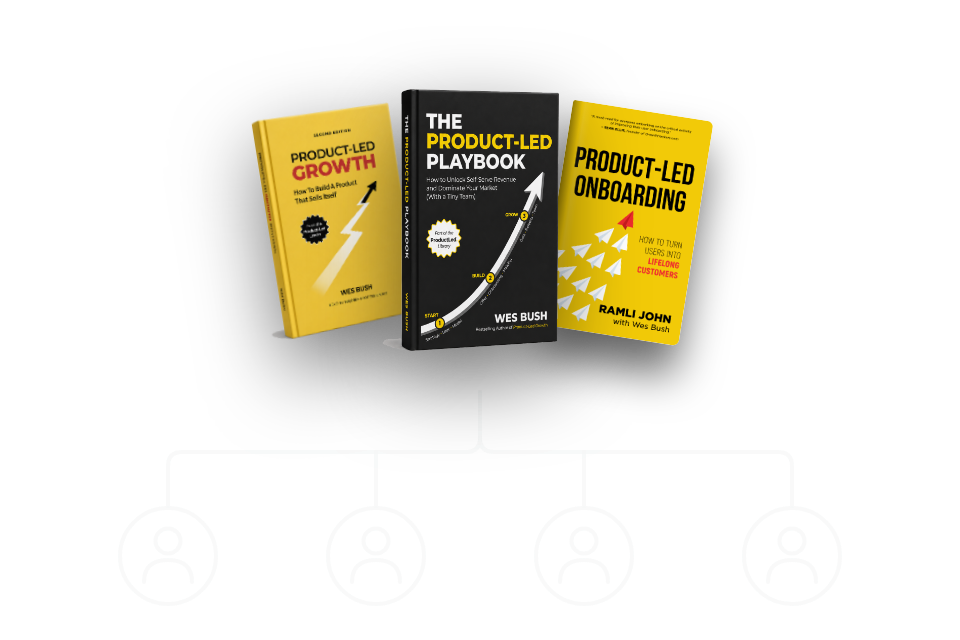
Give your team a shared playbook for growth.
- Everything in the three-book bundle
- Access for everyone on your team
- Each teammate chooses how to read or listen
- Wes Bush AI for every teammate
One purchase. Unlimited teammates.
Get the team bundlePrefer print? Get a paperback on Amazon →