
Will You Become the Obvious Choice?

Rate yourself from 1 to 10.
Odds are, you’re in a competitive market. Everyone wants to steal your market share.
Creating a blue ocean strategy won’t work for long. You need to thrive in a red ocean and become the obvious choice for buyers. Now.
There’s only one obvious choice in every market:
One Zoom.
One Slack.
One Canva.
One HubSpot.
But here’s what might surprise you: it’s actually simpler to become the obvious choice than uprooting the current one.
Once you establish yourself as the obvious choice, your users automatically recommend your product over others, even if competitors eventually offer similar or slightly better products.
It might seem strange, but it’s common—when people find a product they love, they stop searching for alternatives and stick with what they know.
Over the long run, this free advertising boosts profits, which gives you more gold to invest in making the best product and hiring top talent. This makes you harder to copy over time.
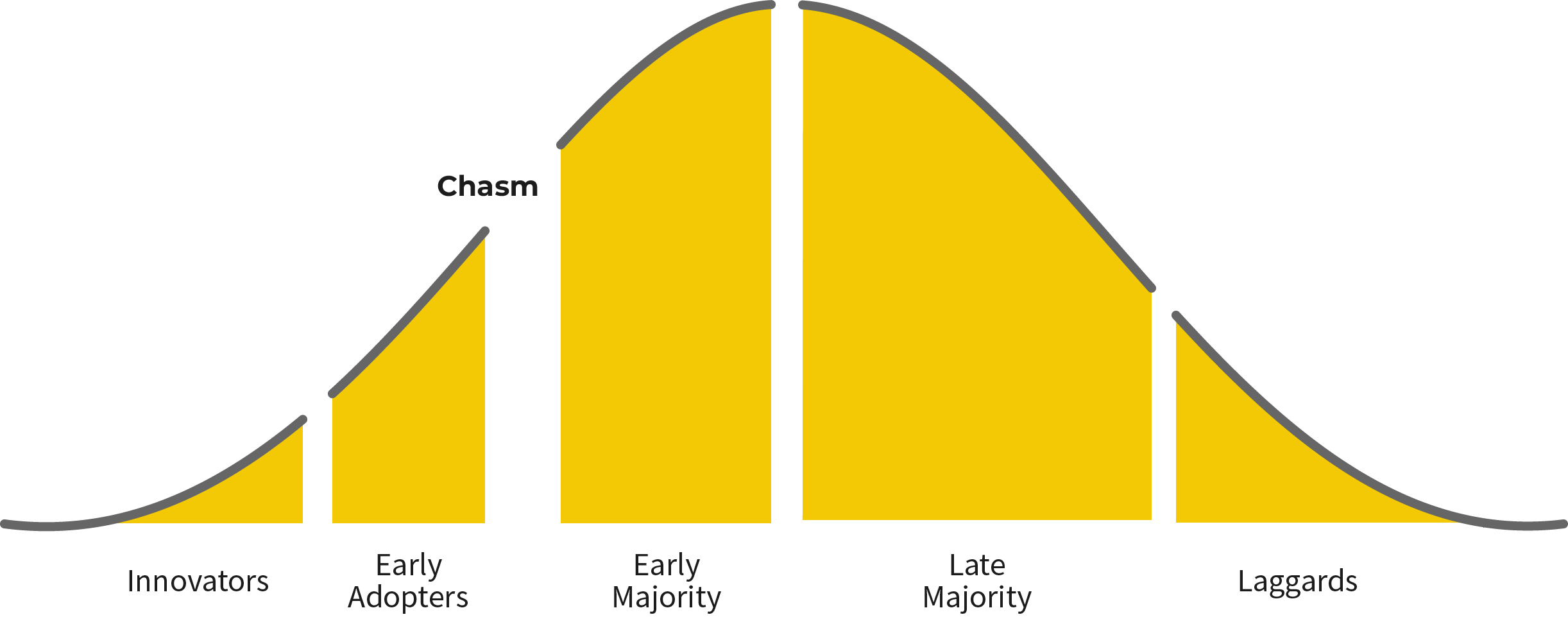
Geoffrey A. Moore covers this brilliantly in Crossing the Chasm. The book highlights how to cross the chasm from early adopters (who are willing to take risks on new technology) to the early majority (who are more cautious and pragmatic). To reach the next group of potential users, focus on getting your current users to recommend your product.
Obvious-choice products don’t just cross the chasm faster. They win over the innovators, early adopters, late majority, and laggards. Laggards, in particular, are more risk-averse and just want to use what everyone else is already using.
That’s why there are jokes like “nobody gets fired for choosing Microsoft.” Once you become the obvious choice, it’s mind-numbingly hard for competitors to dislodge you from that position.
So the only question is, will you become the obvious choice first?
Predicting Your Future
If you look ahead into the next three years, you will end up in one of four circumstances.
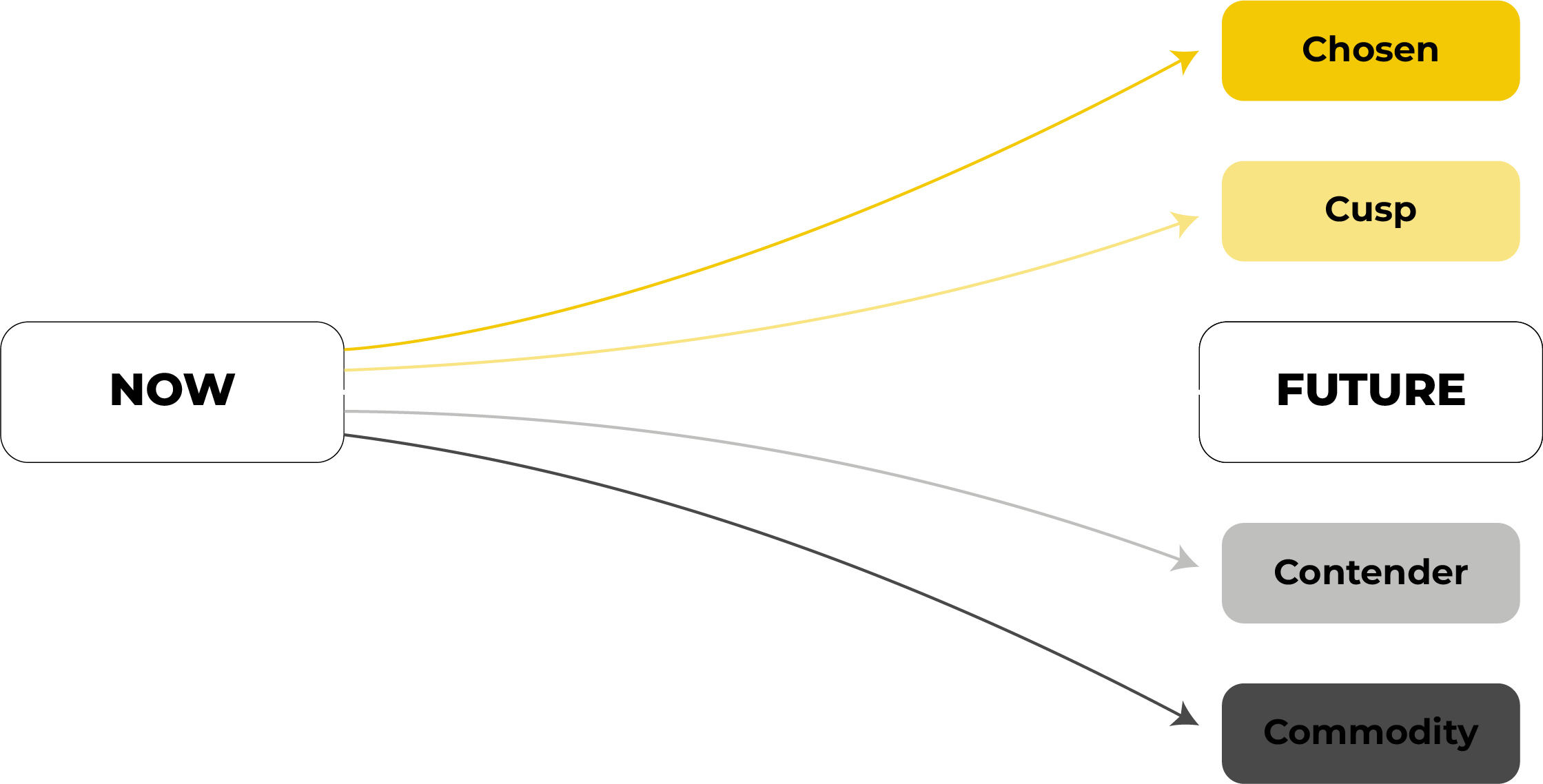
Commodity: You might be seen as just a Commodity in your market, where customers only choose your product if it’s the cheapest. You’re struggling to attract customers and make a profit. It feels like the game is rigged against you. How would it feel to be seen as a commodity a year from now?
Contender: You might find yourself being seen as just another player in your market. Most users don't know about you, but you offer something unique. Contenders often get acquired for their unique features or copied by those already on top. Being a contender is tough because a unique approach isn't enough to protect your business—competitors can easily replicate what you do. You must gain meaningful market share to stand out. What would being a contender feel like?
Cusp: You could be on the cusp of your market, battling it out with a few tough competitors. You’d be fighting over a minority share of the market. As soon as you develop a new feature, competitors quickly copy you. As soon as you find a new marketing channel, competitors copy you. Because you lack sizable profits and are neck and neck with so many competitors, it feels like it’s a constant fight to stay on the cusp. While the obvious choice is thinking long-term, you’re stuck in the short-term, trying to outmaneuver the competition. What would being on the cusp of your market look like for you?
Chosen: You could reach the pinnacle of your market. You have become the obvious choice, and your market automatically refers to your product over any other solution. You take the lion's share of the market and enjoy automatic profits. Top talent is knocking at your door. What would becoming the obvious choice look like for you?
Which of these four circumstances best describes where you are at today? Be honest. Now, where do you want to be in the next three years?
To get there, you must do what’s required. Moving up from one line to the next gets riskier, harder, and costlier as you progress. Many people think time is a straight line, but it’s not. Time curves everything. Time is the ultimate compounding vehicle.
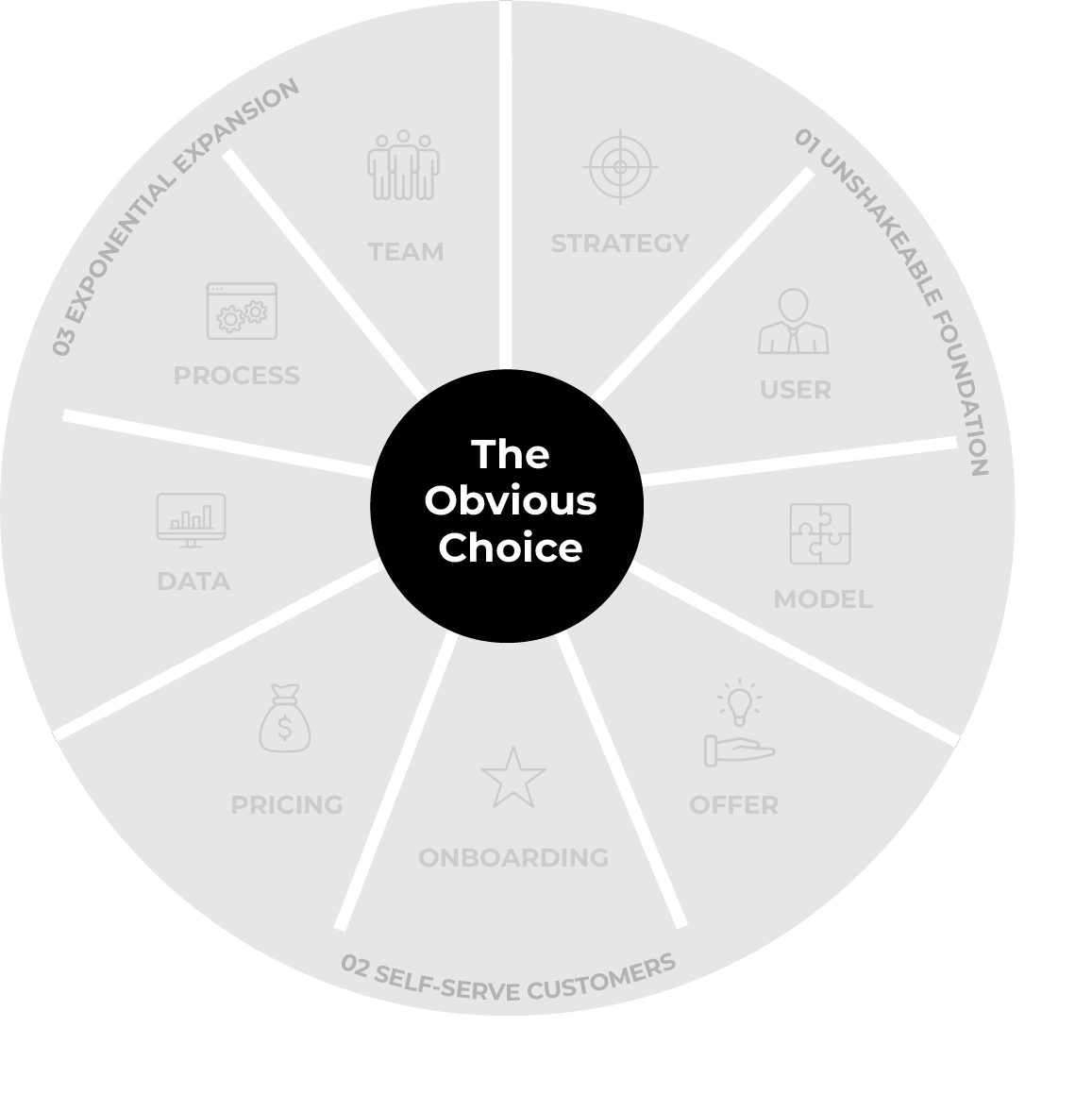
If you procrastinate and keep drifting along, there is no alternative other than to land in the Commodity zone. If you build an unshakeable foundation and implement Stage 1, your best bet is to become a Contender in your market. If you implement Stage 2 and unlock self-serve customers, you can gain the leverage you need to be on the Cusp of your market. It's not a bad place to be, but we both know you're capable of more.
To become the obvious choice, you must implement the entire ProductLed System and unlock exponential expansion. That’s how you win.
When we work with clients, we do two things:
- We help get you back on the fast path to becoming the obvious choice when you feel like you're drifting off.
- We push the pace and bring accountability.
Some of our top-performing clients see a third, powerful opportunity: accelerating their growth by becoming a portfolio company of ProductLed. This strategic move not only speeds up results but also propels them to market dominance faster than they ever imagined.
That's a more intense level of working with us, and it's probably not the conversation for today. For now, the question is, “Do you want to become the obvious choice in your market?”
Your competitors might be reading this book—and putting it into action. Will they beat you to that top spot? Dislodging a competitor from there is mind-numbingly hard.
There’s only room for one. And right now is your best shot to become the obvious choice in your market.
Thank You for Reading!
Congratulations on finishing the book!
I appreciate you choosing to spend your valuable time with me—it truly means a lot.
Now, I have a small request that can have a big impact: If this book helped you, would you take just 60 seconds to leave a review on Amazon?
Your feedback not only helps others discover how becoming product-led can transform their business, but it also supports me in spreading the word.

Leave your review on Goodreads: goodreads.com
Thank you from the bottom of my heart.
Wes Bush
P.S. I’m eager to hear your thoughts on the book. Please send your honest feedback to wes@productled.com with “Review” in the subject line. Your input helps me grow as an author.
P.P.S. If you enjoyed this book, you’ll also love Product-Led Growth: How to Build a Product That Sells Itself and Product-Led Onboarding: How to Turn Users Into Lifelong Customers. Both are available for free at ProductLed.com.
P.P.S. Want to help more companies successfully implement the ProductLed System? Learn more at ProductLed.com

Go all in on product-led growth.
Get three complementary playbooks to turn your product into your biggest growth engine. Read or listen anywhere, on your own or with your team.
Take {book} with you.
- Download the PDF and EPUB
- Listen to the full audiobook
- Read or listen on your preferred device
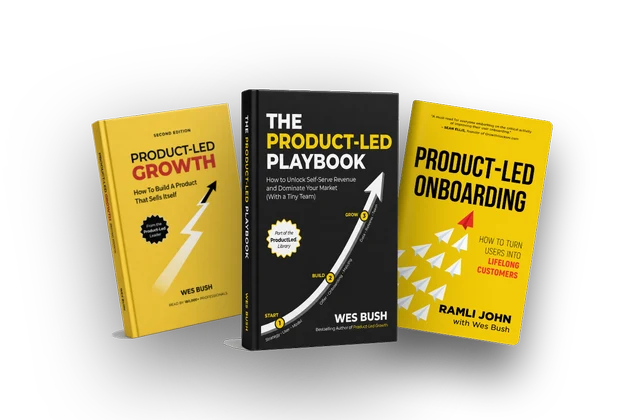
Get the complete ProductLed Library for $10 more.
- Product-Led Growth
- The Product-Led Playbook
- Product-Led Onboarding
- All three as PDFs, EPUBs, and audiobooks
- Wes Bush AI to help you apply what you learn
For individual use.
Get all three books
Give your team a shared playbook for growth.
- Everything in the three-book bundle
- Access for everyone on your team
- Each teammate chooses how to read or listen
- Wes Bush AI for every teammate
One purchase. Unlimited teammates.
Get the team bundlePrefer print? Get a paperback on Amazon →