
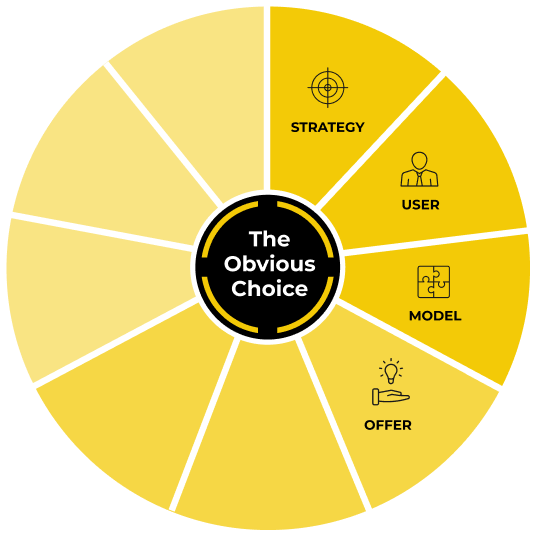
The 5-Star Offer Generator is a three-phase framework for crafting a SaaS offer that gets more ideal users to sign up for your product. You define a core offer and its enhancers, such as bonuses and exclusivity, then assemble them into a homepage with five sections, from the hero to the call to action.
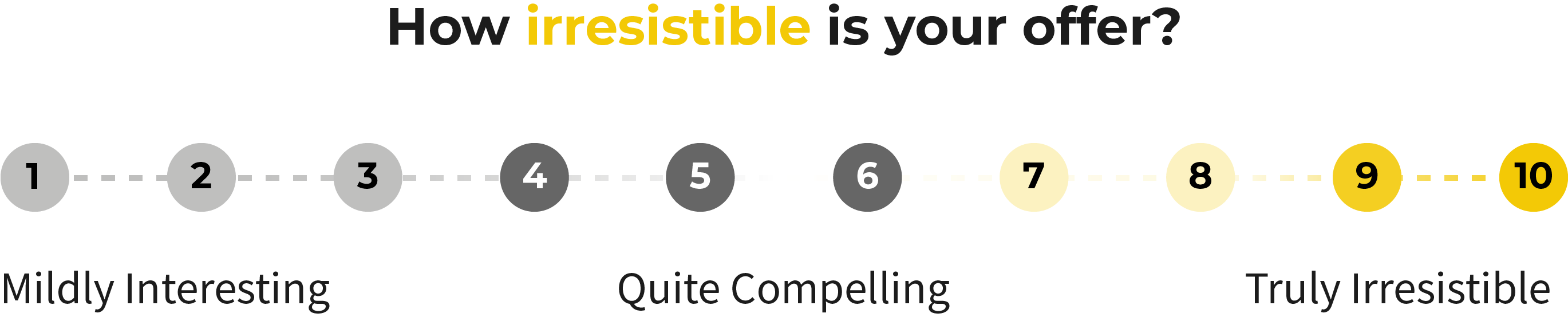
Rate yourself from 1 to 10.
You’ve just designed a free model that’s genuinely going to help your users. Now, it’s time to get as many people to try out that free offer—and make it so enticing that people would feel stupid to say no. It isn’t easy.
Within seconds of landing on your homepage, users evaluate your business and your offer, placing you into one of three buckets:
- You can’t help me. Visitors will move on—even if you can solve their exact problem.
- You might be able to help me. Visitors may sign up and check out your product, but the uncertainty saps their motivation. They often bail during onboarding.
- You can absolutely help me and I believe this is the best solution. Users “get it” and are hungry for your solution, even at different stages of the user journey.
Why is it so hard to get into (and stay) in the third bucket? Because your offer needs to stand the f*ck out, according to Louis Grenier, author of Stand the F*ck Out.
Yet, want me to let you in on a little secret? If your strategy sucks, so will your offer. If your strategy is rock solid, your offer will be, too.
For instance, PromoTix is going up against Eventbrite, and they identified that they could win against Eventbrite with:
- Lower prices.
- Better marketing tools to help sell more tickets.
That’s PromoTix’s strategy for how to win. It leaned into those two big advantages in the homepage copy and increased signups by more than 40%—with the same amount of traffic!
It pays to have a clear strategy and differentiators. Hiring a magnificent copywriter alone won’t cut it. Your visitors are smart. They can sniff out in a few seconds whether your solution is right for them. And if you make one of three major mistakes, they’ll quickly conclude that it’s not for them.
Mistake 1: Being Cute
You know what I’m talking about: Headlines that read, “We’re the AI-enabled solution to your biggest challenges.” So you do… what?
Your visitors will make a snap decision on whether you can help them or not. If you take forever to explain what your product does, how it helps them, and why they should choose you, they’re going to find another solution. Your offer needs to be succinct. If your language is indirect, fluffy on benefits, or full of jargon, you’re being too cute.
Mistake 2: No Enhancers
Chocolate ice cream is delicious on its own. Most people reading this would agree. Yet put peanut butter on it, and you’ve just taken that ice cream from a 7/10 to a 10/10 experience.
Without enhancers, you won’t be irresistible (but another flavor of software will be).
Mistake 3: Lack of Structure
An offer page should flow like a story. You meet the villain (a big challenge), sign up for the product, and then beat the villain with your new powers.
Most offer pages lack structure or just ramble on about the greatness of the solution. A good book follows a structure, and your offer should, too.
We’ll address all of these mistakes and more so you can significantly increase the number of users signing up for your product without increasing your traffic. Lucky for you, you don’t have to be a copywriter. We’ve had many founders implement this process and unlock more conversions.
Introducing The 5-Star Offer Generator
This framework consists of three phases. By the end, you’ll have a homepage that not only encourages visitors to sign up but gets them excited about using your product.
This phase builds on the foundation from the User and Model Components. I'll use PromoTix as an example throughout this component to highlight the importance of following the strategic order of the ProductLed System.
Phase 1: Core Offer
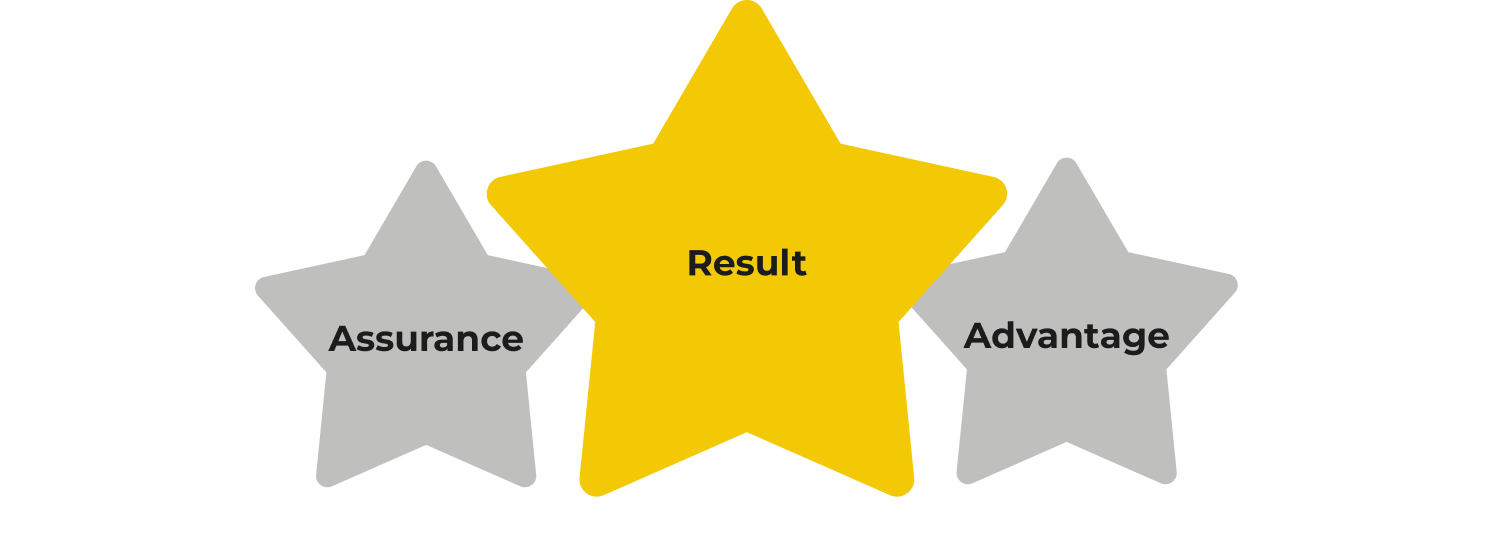
Defining your core offer answers why your product is awesome for users.
There are three pillars:
- The Result
- The Advantage
- The Assurance
A great offer sits at the center of all three.
To establish these pillars, dig deep into your customer's psyche. Ask "why" at every stage to uncover the essence of their problem, along with the unique benefit your product provides. Otherwise, you're stuck at the surface level, blending in with the crowd.
Pillar 1: The Result
This is the tangible, measurable outcome your product delivers. It’s not about vague benefits. What are you doing to help users save time or make money? Anything not directly attached to an outcome is not specific enough.
Take the case of a business with an email automation tool for WordPress. An ineffective approach would use vague terms such as "better," "faster," or a broad promise that it will "grow your business."
The better approach? Highlight specific, relevant benefits:
- “Designed for agencies using WordPress," eliminating the need to learn a new platform and saving time.
- “Flat-rate pricing,” which translates to significant cost savings as an email list grows.
These points directly address user needs and position the product in a compelling way.
To get started on your offer, revisit how you defined the endgame for your ideal users (from the User Component).
Next, define the top three results successful users will notice. Ideally, these are measurable. Often, they break down into three groups:
- A very tangible result that all users will see (e.g., self-serve revenue increases).
- An intangible outcome (e.g., more peace of mind).
- An improvement (e.g., revenue-per-employee improves).
If you filled out the top three outcomes from the User Component, you might be able to use those here as well.
Your Turn (To Fill In)
Once you’ve identified the top three results, explain why your product is better.
Pillar 2: The Advantage
How is your product significantly better than other options on the market?
Most founders can’t answer this question—so their potential customers can’t either. A marginally better product won’t convince potential customers to switch.
Claims like "we're easier to use" or "our platform is faster" won't cut it. Dig deeper. Why is your product five or 10x better than the competition?
- Zoom has a great audio filter that blocks all background noise and allows users to make calls from bustling coffee shops.
- Canva is far easier to use than Adobe Photoshop.
- PromoTix is up to 40% cheaper than alternatives like Eventbrite.
Write down your product’s advantages. Think holistically. Why is your approach the best?
Next, run them through the “Why does it matter?” test.
Let’s say your platform has a better user experience—why does this matter? If all solutions in your space are extremely hard to use, this could be a major benefit. If not, then it’s not the advantage to lead with.
If you’re still struggling, go back to your “how to win” strategy. Your moats should reinforce your advantages.
For instance, if your how-to-win moats are:
- A differentiated approach.
- A unique pricing model.
- Great user experience.
Call out those specific advantages! It’s great if your main advantages closely align with your strategy—it shows that what you’re putting into the market aligns with your strategy.
Your Turn (To Fill In)
It pays to have clear advantages, but you also need to identify why some visitors still don’t sign up.
Pillar 3: The Assurance
If potential customers believe switching to your product is a risk, they won't make the leap—regardless of your offer. Addressing fears and uncertainties directly can make all the difference.
For example, for Kloudle, a cloud security platform, visitors might want to know:
- Will setup be difficult?
- What cloud providers do you support?
- What compliance and security measures are in place?
Address those fears and explain in concrete terms why they’re unfounded. Be specific about why there’s no risk. In this example, this company could detail the average number of minutes it takes to set up based on past customer experiences.
Here are common objections and assurances for SaaS companies.
Identify your top three objections and address those risks in concrete terms. Explain why those fears are unfounded. Quantify everything. Offer assurance.Here’s what this looks like for PromoTix.
Your Turn (To Fill In)
Combining It All
All three pillars are critical:
- If a company communicates only the results and assurances, why should you use that solution?
- If a company communicates its results and advantages, what are the risks of signing up?
- If a company communicates the assurances and the advantages, what are the results?
Now that you have an irresistible offer, it’s time to enhance it.
Phase 2: Enhancers
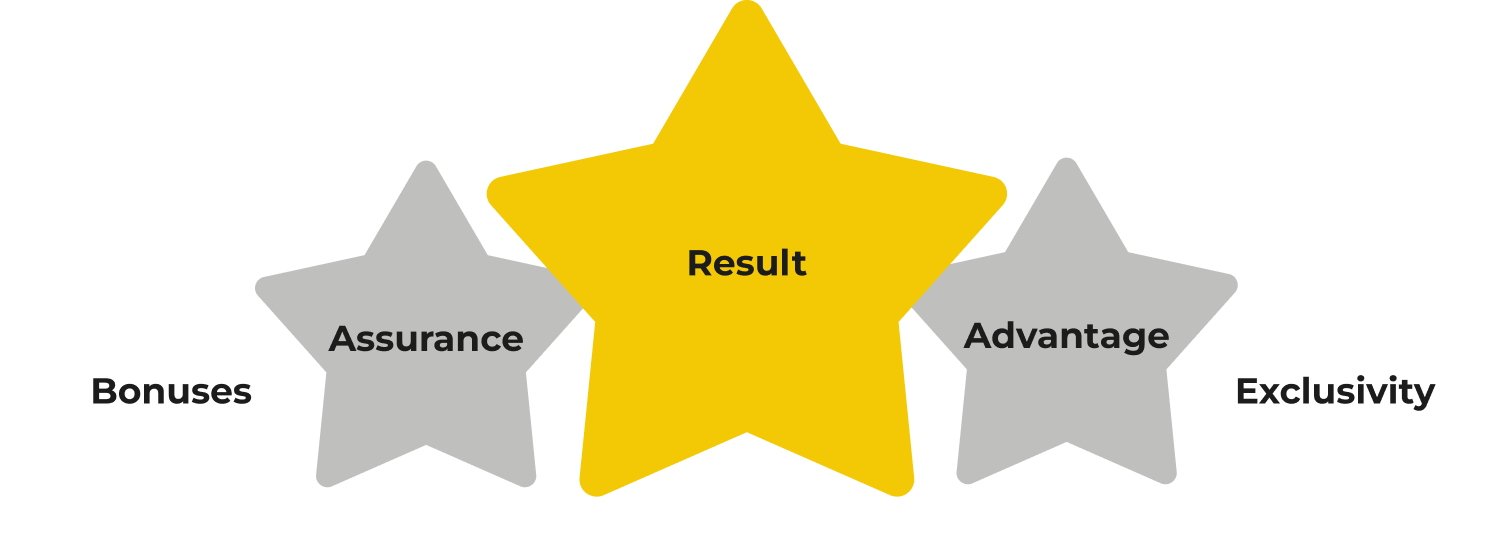
Start with a solid core offer. Let enhancers take that offer from a 7/10 to a 10/10. This can mean up to 15% more conversions.
Deciding what these enhancers are doesn’t take long, but the impact is almost immediate. You have two main options: exclusivity and bonuses.
Exclusivity
Exclusivity is driven by scarcity and urgency.
Can you handle only a limited number of customers each month? Do you want to cap your beta program to, say, 100 spots? Do you want to invite only a few people to test out your new free motion?
Every business has something that’ll break if you add too many customers to it. Artificial scarcity doesn’t work, but consider whether you can add authentic scarcity to the mix.
Scarcity is one reason to sign up now. Urgency is another. Your biggest competitor isn’t your competitor. It’s people who continue doing the same thing the same way.
Forms of urgency include:
- A limited-time offer.
- Exploding opportunity. (e.g., PLG is hot. If you don’t do it, a competitor will.)
- Cohort-based urgency. (e.g., You have a firm deadline on when you can no longer accept enrollments.)
- Bonus-based urgency. (e.g., A free gift disappears after a certain period of time.)
Let’s dig into bonuses a bit more.
Bonuses
A good bonus excites potential users. But most bonuses are random: “Open a new bank account and get a free toaster!”
Good bonuses tie back to your User and Model Components. They address challenges that haven’t been addressed yet. For instance, if your software is a user onboarding solution, users may struggle to understand the principles of how to onboard their users effectively.
So what do you offer? Give users a free user onboarding course. Typically, this is valued at $999, but if they sign up this month, they’ll get it for free. That’s a compelling offer.
Other types of bonuses include:
- Free gifts
- Free resources (assessments, training)
- 1:1 expert support
- Free audits
ProductLed client Keap.com noticed that many customers churned in the first few months because small business owners rarely automate important processes—a core differentiator. So, they gave away a free audit to help business owners identify one crucial process to automate, then set it up for them. This one bonus skyrocketed Keap’s retention.
What enhancers can you offer?
You don’t have to use every enhancer. Identify three to help assemble your offer. Put everything in the Irresistible Offer Canvas for reference and share with your team.
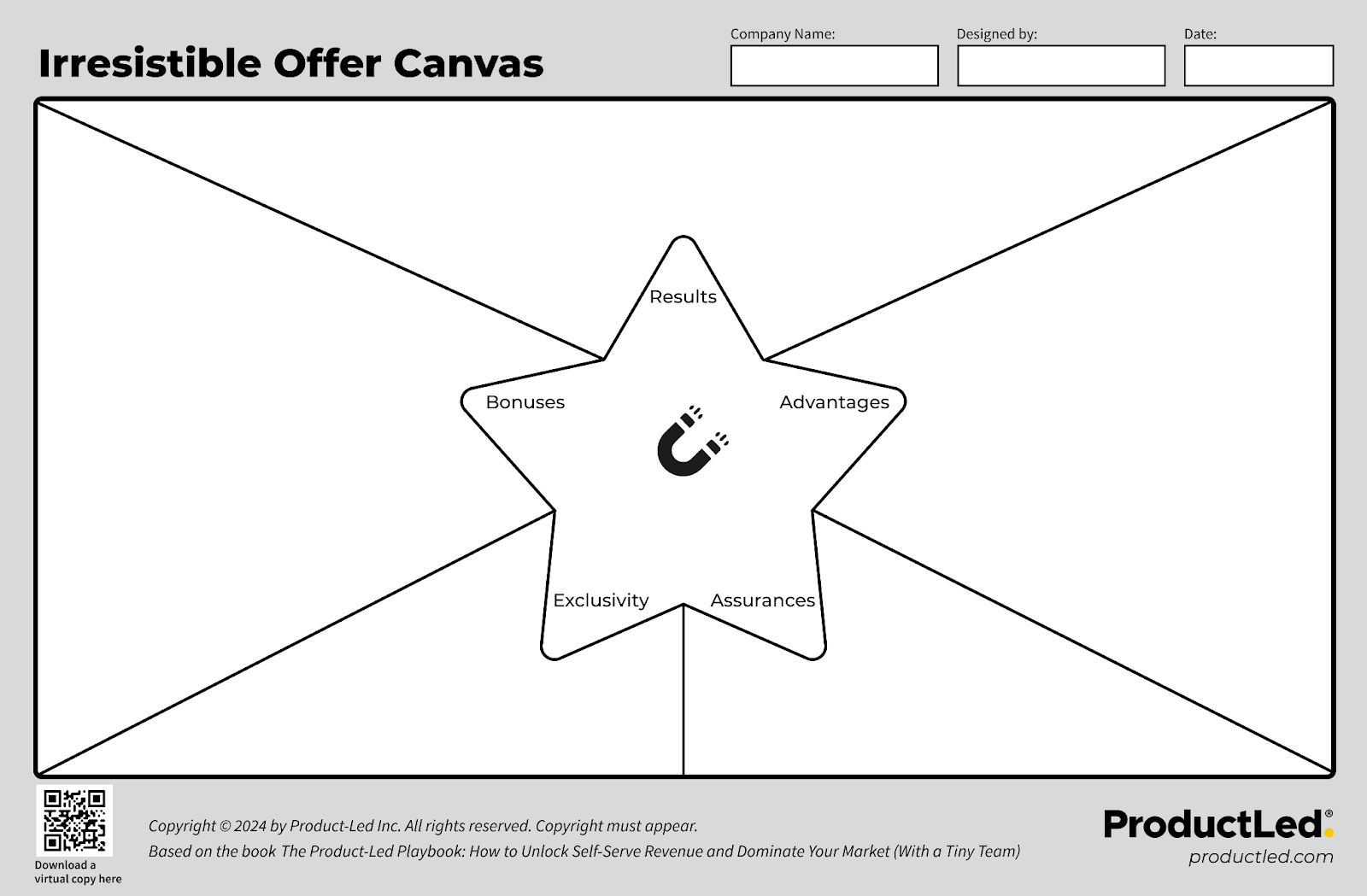
🎁 Action Tool: Irresistible Offer Canvas
Grab our free Irresistible Offer Canvas at ProductLedPlaybook.com to follow along with this activity.
Once you’ve built out your irresistible offer, you’re ready to get more signups with a high-converting homepage.
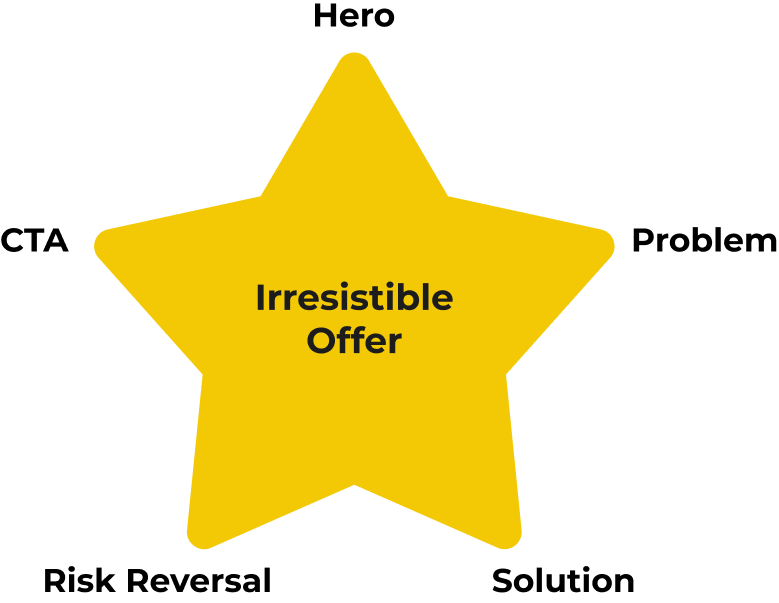
Phase 3: Assemble Your Offer
Your offer page needs five sections:
- A Hero Section gets your attention by clearly communicating the main value proposition—what you’ll get from the product.
- A Problem Section clearly communicates the main problem your product solves and builds interest around the potential solution.
- A Solution Section explicitly answers the “How does it work?” question that so many users want to know before signing up.
- A Risk Reversal Section addresses the main reasons that might prevent someone from signing up.
- A Call-to-Action Section asks the user to sign up and gives compelling reasons to support why they need to take action.
Don’t overcomplicate your homepage—these five are all you need. It’s tempting to delegate this step to a copywriter but complete the first draft yourself. Messaging matters. You’re the expert.
Let’s take a look at PromoTix’s changes—and the resulting impact.
Hero Section
Your Hero Section contains the first words users see and is arguably the most important part of your homepage. It’s the first impression of what you do as a business, and in seconds, users will decide whether they should continue scrolling through—or ditch—your site.
There are five pieces:
- A tagline that communicates the result you offer.
- Sub-copy that reinforces what you do as a business and prompts users to start.
- A call-to-action (CTA) that’s a simple prompt to take the first step to sign up.
- A visual aid is optional but can quickly communicate what your product does in ways that words can’t.
- Social proof assures users that you’re a reputable business.
Since you’ve already done the hard work of filling out your Irresistible Offer Template, completing the Hero section is a lot easier. You’ll notice that your offer is a lot more specific and speaks directly to your ideal users.
To show you the massive impact this can have, look at the changes PromoTix made to its Hero Section.
Your Turn (To Fill In)
Once you’ve grabbed the attention of your user, educate them on their core problem.
Problem Section
A good Problem Section quickly points out why the current approach is not the best path forward.
Your Problem Section might point out problems:
- With other tools.
- With current (non-SaaS) solutions.
- The broader, underlying problem.
What obstacle blocks users from seeing value? Wes Kao, co-founder of Maven, refers to this as your “spiky point of view.” It should be a tad controversial—not over the top, but not something everyone agrees with. If you’ve identified the underlying reason why you’re better as a business, your spiky point of view plays into it.
For instance, at ProductLed, what makes us better is our holistic approach to product-led growth. So when our problem statement is “Product-led growth is more than a free trial,” it reflects our belief that a free trial is just one piece of the puzzle.
Don’t shy away from confrontation. PromoTix embraced it. The Department of Justice is suing its competitors for high ticketing fees10 (among other things), something important for them to highlight. Their problem statement is, “Ticketmaster, eTix, Eventbrite, and others have service fees ranging from 20 to 40%, and the fees are climbing…”
If your users don’t have comparable solutions, ask: What should scare them if they don’t use your product?
If you’re struggling to identify the core problem, go back to the problem statement from the Strategy Component. It should overlap. Also, your top challenges should overlap with challenges identified in the Model Component for the free model.
Intrigue your ideal user with a spiky point of view, list some of the top challenges holding them back, and leave them aligned with your perspective. (Note: This won’t mean everyone is aligned. You want to turn away non-ideal users.)
Your Turn (To Fill In)
Unlike the Hero Section, which is clear-cut, your Problem Section is flexible.
To see if you’re on the right path, write your Problem Section out as a LinkedIn post and see if it strikes a chord. If it falls flat, you don’t have a spiky point of view. If it drives a lot of engagement, you’re onto something.
Solution Section
A good Solution Section answers the “How does it work?” question. A great Solution Section reinforces the underlying result and outlines how users can achieve it.
Most companies overcomplicate it, listing all the required steps. Ideally, you have no more than five. (They don’t have to be sequential.)
A compelling Solution Section makes users feel like they can achieve the result by reading the copy alone. Give users a taste of what solving this problem feels like.
Your Turn (To Fill In)

Go all in on product-led growth.
Get three complementary playbooks to turn your product into your biggest growth engine. Read or listen anywhere, on your own or with your team.
Take {book} with you.
- Download the PDF and EPUB
- Listen to the full audiobook
- Read or listen on your preferred device
Get the complete ProductLed Library for $10 more.
- Product-Led Growth
- The Product-Led Playbook
- Product-Led Onboarding
- All three as PDFs, EPUBs, and audiobooks
- Wes Bush AI to help you apply what you learn
For individual use.
Get all three books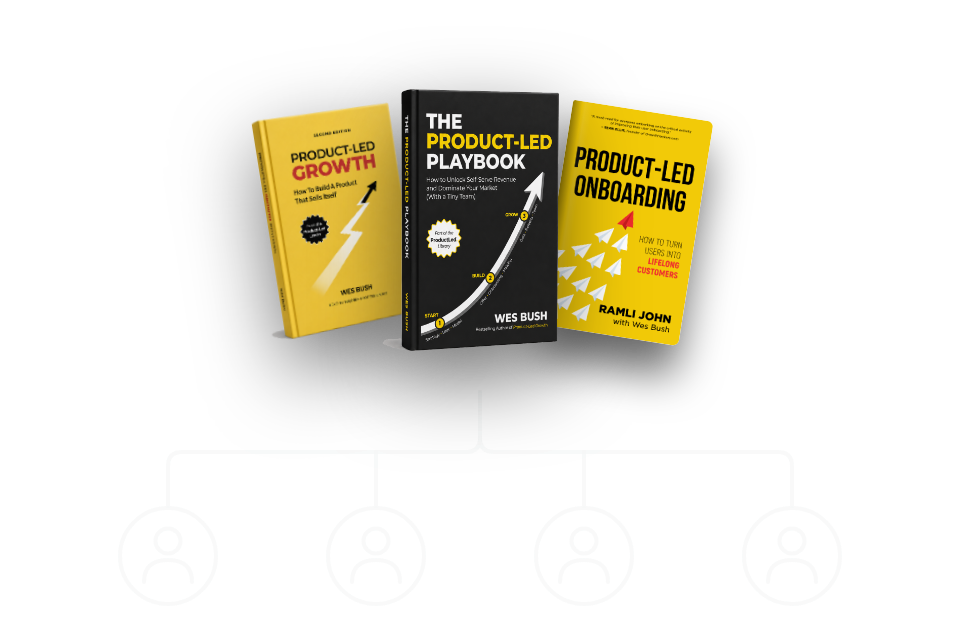
Give your team a shared playbook for growth.
- Everything in the three-book bundle
- Access for everyone on your team
- Each teammate chooses how to read or listen
- Wes Bush AI for every teammate
One purchase. Unlimited teammates.
Get the team bundlePrefer print? Get a paperback on Amazon →