
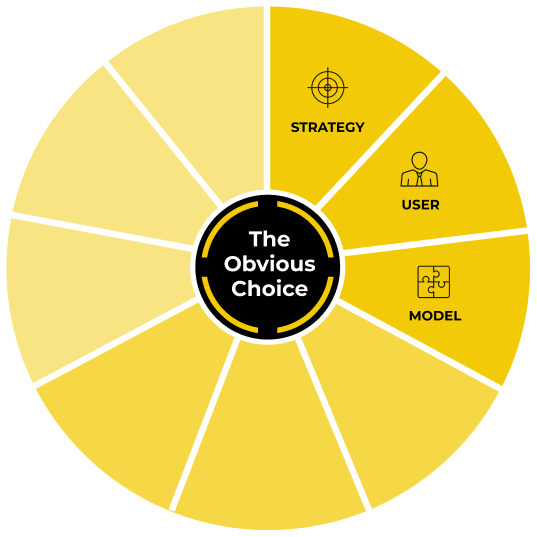
The DEEP Model Framework is a method for deciding what your product gives away for free and what it charges for. Its four phases, Desirable, Effective, Efficient and Polished, give DEEP its name and run from splitting the user journey into three levels to choosing a model such as freemium or a free trial.

Rate yourself from 1 to 10.
A product-led model determines what to give away for free and what to charge for. The best product-led models give users everything they need to succeed at each stage of their user journey.
Yet, designing a product-led model is hard. Even if you understand your users well, you can still get your model wrong.
Take Tettra as an example. Tettra is an online knowledge base for your team that makes it easy to create and share important documents like your time-off policy. They initially had a 15-day free trial model and found it hard to scale the business.
They had relatively high short-term churn and mediocre conversion rates across the board. Why? Because what could users do in 15 days with an online knowledge-based tool? Would you invest time and effort if you knew you had only 15 days to use it?
Tettra couldn’t shine with their free-trial model. The real value kicked in when companies built up a trove of important company documents over time to train employees. Without knowing it, Tettra had created a product-led model that prioritized asking for money before providing value.
On the other hand, a freemium model could provide more value upfront, give users time to set up their knowledge base, and allow Tettra to ask for money when the time is right. So Tettra pivoted to freemium. It worked.
The freemium model allowed users to try the product without a time limit. In addition, Tettra didn’t ask for credit card information, which led to more people onboarding, finding value, and converting. While more “tire kickers” drained some resources, that was a manageable problem with automation, and the increase in signups outweighed the losses.
Upgrades increased, too. While Tettra expected Monthly Recurring Revenue (MRR) to go down, the number of upgrades counteracted the drop: The freemium switch tripled the number of upgrades by the 5th quarter.
What about retention? After the freemium launch, it never dipped below 70% and consistently had 100% retention rates throughout the year.9
When you identify the right product-led model, good things happen. It’s easier to scale. It’s easier to convert users into paying customers. It’s easier to keep customers.
Yet, if you can believe it, there is no single correct model. Multi-billion dollar product-led companies have made PLG work with free trials, freemium models, reverse trials, and other free models. You can find a company that has made every model work.
What goes into the model matters more than the model itself.
An intentional product-led model solves a meaningful problem for users. Sometimes, that takes days; other times, it takes months. The biggest challenge is deciding what goes into the model and ensuring that your product’s true value can shine in your free motion.
The Three Common Scenarios
When signing up for a product-led model, you’ll likely run into three scenarios.
The first is the most common expectation—the free product gives you a new capability. You’ll grow 2X bigger. You’ll spew fire, just like Mario.
You’re aiming for that gold standard.
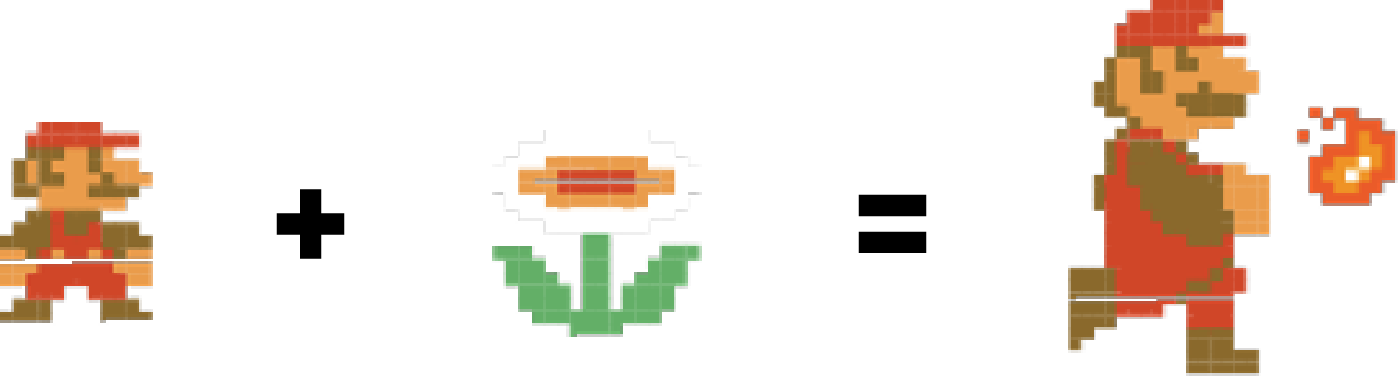
Most times, however, a second scenario occurs. You pick up the free model but are exactly the same.

What do you do? Most ditch the product and never return.
Now, the third, least common scenario happens mostly with VC-backed companies. They can often afford to forgo monetizing users in pursuit of aggressive user-growth targets. So what do they do?
They give away almost everything for free, removing the motivation to upgrade—you can beat the game with your new, no-cost abilities.
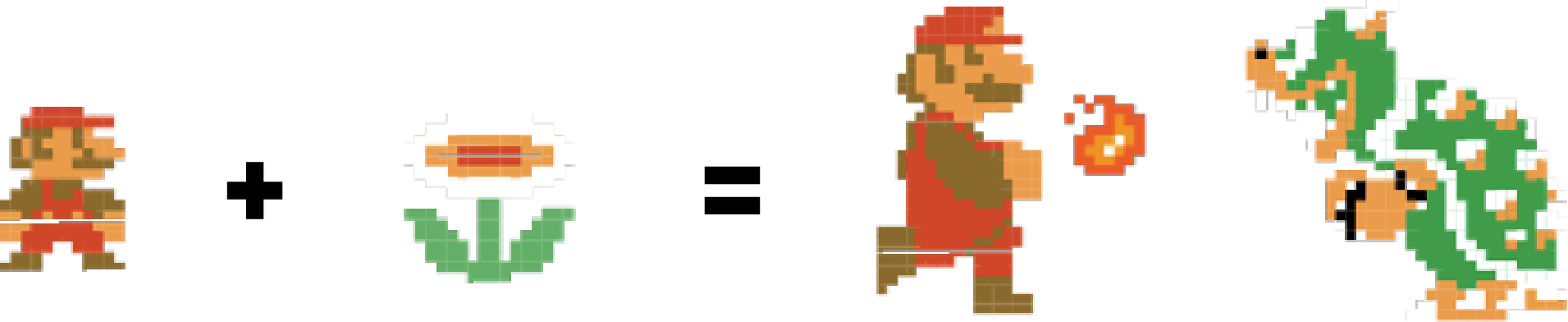
That’s how I used Evernote for eight lovely years before paying them a dime. I had zero reason to upgrade until they finally dumbed down their free model (more on that story later).
So, what’s the goal of your free model? It should be to give your users everything they need to tackle a big, hairy problem they couldn't solve on their own.
It’s not about letting them beat the game—it’s helping them level up.
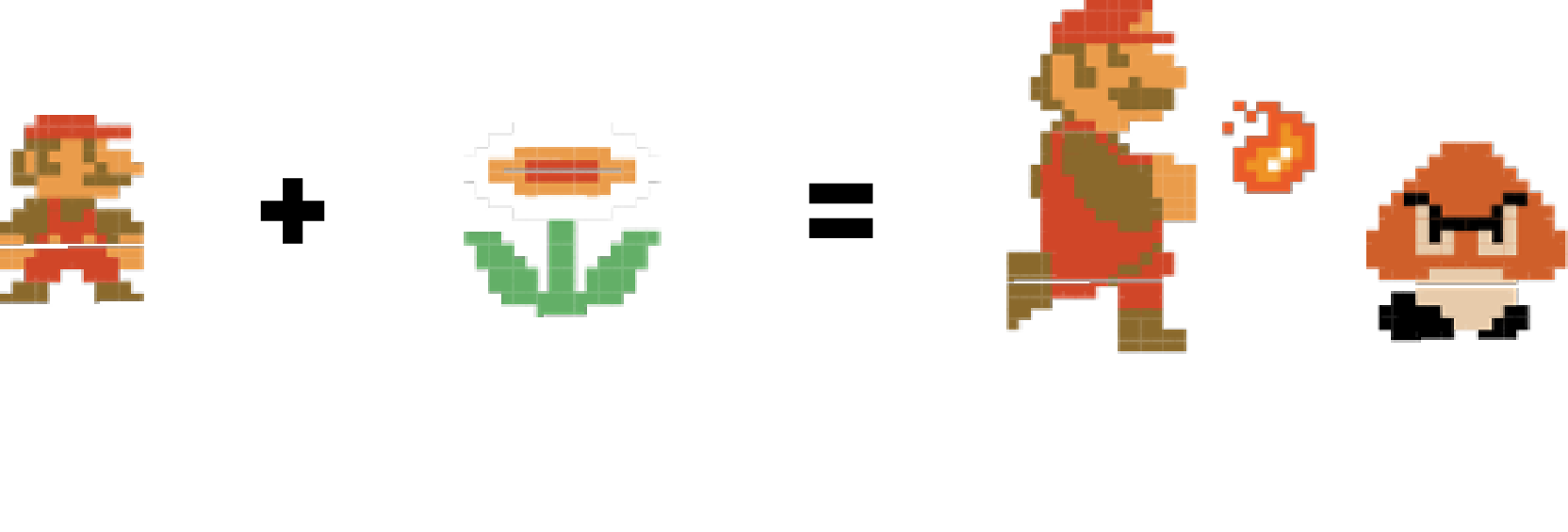
What scenario best represents your free model?
The goal is to build enough trust with your users to show you can deliver on your promise.
Let’s see how to do just that with the DEEP model.
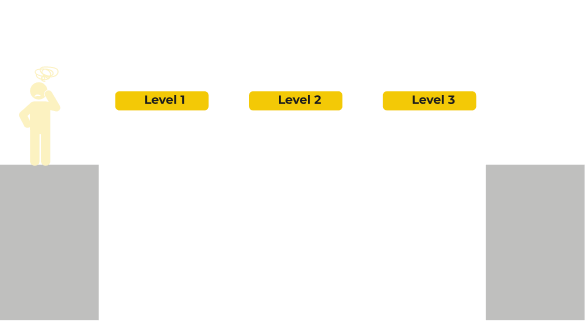
Phase 1: Desirable – Gamify Your Model Into Three Levels
Think of your free model as a game. Every game has levels—some version of beginner, intermediate, and advanced.
In a product-led business, each level equates to a key step in your user’s journey. Your job is to break down the full user journey into those levels and make it easy for users to advance from one to the next.
If you don’t do this, you might run into the Cold Start Problem—starting to solve advanced problems in your free motion before addressing beginner problems.
When I worked at Vidyard, we encountered this issue. This was why our initial free trial was unsuccessful. At the time, Vidyard was known for video marketing analytics. You could know exactly what percentage of a video someone watched on your website. Creepy, but cool!
To see the value of our video marketing analytics during our free trial, you’d have to:
- Upload a video to the platform.
- Embed that video on your website.
- Integrate Vidyard with your marketing automation platform.
- Drive traffic to the page with the video.
- And voila! You could see who’s watching your videos.
How many users completed all of these steps? Next to none. It wasn’t hard to do, and the platform wasn’t clunky. The real problem was that we were solving an advanced problem. Most users didn’t even have a video to upload.
So, we launched a simple Chrome extension that made it easy to record a video with a few clicks. You could easily send it to anyone, and when they watched it, you’d see what percentage of the video they watched.
This solved a beginner problem. That Chrome extension took off, gaining 100,000+ users in the first 12 months—and millions of users since then.
When designing your game, take a step back. Remind yourself what the ultimate user endgame is and break it down into three levels.
A beginner level represents a problem that everyone in your market would need help with at some point. This is what you’ll give away for free. Don’t worry yet about the specifics of what you’ll give away—just focus on the desired outcome.
An intermediate level represents a problem that most of your market will eventually struggle with. The advanced level represents a problem that only a minority of the market struggles with.
Each level has a desired outcome. Once users experience the outcome of one level, they can continue at their current level or graduate to the next one. In the Vidyard example, a user can start making videos easily at the beginner level, so they feel confident making these videos and using them in sales.
Eventually, the number of videos they can create will be limited. At this point, they can upgrade to the next level, unlock unlimited videos, and access more features to help them sell more.
Once a user is extremely successful using Vidyard, they might roll this out to their entire team so that they can all use video to sell more.
The transition from one level to another is seamless—just what we’re going for.
I’ll share one more example. Among ProductLed’s clients is PromoTix, an event ticketing platform similar to Eventbrite. For them, the user endgame is hosting a sold-out event with happy attendees.
The desired outcome of an event host is to publish an event so they can start selling tickets. Once that’s done, the goal is to sell out that event. However, to do that, they need powerful marketing tools. That’s when it makes sense for them to upgrade to the intermediate level.
If you’re selling tons of tickets, you’ll run into another issue: ticketing fees start to add up. That’s when you’ll want to lock in a fixed monthly rate—exactly what’s available at the advanced level.
Once again, there’s a clear progression from beginner to advanced. Don’t overcomplicate this by adding too many levels. Most businesses do just fine with three.
For your product, what’s a meaningful win that someone could experience in less than seven minutes? That’s the beginner level.
One of the most common issues I help ProductLed clients avoid is giving away too little for free. For instance, one of the companies we serve has a coaching platform that allows you to train university students to work as accountants. Their unique ability is that they help learners acquire technical skills fast.
They wanted to give away five courses for free. However, it might take up to a year for companies to set up five courses. So we recommended they give away one free course instead. Remember: the goal here isn’t to have free users for life. It’s to help them to get to value and upgrade.
Be generous with your beginner level. Give users everything they need to level up. But don’t overwhelm them with unnecessary features.
Your beginner outcome should check these boxes:
Remember, no one likes to play a game they can’t win or where the odds are stacked against them. If you can’t make your free offer desirable, no one will want to play.
Your Turn (To Fill Out)
Once you’re clear on what the main outcome is for each level, unpack what’s stopping your ideal user from reaching those outcomes.
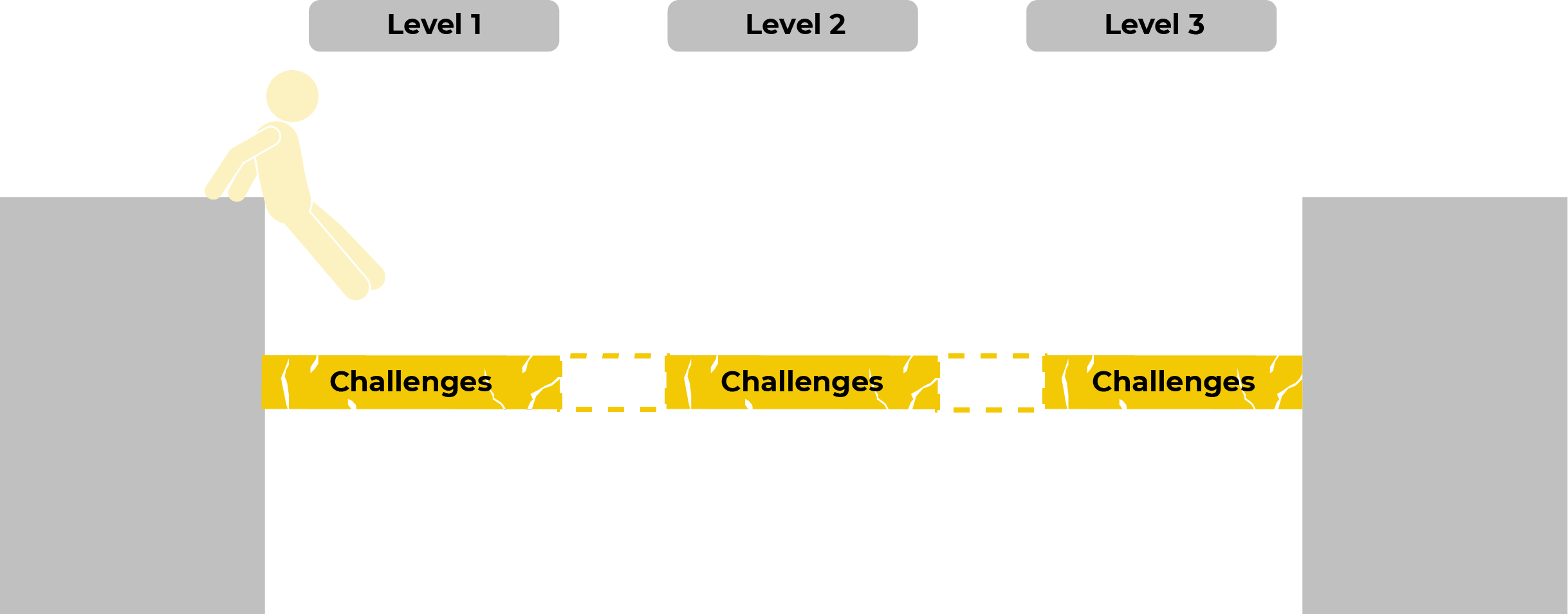
Phase 2: Effective – Unpack the Biggest Challenges
Before you can design the perfect free model for your users, you must understand every challenge they’ll face. You’ll use that knowledge to give them the right tools.
Thanks to the groundwork you’ve done in the User Component, this will be relatively easy. Review your User Endgame Roadmap and place the challenges you’ve identified into their respective levels.
Here’s how PromoTix broke down their challenges:
Add new challenges, too. You can use AI tools to brainstorm challenges to achieve a desired outcome. Use a prompt like “List out the biggest challenges for [Ideal User] to achieve [Desired Outcome].” You’ll be surprised how accurate the results are. It’s not a comprehensive list, but it’ll break through writer’s block.
Most challenges fall into three buckets:
- Product challenges: How can a user experience the value of your product?
- Knowledge challenges: What does your user not know that’s holding them back?
- Skill challenges: Which lacking skills prevent success?
One of our ProductLed clients, Userguiding.com, simplifies the process of rolling out tooltips to help guide users more effectively within your application. The product itself is relatively simple to set up. Yet, they need to educate their users a lot and guide them through how to use these tooltips effectively.
Otherwise, they might showcase all the features while their user doesn’t accomplish anything meaningful in the product. So many of their challenges relate to a knowledge and skill gap.
Your Turn (To Fill Out)
Identify at least five to 10 challenges for each level. The more, the better, as you’ll have a better understanding of what’s holding users back.
Prioritize Challenges
Once you’re done listing out all your challenges, classify them on the Roadblock Rating from 1 to 5:
1 - It doesn’t feel like a challenge (everyone can overcome it).
2 - Small challenge (almost no one has a problem with this).
3 - Decent challenge (many users are pointing out this obstacle).
4 - Most users face this challenge but can’t overcome it.
5 - No users can overcome this challenge without support.
You’ll quickly start to understand which challenges most impact your users. Tackling some of the biggest challenges first will help more users reach the next level.
Here’s what this might look like for the beginner level.
Once you’ve identified the magnitude of each challenge, shortlist the ones you’ll tackle for each level. This doesn’t mean ignoring all other challenges. It does mean focusing on overcoming the top three to five that prevent users from completing a level.
The top three challenges for PromoTix are clear:
- Get the event set up.
- Plan the event.
- Sell the tickets.
Your Turn (To Fill Out)
Once you’ve identified the top three to five challenges, you can arm users with everything they need to succeed at every level.
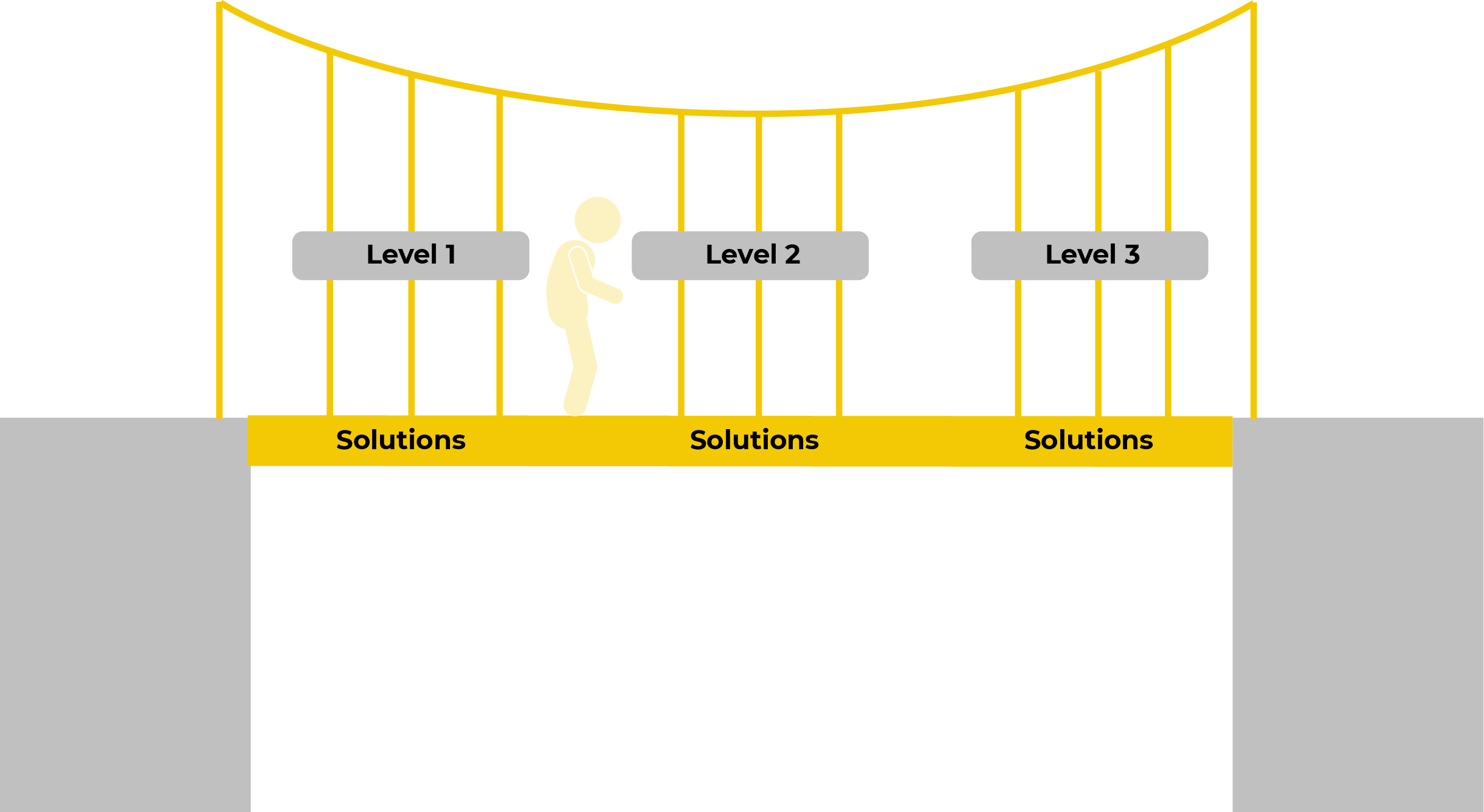
Phase 3: Efficient – Decide What to Give Away for Free and What to Gate
Without the right tools to succeed, users will attempt to move from one level to the next—but they’re playing the game on “hard mode.”
Your users need “power-ups” (a.k.a. solutions) to avoid or defeat challenges they encounter. The goal is to make each level easy to achieve.
To get started, run the PCR test.
Step 1: Run the PCR Test
Let’s say your user’s top challenge is to “publish an event page.” The PCR test will show you how to find the best solutions for that challenge:
- Product solutions.
- Content solutions.
- Resource solutions.
A content solution is consumed and easy to share; a resource solution is interactive (e.g., quiz).
Instead of just one potential solution for each challenge, you’ll want to develop many different ones. For major challenges, that’s a great thing. Some people prefer to learn, while others want a dedicated tool.
Here’s how this breaks down for PromoTix’s beginner level.
Ideally, you’ll identify at least five to 10 potential solutions for every challenge.
Why so many?
By doing this, you’ll identify unique solutions that help your users overcome these challenges easily. This is also another reason why you should do this with your team: you’ll unlock creative solutions to complex challenges. One of the issues with brainstorming is it’s way too easy to only focus on product solutions. For instance, if you ask a group of product managers how to help users sell more tickets, you’ll hear many product-related solutions. Yet, this challenge could have been addressed with a simple blog post.
Once you’ve listed out your solutions, you should feel confident that if your users had access to everything, they would easily accomplish each level in your game.
Step 2: Prioritize Your Solutions
In an ideal world, you’d test all your solutions to see which works best. In the real world, you have limited time and resources—you must invest wisely.
For every solution you’ve built, score it on two factors:
- Impact: How impactful is this solution in helping users overcome a specific challenge?
- Cost: How much does it cost the business to offer this solution?
The beauty of prioritizing based on Impact and Cost is that it vets solutions based on what’s best for the business and the user.
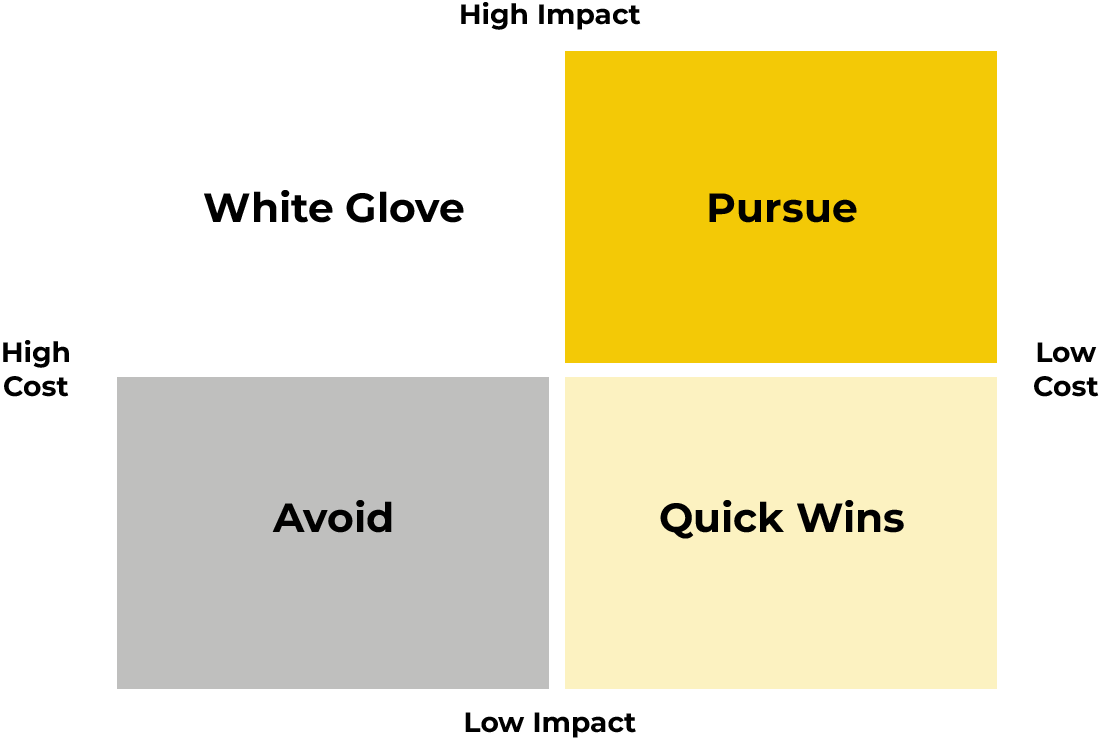
Here’s how to think through prioritizing solutions:
- Pursue: If the solution is highly impactful to the user and low cost for the business to roll out and maintain, greenlight it.
- White Glove: Your solution is costly to roll out but it’s highly impactful (e.g., free onboarding calls to every user). It won’t scale, but it helps you learn more about users.
- Quick Wins: The solution isn’t super impactful but it’s easy to roll out (e.g., removing a bug that annoys users). It won’t 10x the business but it’s necessary.
- Avoid: If your solution isn’t impactful and costs your business a lot, don’t do it.
Make every potential solution fight for its life. Low-cost, high-impact solutions are wonderful but rare. Expect to make difficult decisions and kill most of the ones you identify.
Every team should be involved in identifying and creating solutions. The marketing team can create content about challenges. The sales team can create enablement resources for objection-related challenges. And so on.
Your Turn (To Fill Out)
Use the labels high, medium, and low to fill out your Impact and Cost columns.
Step 3: Shortlist Your Solutions
Shortlist everything so your team knows what needs to be built. You’ll have clarity on what you’re giving away for free and what you’re moving behind a paywall.
List your top three challenges and the top three to five solutions for each level.
PromoTix Example:
This is the foundation for your free model:
- You'll give away everything at the beginner level.
- The intermediate level is the first paid plan.
- The advanced level is where you’ll charge the most and grow with your customers.
The first time you do this, focus on the beginner level.
If you have a usage-based product, list how many units of your product you’d need to give away for your user to see value (e.g., five free seats, three free boards, five free courses, etc.). Also, list how long users will need to roll out these solutions. It’ll help you with the last phase.
Your Turn (To Fill Out):
You’ve got a rough shape for your free model. Now, it’s time to polish it so that users can easily understand what it is and how it works.
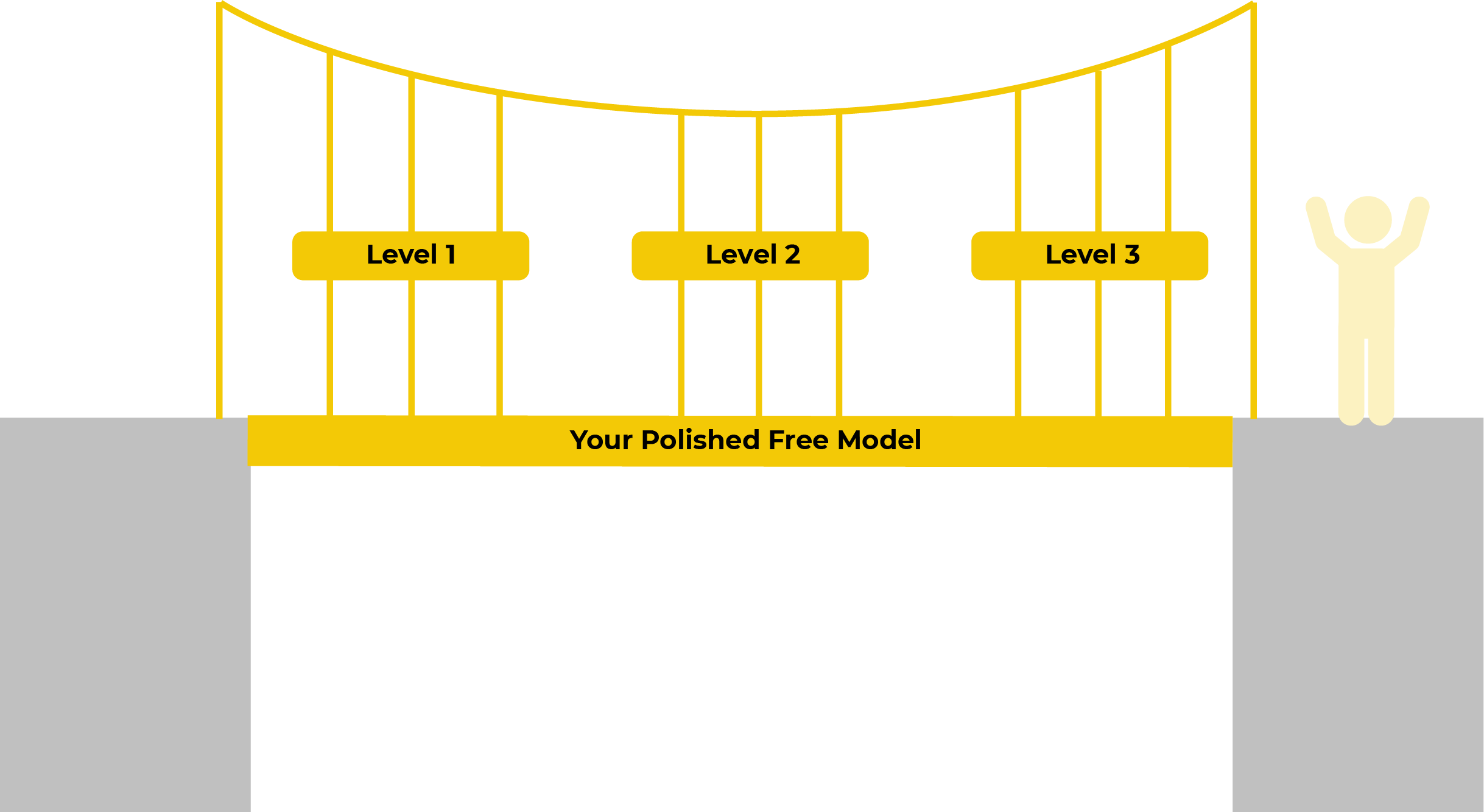
Phase 4: Polish – Identify What Free Model Works Best for Your Business
Many companies debate what to give away for free, yet only a few use a real strategy to support their opinions.
That won’t be the case for your free model. You’ve already identified a meaningful win for your users, the big challenges, and solutions to overcome them. By the end of Phase 4, you’ll have a clear one-pager that identifies what you’re giving away for free and your overall product-led model.
Step 1: Discover the Six Main Product-Led Models
Before you pick a model, make sure you understand its advantages and disadvantages.
After learning about each model, try it on like a hat—what would it look like for your product?
Opt-in Free Trial
An opt-in free trial is among the most common product-led models.
Opt-in free trials are time-based and can be as long or short as needed for your user to experience the core value of the product. Users are attracted to this model because it doesn't require a credit card to sign up.
During your trial timeline, users can access most of the product's features to see whether they meet their needs. They'll likely stick around if they can get value within the allotted time (typically 7, 14, or 30 days).
Ask yourself whether users can find value in your product within the allotted timeframe; otherwise, the model won’t work.
Opt-Out Free Trial
This model asks the user to provide credit card information to access the free trial. Why add friction?
- Reduce spam signups.
- Reduce the number of tire kickers.
- Set a trigger for users to come back (e.g., an education product where most people don’t have a natural trigger to consume content).
- Avoid the cost of setting up a free trial for each user.
- Avoid bogus email signups from recurring trial users if your product is used intermittently (e.g., an SEO tool like Ahrefs).
- Work only with committed users if you’re still manually onboarding users.
An opt-out free trial should be a last resort because it adds enormous friction and usually gets only a fraction of the sign ups of an opt-in free trial.
Your free-to-paid conversion rate will be higher than an opt-in free trial, but that’s because most potential users didn’t sign up in the first place. Overall, you typically make less money with an opt-out free trial. The higher free-to-paid conversion rate doesn’t make up for the smaller number of trial starts.
Usage-Based Free Trial
Usage-based free trials are one of my favorite models. Instead of a time limit, you set a usage limit—exactly how much value you give away for free.
For example, I’ve been using Evernote for eight years on their forever-free plan. They gave me unlimited free notes to create, so I was happy. Evernote tried to upgrade me based on random features I didn’t need (e.g., Do you want to design what your homepage on Evernote looks like?).
However, in early 2024, they changed to a usage-based free trial where I could create only 50 notes. I had created hundreds over the years, and I couldn’t create more unless I upgraded. It took me 10 seconds to decide to upgrade. That’s a usage-based model in action.
You’ll see usage-based free trials at many world-class product-led businesses, such as Miro (three boards) and Vidyard (25 videos).
Usage-based free trials work because they allow users to access a limited amount of your product's full value rather than restricting features as you would with a freemium model. It’s the difference between offering "a limited amount of all the value" versus "an unlimited amount of some of the value." This approach eliminates artificial time pressure and lets users experience the core benefits of your product at their own pace.
Freemium
Freemium is when you give away certain features—forever.
For instance, Canva has a generous freemium plan that allows you to create unlimited designs. However, there are limits to templates and features you can use. For example, you can’t resize a template or use premium stock photos without upgrading.
Freemium works well when your product requires mastering a specific skill (e.g., design), and ideal users naturally move from solving beginner problems to more advanced ones, which, in turn, require access to more advanced features.
Freemium is the most powerful product-led model because it has the most compelling offer. Yet, it's also a high-risk model. Many ambitious entrepreneurs have tried and failed. Rob Walling, the previous CEO of Drip, offers a warning: “Freemium is like a Samurai sword: unless you’re a master at using it, you can cut your arm off.”
Another challenge with freemium for smaller companies is that it can attract a lot of non-paying users, who create distractions.
But maybe you don’t need any of the above models. Maybe you need a new product.
New Product
I know what you’re thinking. This isn’t really a new product-led model. (You’re right.)
But, going back to the Vidyard example, our biggest blocker was users not having a video to upload. Without it, they would almost never see the value of our solution.
A longer free trial or a different product-led model wouldn’t solve the problem. So we designed a new product that made it super simple to record a video and made that tool free, which is still used by millions today.
Maybe you’re not addressing the primary challenge that’s holding users back from seeing value. In these situations, it typically makes sense to develop a new product to help users overcome their main challenge faster.
What if that’s not an option? Sometimes, creating a sandbox is all you can do.
Sandbox
The sandbox model is a clickable product tour—the last resort.
It’s not as exciting to play with dummy data and click around on a product. Nothing will ever replace seeing your data in a product. Yet the sandbox model can complement an existing model above.
This can often improve sign up rates. Users can quickly “take a tour” in your sandbox environment to see what the product is capable of and what success would look like. Then, they can sign up for your free model and see for themselves.
Typically, the sandbox model is reserved for companies with a long time to value and for which it’s difficult to roll out the product.
So which model is right for your ideal user?
Step 2: Choose the Model That Best Allows Your Users to Experience the Value
Do you have to pick only one model or can you mix and match?
For instance, can you start with a premium free trial and then downgrade people to freemium? Yes, you absolutely can. But if it’s your first time launching a product-led motion, don’t be cute. Master the basics before considering a more complex hybrid model.
Choose one ideal model that helps users bridge the gap between where they are and their desired outcome. Then package it up as a one-pager.
Your Turn (To Fill In)
Step 3: Put It All in a One-Pager
This is my favorite part.
You get to put the finishing touches and see how everything fits together. This one-page document outlines exactly what you’re promising ideal users in your free plan.
Boil down what you’re giving away for free into three to five bullet points.
Don’t limit your offer to the behind-the-scenes functionality. For instance, instead of pitching “an event page to help users sell tickets,” highlight that you’re “giving the user everything they need to publish their first event.” The first sounds underwhelming and tactical; the latter reads like tangible value.
There’s also an optional section to shortlist more potential free components. When I go through this activity with teams, they often get excited about everything they could give away. But you can always add others later—and it’s great to have a place to keep these ideas handy when re-assessing your free plan.
Voila! You’ve now built an intentional model that lets your product’s true value shine in the free experience. To put everything together, we’ve created the One-Page Free Model Canvas.

🎁Action Tool: One-Page Free Model Canvas
Head over to ProductLedPlaybook.com to put your free model into a one-page canvas you can share with the rest of your team.
Creating Your Intentional Free Model
Most times, your first free model won’t work out. (Sorry, just setting expectations.) But you’ll learn a ton from launching it. There’s beauty in failing fast but learning faster. The only time you really fail is when you fail to learn from your mistakes.
So don’t overanalyze your model to death. It’s time to bring it to life.
Actionable Takeaways
- There is no single correct model. Instead of debating whether you should have a free trial vs. freemium model, focus on your user’s desired outcome and their challenges, then arm them with everything they need to succeed. Align your model with those solutions.
- The best product-led models are Desirable for your users, Effective at showcasing value, Efficient for users to experience that value, and Polished.
- Your product’s unique value needs to shine in your free experience. Don’t hide your best stuff behind a paywall. Let it blow your free users away!
- Run the PCR test to identify out-of-the-box ideas for some of your toughest challenges.
- Your model needs to make a tangible difference in your user’s life. Don’t launch another mediocre model that leaves users exactly where they were. That’s a wasted opportunity.
Notes
- Joyce, Nelson. “Moving From Free Trial to Freemium at Tettra: Two Years Later,” ProductLed (blog), 20 October 2021, https://productled.com/blog/freemium-business-model-example. ↩︎

Go all in on product-led growth.
Get three complementary playbooks to turn your product into your biggest growth engine. Read or listen anywhere, on your own or with your team.
Take {book} with you.
- Download the PDF and EPUB
- Listen to the full audiobook
- Read or listen on your preferred device
Get the complete ProductLed Library for $10 more.
- Product-Led Growth
- The Product-Led Playbook
- Product-Led Onboarding
- All three as PDFs, EPUBs, and audiobooks
- Wes Bush AI to help you apply what you learn
For individual use.
Get all three books
Give your team a shared playbook for growth.
- Everything in the three-book bundle
- Access for everyone on your team
- Each teammate chooses how to read or listen
- Wes Bush AI for every teammate
One purchase. Unlimited teammates.
Get the team bundlePrefer print? Get a paperback on Amazon →