
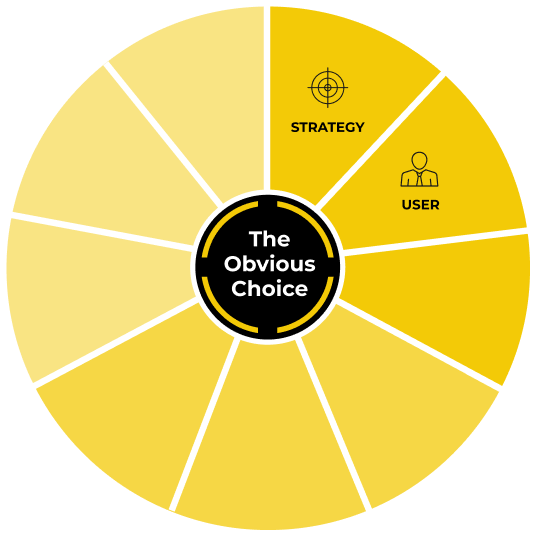
Ideal User
Do you understand your ideal user better than anyone else in your market?

Rate yourself from 1 to 10.
Whoever knows the customer best wins the market.
Your primary objective? Get laser-focused on who you’re serving.
When you don’t, the cost will be steep.
Building for everyone equals building for NO ONE.
Take ProductLed client LucidLink, for example. It’s a storage collaboration platform with many potential use cases. They didn’t want to exclude potential users and were shy about honing in on one user profile.
So, they kept their messaging general.
As a result, users who signed up were unsure how the product could best help them. Even best-fit users couldn’t immediately recognize its value. Generalization led to more questions than answers—as it usually does.
LucidLink fell into the all-too-common trap of trying to be everything to everybody. Here’s what happens when you don’t make the strategic sacrifice to cater to one user profile:
- It’s hard to understand how to serve users better.
- Deciding what to give away for free in your product-led model is difficult.
- You weaken your offer by trying to speak to too many users simultaneously.
- Your onboarding becomes chaotic with so many use cases.
- Your pricing becomes confusing as users all see value differently.
- You have a high churn rate.
When LucidLink made the switch to focus on one user profile group (media production companies), it saw a massive uptick in users. Not only did they see a 40% increase in signups, but their entire team aligned on helping these specific users succeed.
Success starts with a strong understanding of your users. Problem is, most companies have a weak sense of who their users really are.
Why is that?
Treating Buyers and Users as Equals
Let's clarify a crucial distinction. Users interact with your product while buyers make the purchasing decision.
For direct-to-consumer businesses, these roles often overlap; a user buys and uses the product. If you sign up for a simple application like Chess.com, play a few chess games, and decide to purchase it, you are both the user and the buyer.
However, in many B2B scenarios, the buyer and user are different people. The buyer could be a C-suite executive, while the users are buried further down the organizational hierarchy.
If you focus solely on the buyer's needs, you may create a product that buyers appreciate but users despise. This scenario leads to poor adoption, as users—who interact with the product daily—find it clunky or ineffective. On the other hand, if you focus on creating a product that users love, they will advocate for it, secure budgets, or even make personal purchases.
The Importance of Identifying an "Ideal User"
Not all users are created equal. An ideal user thrives with your solution, engaging with it regularly, sharing it with others, upgrading without hesitation, and providing valuable feedback. These users are easy to serve and often become your biggest advocates.
You can spot ideal users by looking at which customers use the product the most, upgrade the quickest, and leave the best testimonials.
When you become maniacal about helping your ideal user, you’ll see:
- Enhanced product-market fit. Tailoring the product to a specific user ensures it meets their needs perfectly, making it more likely that they will choose and stick with the product.
- Efficient resource allocation: Instead of spreading efforts thinly across multiple user types, businesses can concentrate on developing features and services that significantly benefit their ideal user.
- Effective marketing and messaging: Clarity in messaging better resonates with the target user, leading to higher engagement and conversion rates.
- Stronger user loyalty and advocacy: When a product is designed to meet the specific needs of a particular user, they are more enthusiastic about the product and more likely to recommend it to others.
When you focus on an ideal user, you get to know them better than anyone else in the market. You know their deepest challenges and focus all your energy on serving them.
The User Endgame Roadmap Model
You can narrow down who your ideal user is, understand their unique challenges, and learn how to design a product experience that powers your bottom-up sales motion with the User Endgame Roadmap Model.
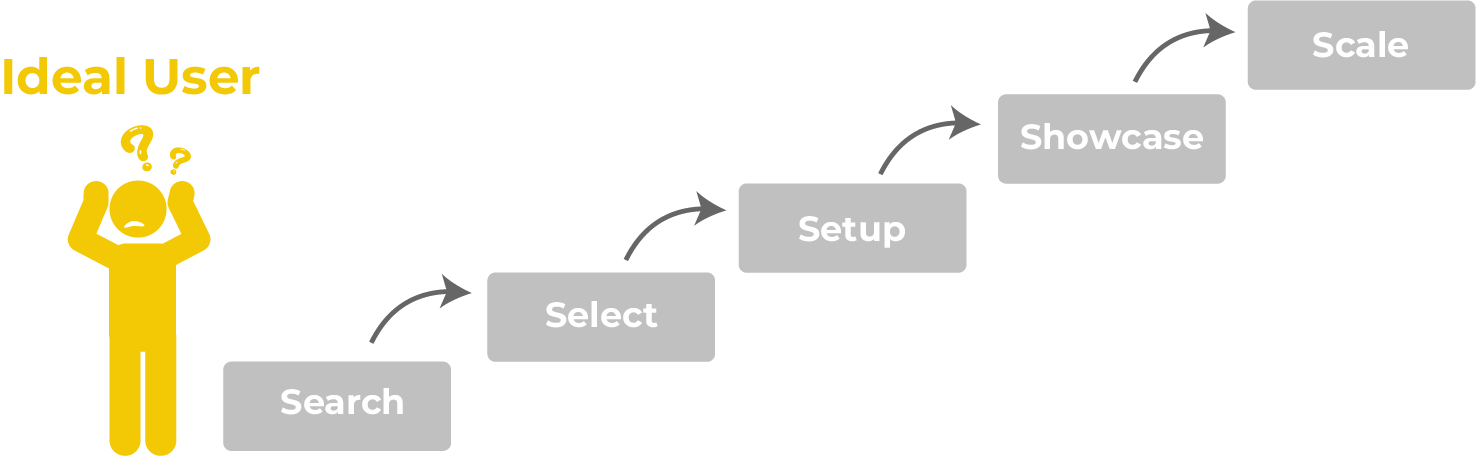
Phase 1: Identify Your Ideal User
Every product attracts an Ideal User Profile (IUP). ClickUp appeals to productivity enthusiasts, while Netflix targets entertainment lovers. Your business is no different.
To find this user, you must understand what makes them “ideal”:
- Love your product: Are enthusiastic about the product and excited to use it, even if the product still needs improvement.
- Great Retention: Tend to stick around for a long time and gain substantial value from the product.
- Highly Successful: Derive more value from the product than other users due to their specific use cases and technical skills, which maximize the product's potential.
- Strategic: Help you break into the market more effectively, as they are often looked up to by others, increasing awareness and credibility.
I’ve seen too many companies try to focus on two, three, or even four ideal users. The most common justification is that they have a horizontal product that can appeal to many users. Although that’s true, only a small subsection of people really care about what your product does.
You want to build a product for your ideal users because they’re the ones who will become your raving fans. Raving fans bring more fans to your door. (How did you hear of Canva? From a raving fan.)
Olly Meakings runs Senja.io, a software application that makes it easy to collect and share testimonials. Senja is a horizontal application; many different users can get value out of the product.
When Olly was defining his ideal user, he listed three options:
- SaaS founders
- Freelance writers
- Course creators
Olly’s intuition was to serve the SaaS founders. However, when he spoke to other SaaS founders, he learned they weren’t that motivated to use the product and noted alternatives like G2, Capterra, and Trustpilot.
When Olly analyzed each group (more on that later), he noticed that course creators were the most motivated and saw it as a vital tool in their marketing toolkit.
Senja.io had all the features a course creator could ever dream of, while SaaS founders would insist on more integrations. Olly knew he could scale well past $1M ARR by focusing solely on course creators.
Your ideal users should love your product for what it is right now.
Step 1: Write Down as Many Ideal Users as You Can
Start by listing potential ideal users. For B2B SaaS businesses, these are often job titles. Don’t aim for perfection.
Remember, a buyer is not always the user. If you’re selling a marketing automation product, the VP of Demand Generation (i.e., the buyer) might purchase it, but the Digital Marketing Specialist is the user.
Once you’ve listed five to ten potential ideal users, it’s time to narrow it down.
Step 2: Identify a User’s Likelihood of Success
Assess each user's likelihood of success using three key indicators from the BJ Fogg Behavior Model:
- Motivation: They’re extremely motivated to use the product—something is pushing or pulling them in this direction.
- Ability: It’s relatively easy for them to pick up and use the product (e.g., maybe they have programming experience).
- Prompts: It’s top-of-mind. They’re constantly getting triggers to fix this problem, whether internal or external.
As long as a user has enough motivation, ability, and prompts, they can achieve any target behavior—including success in your product.
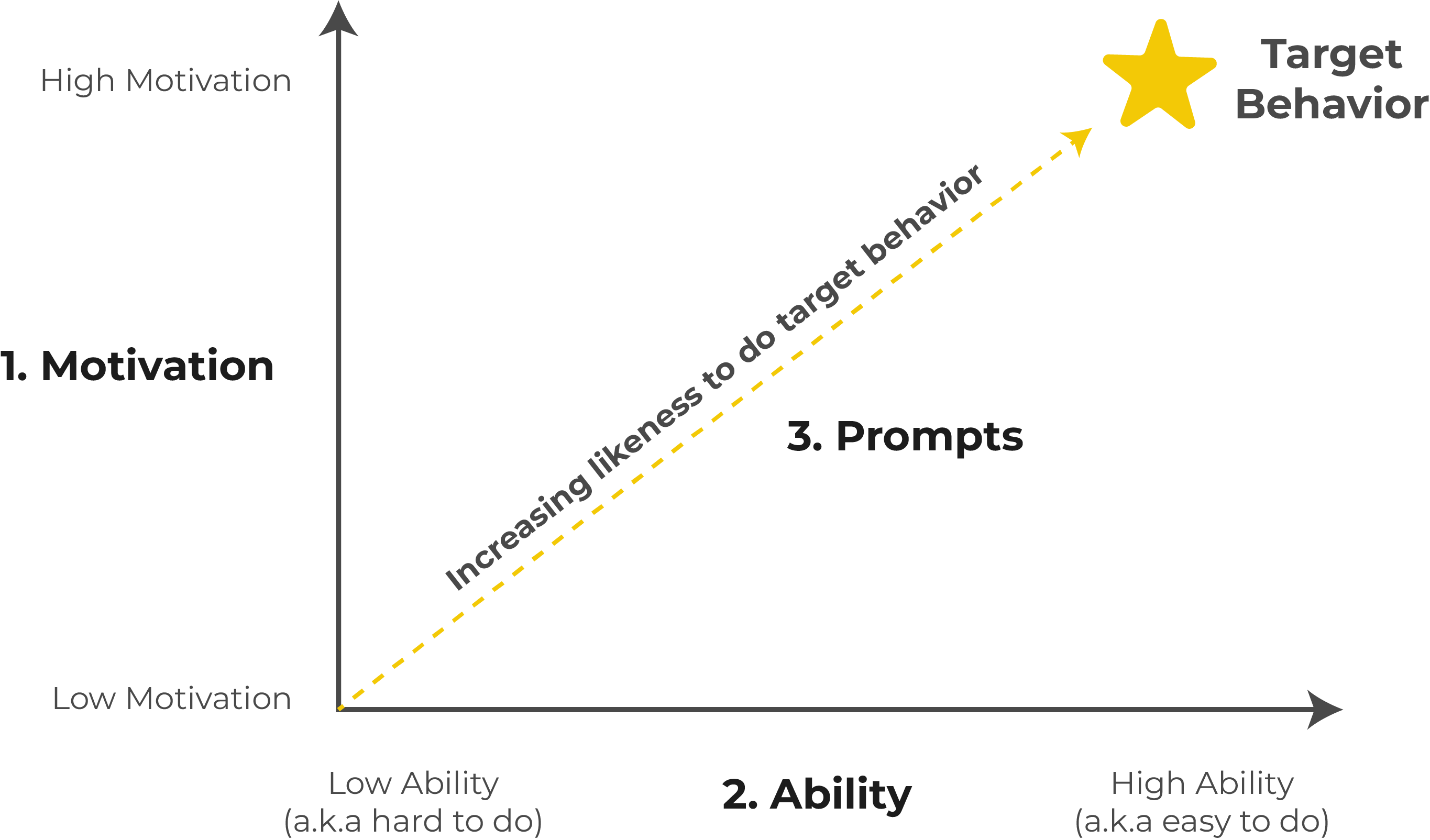
For example, developers are more likely to succeed than marketers with a highly technical application. I’m more likely to workout consistently if I do workouts that I enjoy, such as swimming. And you’re more likely to read this book if I don’t overwhelm you with too much all at once.
Rate each potential ideal user based on these three key indicators.
Your Turn (To Fill In)
You’ll start seeing a trend—one or two users reach the top. Still, you might not want to pick the top one.
For example, ProductLed client Kloudle is up against many bigger, better-funded players going after security engineers. The security engineer’s full-time job is to find and fix security issues. They’re the most motivated, have the highest ability, and get tons of prompts to address security issues.
Yet, the founder, Akash, didn’t pick this ideal user. For one, it was saturated. Second, it didn’t lean into their strengths as a business. Kloudle is unique because it automatically identifies security issues without needing expensive security engineers.
So, he decided to target smaller companies where a developer is tasked with solving security issues. This user isn’t as motivated to solve this issue, but they know it has to be done. They could set everything up and use internal prompts to fix them. Sounds lackluster, but what makes Kloudle stand out is that the product could find and fix most security issues automatically—music to your ears if you don’t want to do something.
Akash knows his ideal user has super limited motivation, so he created a product that was the quick fix his ideal user wanted.
If you’re finding it difficult to narrow down your ideal user, add additional columns:
- TAM: Is the total addressable market big enough?
- Free-to-paid conversion rate: Do ideal users convert at a higher rate?
- Retention Rate: Do ideal users stick around the longest?
Use this framework to identify who will be the most successful with your product and make a compelling case for why you’ll focus on them.
The next step is to commit to just one.
Step 3: Identify One Ideal User
I’ve seen so many SaaS founders analyze this to death. Too many companies take too long to double down, which lengthens the learning curve.
Of course, you want to get as much research and data as possible to back up your decision. Still, you’ll never have enough to decide with 100% accuracy. And if you do, you’ve spent too much time and energy trying to get it right.
Colin Powell, the former U.S. Secretary of State, had a 40 to 70 rule: Without 40% of the available information, you’ll make a bad choice; with more than 70%, you’ll have waited too long—and the choice will be made for you.
But how do you know if you’re closer to 40 or 70? Ask three questions:
- Use your head brain: “Who do I think is the right ideal user for our business?” Use logic and data to determine the ideal user. Analyze data, understand market trends, and make a business case.
- Use your heart brain: “Who do I feel is the right ideal user for our business?” Tap into your intuition and emotional intelligence. Align the choice with what feels inherently right for the business and its values.
- Use your gut brain: “What do I have the courage to say is our ideal user?” Commit to a specific user segment, even if it excludes others. Take a bold stand and focus resources on this group.
You make better decisions when you use your three brains. You can read more about the science behind it in mBraining by Grant Soosalu and Marvin Oka.
Getting it “right” the first time can feel overwhelming. Still, pick one. Refine it as you get more data and insight to validate that it is, in fact, the “ideal” user.
The first time we did this activity at ProductLed, we picked the wrong ideal user. We first chose Senior Product Executives. But we soon realized that it’s difficult for them to be successful at PLG when it isn’t adopted by the CEO, who makes it a company-wide initiative. Only then did we make the call to focus on founders and CEOs.
Your ideal user will evolve as you scale your business. You may even find that you’ve maxed out one segment and are ready to move on to the next—that’s great!
When you finally identify the right ideal user, you’ll know. Customers will be easier to serve, you’ll make more revenue per customer, and conversions will increase as you double down.
The challenge is sticking with your thesis long enough to identify some of those positive signals. How long? There’s no definitive answer. But if you’re seeing bad conversion rates, low referability, and bad retention, it might be time to move on to the next user profile.
So pick one ideal user, especially if this is your first time going through the ProductLed System. Even if you add just one more ideal user, you’ll lose focus. You’ll learn the most from picking one and serving them.
Once you’ve done that, it’s time to clarify the endgame for your ideal user.
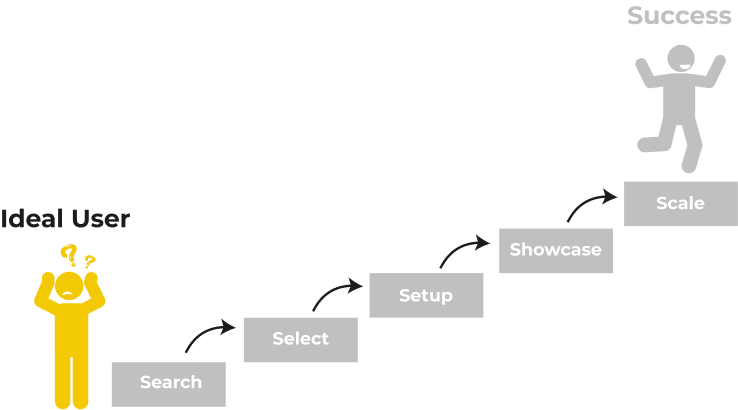
Phase 2: Clarify the Endgame
What is a user capable of once they experience the value of your product?
When you play Super Mario Bros. and pick up a flower, Mario grows bigger and can spew fire— he’s a complete badass.
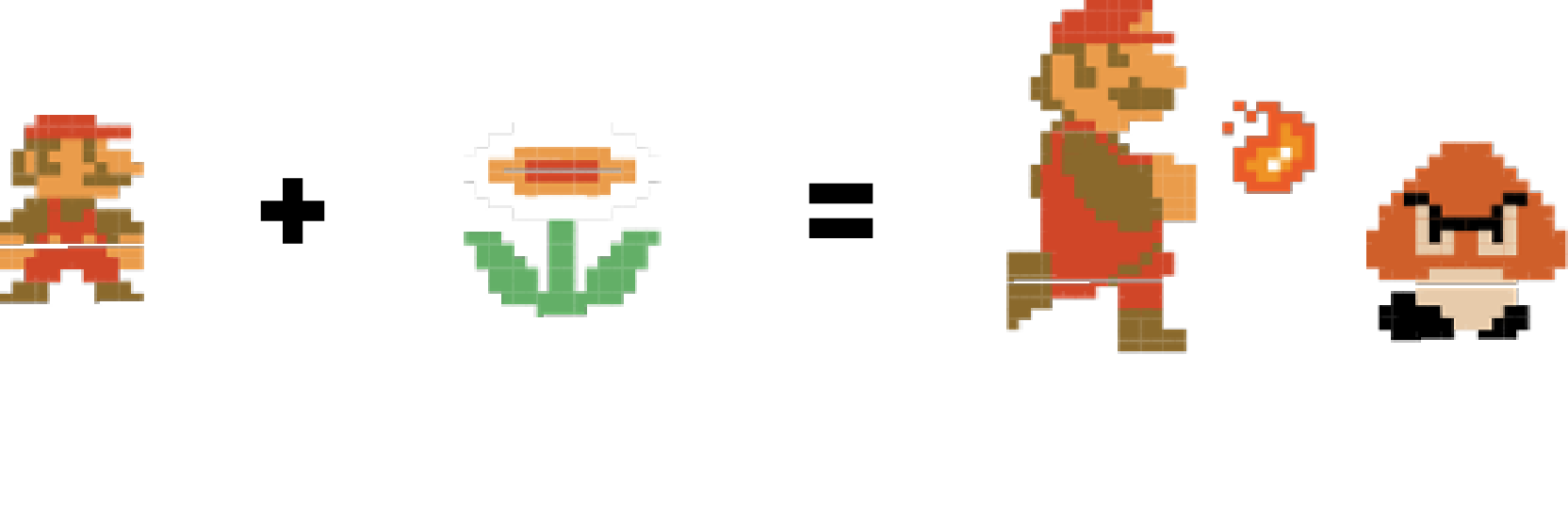
Your product is the flower. That badass version of Mario is a successful user.
Too often, companies obsess over their product yet don’t pay attention to how many fire-spewing Marios they create.
Let’s change that!
Step 1: List All Core Outcomes
When your users are successful, what core outcomes will they experience?
These three questions can get your wheels spinning:
- What will your users see when they’re successful?
- What will they feel when they’re successful?
- What will they hear when they’re successful?
For example, if you implement the ProductLed System, we know you’ll experience three core outcomes:
- Effortless ARR: Your product will sell itself.
- Lean Scale: You’ll be able to scale without hiring a big team.
- Durable Growth: Your business will be profitable over the long-term.
Everything we do in this book and in our implementation program helps you achieve those core outcomes.
List out all the potential outcomes your product helps users with. Keep it simple.
Your Turn (To Fill In)
Step 2: Pinpoint Your Top 3 Outcomes
Hone in on the top three outcomes your product delivers. Typically, these involve:
- Fix: Immediate problems or pain.
- Prevent: Fear of missing out, or harm.
- Improve: Long-term gain or advantage.
Don’t feel limited by these suggestions; outcomes come in different forms. The key is to simplify your description of how you help users win.
Your Turn (To Fill In)
Once you’ve nailed your outcomes, do the last step and define your user endgame statement.
Step 3: Define Your User Endgame Statement
Your user endgame statement communicates what the end transformation looks like. Your top three outcomes should directly support it.
At ProductLed, we define this as becoming “the obvious choice in your market.”
This is the big transformation we want you to make. You’re no longer a commodity. Your company stands out and is the leading option in the market.
Here are some examples of user endgame statements:
- Canva: Design anything and publish anywhere.
- Hotjar: Get insights to create digital experiences your users love.
- Google: Find relevant answers to any question.
- Shopify: Build your dream business.
- Zapier: Automate your busy work.
It should meet the following criteria:
A user endgame statement is a one-liner that’s easy to communicate to your team. It aligns your team on what it means when your user succeeds.
Fill out your statement below.
Now that you’ve clarified what the endgame is, it’s time to map out the user journey to see what prevents them from reaching it.
Phase 3: Craft a User Roadmap
A user roadmap helps you understand the exact steps a user must take to get value from your product. Companies without a roadmap tend to pay for it with a low percentage of users who reach value and an equally abysmal upgrade rate.
Most users won’t make it through the entire user roadmap. That’s okay. There are five main stages. Each has two milestones to help users progress through their journey.
Search Stage
In the Search Stage, users have two big milestones:
- Problem Aware: They realize they have a problem.
- Active Research: They conduct active research on how to solve the problem.
Challenges include information overload, fear of change, and limited knowledge of how to solve the problem. If you’re in a commoditized space, users will move on pretty quickly from this step. But if it's a new problem, they might do more research.
Educating users at this stage is crucial. If you know what their biggest challenges are, you can educate them on how to think about how to solve the problem.
Here are some examples of common challenges users face at this stage.
It’s your job to educate users on the root problem before they solve the wrong problem in a non-ideal way.
Your Turn (To Fill In)
Next is the Select stage, where they learn more about your product.
Select Stage
In the Select Stage, users learn about your solution and decide whether to sign up.
It breaks down into two milestones:
- Visit: Visiting your website.
- Sign Up: Signing up for your free product.
Here are some examples of common challenges users might encounter:
Screen recording tools can be very helpful here. They observe how visitors interact with your site and help you identify the main challenges.
Your Turn (To Fill In)
Once users have signed up, they move to the Setup stage.
Setup Stage
At this point, the clock is ticking for you to deliver value. Your user has a finite amount of energy, time, and motivation to invest in your product.
In an ideal world, a user can sign up and almost instantly start receiving value. But that's rarely the case, especially in B2B. Two milestones can improve your odds of successful setup:
- Profile: Ask your users a few questions to accelerate onboarding.
- Onboarding: Walk them through exactly what they need to do to get value.
What’s a profile step? It’s a few questions you ask right after your user signs up so that you can serve them better. Typically, this involves asking the user about their goal and collecting more information about their business.
For example, Wave is a financial management tool. When someone signs up, they’re asked a few questions about their business and what they’d like to achieve with the platform. Wave then customizes the dashboard and shows them relevant features to get them to value as fast as possible.
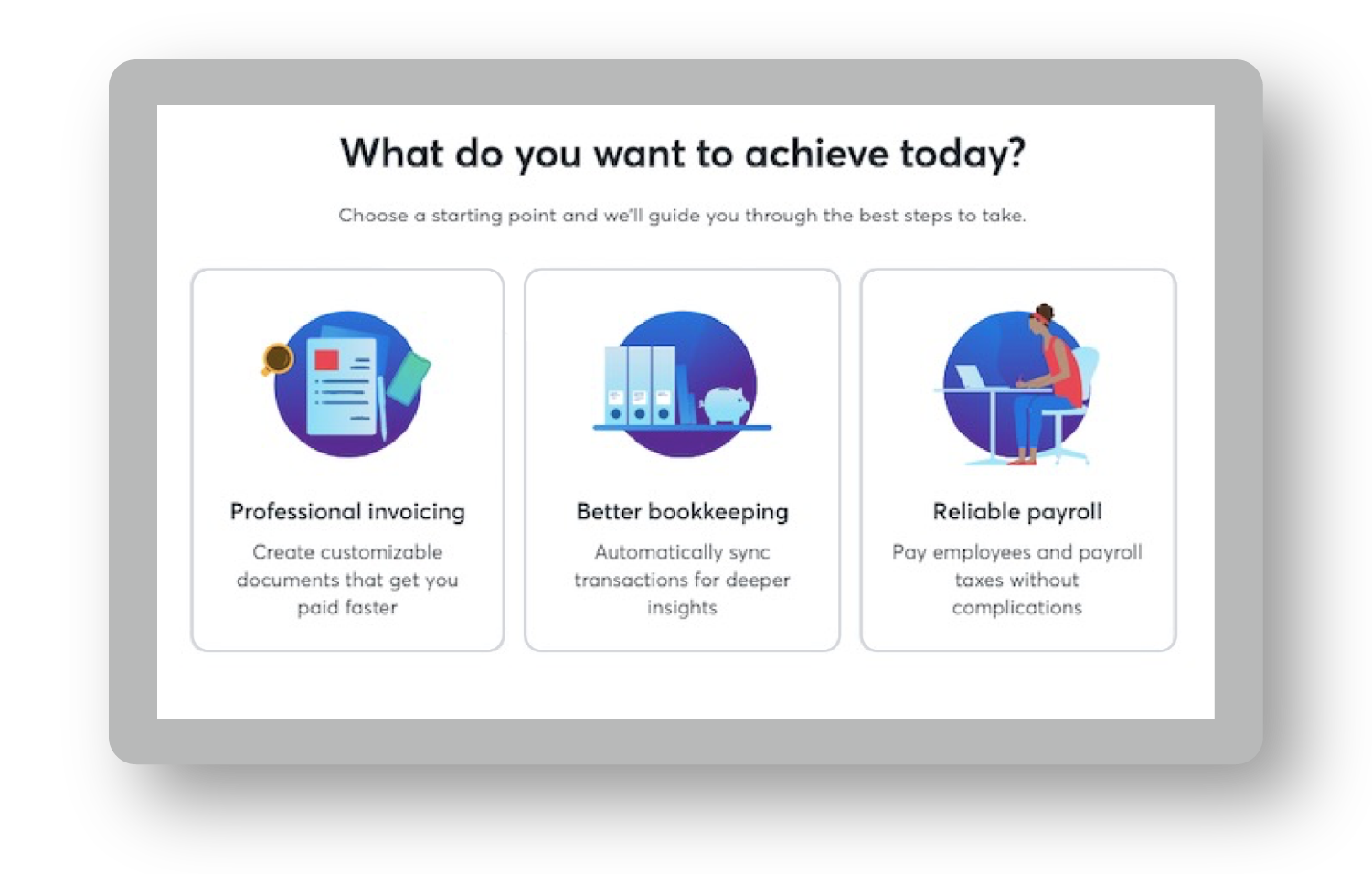
If you don't have this step yet, don’t worry. You’ll add it in the Onboarding Component to understand what percentage of signups are actually ideal users. Once your user completes the profiling step, you can kick off onboarding.
The onboarding milestone guides users through the initial setup to help them quickly realize the value of your product. Most companies don’t design an intentional onboarding experience and lose 40 to 60% of signups at this stage.
Here are some of the most common challenges at the Setup Stage:
Your Turn (To Fill In)
After onboarding, it’s time for users to reach the core value of your product.
Showcase Stage
Once users complete the Setup Stage, they should be ready to experience the product's value. This is straightforward for some products, like Netflix—just start watching. In most B2B SaaS companies, there’s a lot more to it.
We divide the Showcase Stage into two milestones:
- First Strike: Experiencing the core value of the product for the first time.
- Key Usage Indicator (KUI): Experiencing the core value multiple times.
The First Strike in your product should empower users—just like Mario with his flower.
A few examples of First Strikes are:
- Creating your first graphic in Canva.
- Having your first call on Zoom.
- Watching your first movie on Netflix.
- Playing your first chess game on Chess.com.
A First Strike doesn’t mean someone has experienced the entire value of your product. They’ve simply received enough value to motivate them to come back. A great First Strike delivers significant value while leaving room for further discovery.
What’s the First Strike for your product?
Once they’ve hit the First Strike, be on the lookout for the true sign you’ve got a user hooked—they come back for more. This is where Key Usage Indicators (KUIs) come in.
Before I sat down to write this paragraph, I had a peanut butter and chocolate energy ball. I had one before I ate my breakfast and put it back in the fridge, but five minutes after breakfast, I had another one. That’s a KUI that I love these little energy balls.
Your product should have the same effect. The First Strike is that first yummy energy ball. Then the KUI is eating that second energy ball. Once your users experience the KUI, they’re far more likely to develop a habit.
Many times, the KUI is simply experiencing that same First Strike three or more times. Here are a few examples from well-known brands:
- For Slack, a KUI is when an account reaches its 2,000 message limit.
- For Facebook, it's once someone adds seven friends.
A KUI is a great leading indicator that identifies who is getting meaningful value from your product and who is more likely to upgrade.
What does a KUI look like for your product?
The common challenges at this step fall into three buckets:
- Product Gap: Users might need help with the product itself, such as poor user experience or a difficult onboarding process.
- Knowledge Gap: Users lack the necessary knowledge to use the product—it has a high learning curve.
- Skill Gap: Some products require a certain level of skill. If users lack these skills, they may not fully benefit from (or be motivated to use) the product.
As you think through challenges, ask yourself:
- What challenges do users see?
- What challenges do users feel?
- What challenges do users hear?
Here are some of the most common challenges at the Showcase Stage:
Your Turn (To Fill In)
Once you’ve showcased the value of your product, it’s time to scale.
Scale Stage
This is the most commonly measured stage that founders obsess over. Are people upgrading?
There are two milestones:
- Upgrade: When users upgrade to a paid plan.
- Advance: When users grow out of their existing plan or simply use your solution more.
The upgrade step is self-explanatory: the user pays for your product. What’s not so self-explanatory is why your user decides to upgrade.
Take the word “upgrade” literally. What is the user looking to upgrade in their life? This isn’t about features—it’s accomplishing something meaningful. The answer should be compelling to users and solve a genuine problem they care about. It should also be sequential.
For instance, Senja’s free plan makes it easy to collect testimonials. However, every testimonial is still branded with “Powered by Senja.” As business owners become more established, many want to showcase a more professional experience, so they upgrade to a paid plan that eliminates the Senja branding.
What needs to be true for it to be a no-brainer for your users to upgrade?
Once they’ve upgraded, you need to continue delivering value.
The advance milestone empowers users to continue to get more value and justify the upgrade. In some businesses, users adopt the product as part of their workflow (e.g., Canva, Miro, or Notion). For other products, this step looks like a user completing everything they need to experience its full value.
In an ideal world, you’ll grow with your users, but that’s not always true. Some users “graduate” and seek out more advanced solutions. Others will collaborate with you to build out advanced features. Either way, you need to co-develop the advanced milestone with your customers to build out the next edition of your product. The endgame is making customers wildly successful, raving fans.
Here are the most common user challenges at the Scale Stage:
Your Turn (To Fill In)
At this stage, you need to be highly innovative and tap into what your customers want. Otherwise, it’s only a matter of time before the competition catches up and you lose your best customers.
Honing in on Your Ideal User
The User Endgame Roadmap helps you get clarity around who your ideal user is, what success means for them, and identifies their biggest roadblocks.
If you implement the User Endgame Roadmap, you’ll get to know your users better than anyone else in your market. Here’s the User Endgame Canvas for you to fill out with your team.
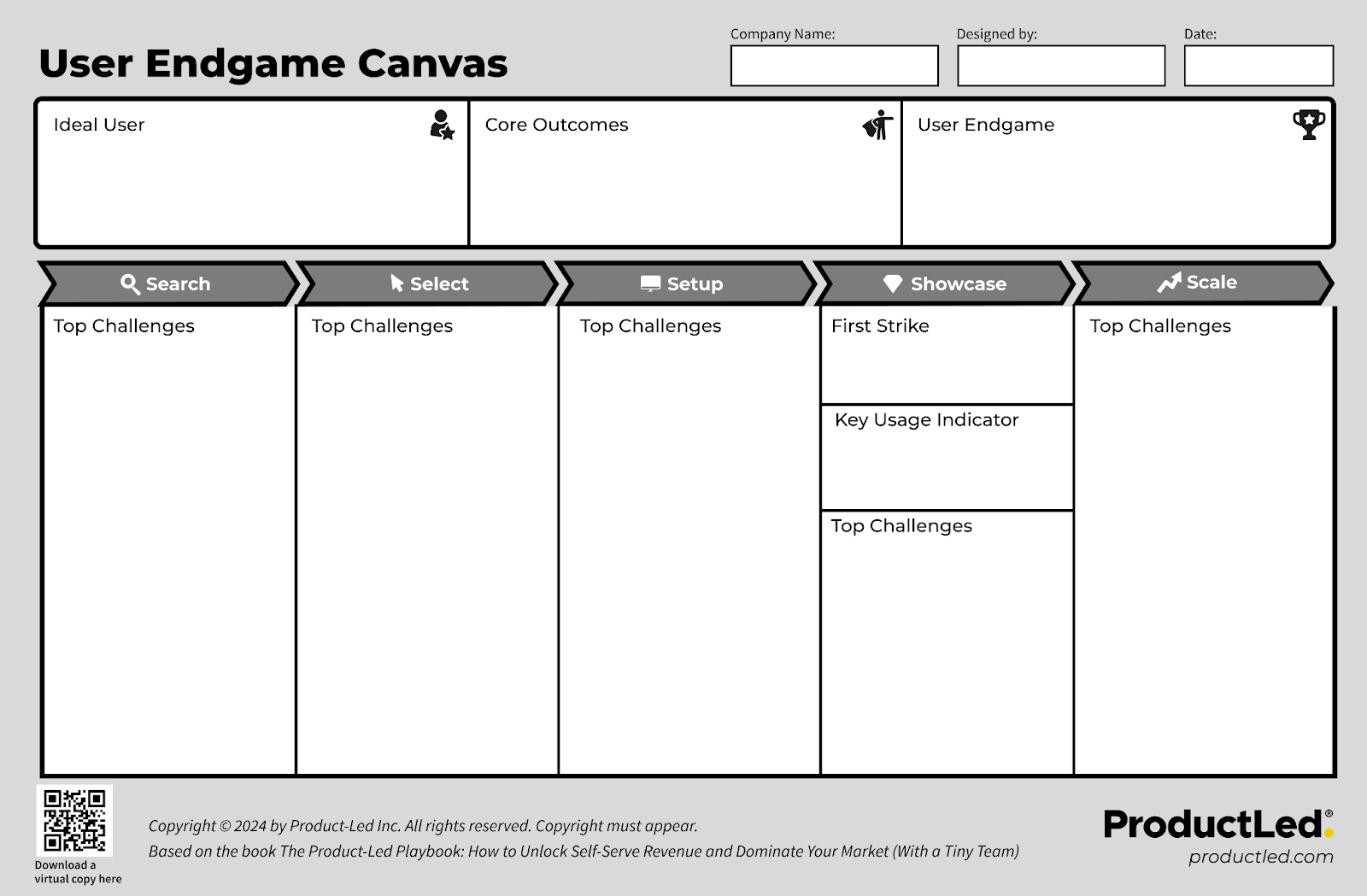
🎁 Action Tool: User Endgame Canvas
Head on over to ProductLedPlaybook.com and download a copy of the User Endgame Canvas. Use it to get to know your user better than anyone else.
But here’s the deal. This isn’t a set-it-and-forget-it activity. Your ideal user will change over time. Your user’s endgame might change based on new technology. Their challenges will evolve as you solve the initial ones and understand them better.
Although the activities we’ve outlined are highly effective at getting leadership teams on the same page about your ideal user and what impedes their success, nothing replaces actually talking to customers.
Get out there and become the leading expert on your ideal users.
Actionable Takeaways
- By tailoring your product to a specific user, you ensure it meets their needs perfectly, leading to higher adoption and retention.
- Focusing on one ideal user allows you to develop features and services that significantly benefit them, maximizing your impact.
- Clear messaging that resonates with your ideal user leads to higher engagement and conversion rates.
- A product designed for specific user needs generates enthusiastic users who are more likely to recommend it to others.