
Winning Strategy
How clearly are you the obvious choice for customers in your market?

Rate yourself from 1 to 10.
A strategy is not a plan; it’s a theory on how you will win.
For instance, Southwest Airlines wanted to be the obvious choice for travelers seeking an alternative to Greyhound.
They believed they could win a substantial part of the market by offering low-cost airline tickets while maintaining the lowest costs to run their business.
To do that, they made key strategic choices:
- Fly point-to-point routes so the aircraft can be used more than the typical hub-and-spoke model.
- No meals on flights to improve turnaround times and cleanup.
- Fly only Boeing 737s to simplify training and maintenance costs.
- Prioritize online ticket sales vs. booking through travel agents to increase their margin.
This strategy helped Southwest Airlines scale rapidly. By 2023, it flew the most passenger-seat miles in the United States.7 They’ve fallen from grace on the public relations front, but that reinforces an important point.
At the core of a winning business strategy is the choice to do some things and not others. Southwest Airlines couldn’t have won by following other airlines. It had to say no to long-distance flights, partnering with travel agents, and flying different aircraft.
A winning business strategy makes it easier for your team to say no to initiatives and projects that don’t align with your theory of how you’re going to win. It’s not easy.
When a strong bias for action is present in a company, you can fall into the “action trap” of trying to do everything instead of being intentional about what you won’t pursue. A good strategy helps the company know what is and isn’t important. This creates a relentless focus that intentionally directs everyone’s energy. A bad strategy, on the other hand, wastes countless resources and energy by trying to do it all.
In Essentialism, Greg McKeown points out that if you have 10 units of energy, you could broadcast it in 10 different directions to make one inch of progress in each direction. Or you could put all that energy into one direction and make 10 inches of progress.
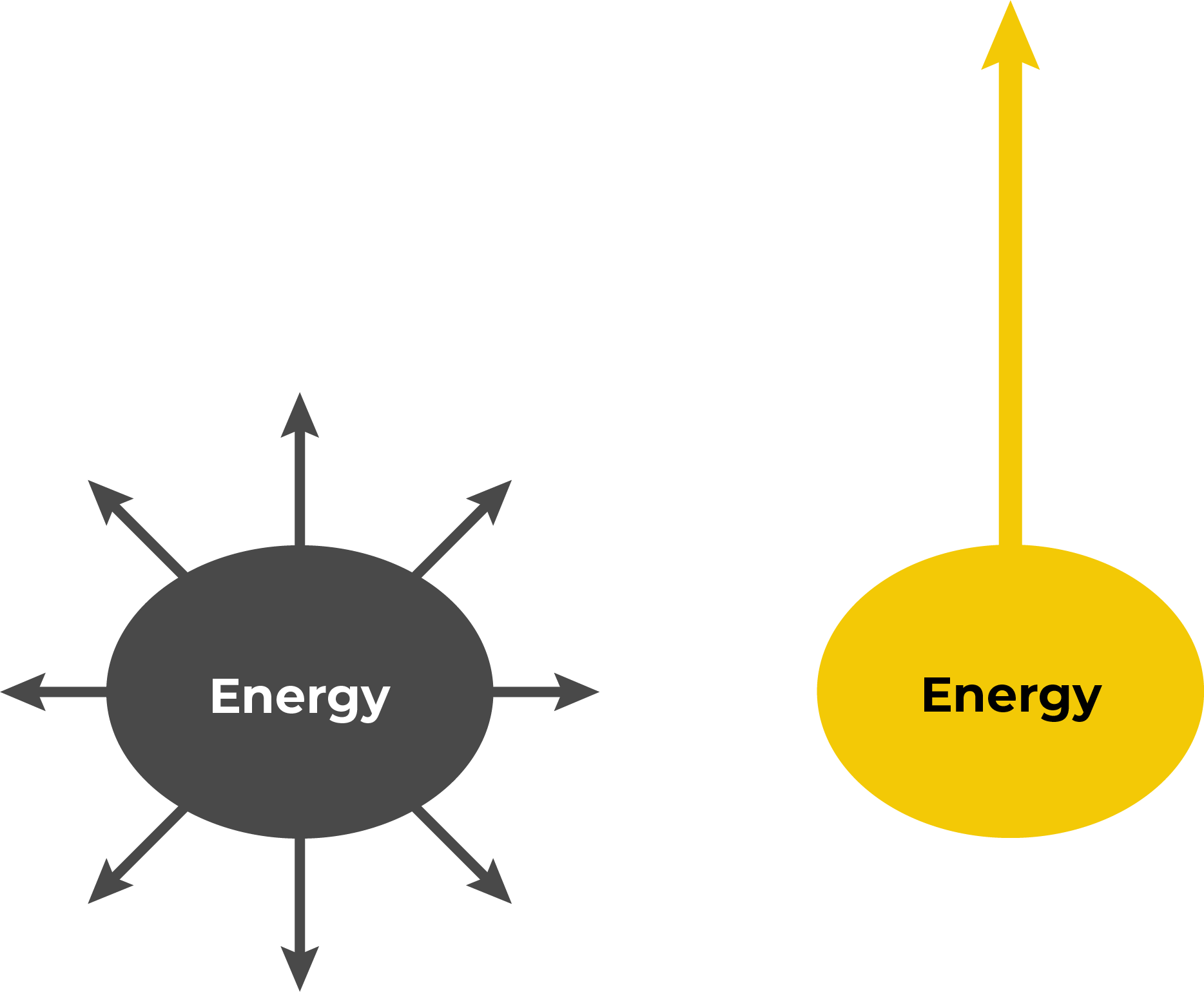
A great strategy unites your team to make massive progress in one direction by giving everyone the same decision-making framework for the company’s focus.
Focus means:
- Your entire team can make decisions faster.
- Your customers better understand what you do.
- Your business becomes hard to copy.
I would know, but not for the reasons you might think.
For the first five years of running ProductLed, we had no winning strategy. Our target market was vague, and we didn’t have a distinct advantage. My bias for action was running the day-to-day. We got a lot done, but few projects made a big impact. Over time, we lost momentum and were pushing a rock up a hill.
Then, we built a strategy with this framework. We became intentional about where we directed our energy. We said no to exciting opportunities to pursue ones aligned with our strengths.
Over time, growth picked up. We started making massive progress in one direction.
The Bullseye Strategy Framework
What sparked this transition for me was reading Roger Martin and A.G. Lafley’s Playing to Win, which outlines their strategic framework for Fortune 500 companies.
I found it a tad clunky for SaaS businesses, so I simplified their approach to create the Bullseye Strategy Framework. It consists of five steps that underpin your high-level strategy.
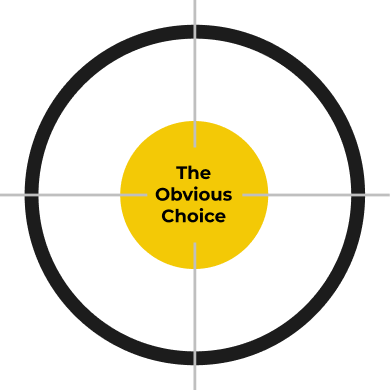
Step 1: Which Market Can You Dominate as the Obvious Choice?
Every market becomes commoditized.
In a commoditized market, it’s a race to become the obvious choice.
There’s only one Canva.
One HubSpot.
One Atlassian.
One Zoom.
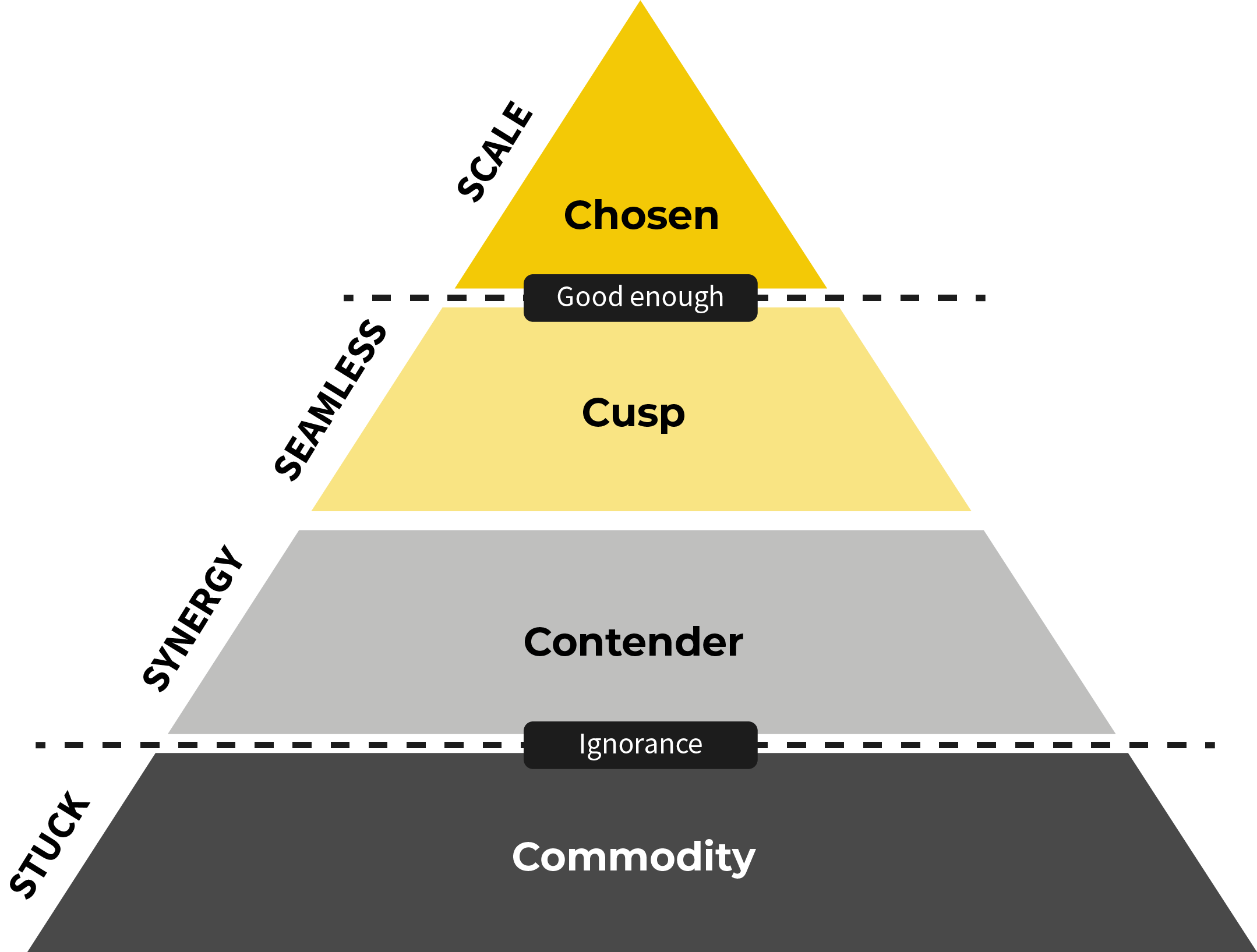
In the early stages, many businesses find themselves in what’s known as the Commodity zone. The struggle is real here: competition is fierce, and profits are slim. At this point, your product doesn’t stand out, so it becomes difficult to command higher prices or attract customers easily. The customers you do manage to acquire often need a lot of hands-on help to use your product effectively. This stage demands significant effort just to convince users to sign up for your product, not to mention getting them to realize its value.
This is where so many teams get stuck.
There is too much at stake to be simply a commodity.
To reach the next level, your product needs to start doing the heavy lifting to support users so they can get out of day-to-day operations.
That’s when you become an actual Contender in your market. It's not a bad place to be, but to get to the next level, you need a killer strategy that makes you differentiate and stand out from the rest of the competition.
That’s when you’re on the Cusp in your specific industry. You’re one of the top three to five players in your space. When you're at this stage, it's actually great. Usually, you have seven-figure profits, a high RPE, and predictable revenue in your business.
But it’s not the final stage. In fact, this is the most dangerous place. This is where most stop. Good enough is the enemy of a truly great business. This is where it really takes discipline. And that is why very few make it to the top.
At the top, you’re the Chosen leader. At this stage, you’re the Canva of your industry. Your strategy should not only focus on outshining competitors but also on scaling efficiently to capture the majority of the market share.
Now I have a question for you…
Which market can you dominate as the obvious choice?
Many founders often feel intimidated and question their ability to become the obvious choice. To overcome this reluctance, specify who you’re targeting and your unique value. For example, if you’re a CRM tool competing against HubSpot, it’s unlikely you’ll beat them by also targeting all small-to-medium-sized businesses (SMBs). To win, you must target a segment of the market. Instead, you could focus on being the best CRM for real estate agents.
One of our ProductLed clients, Paubox, offers HIPAA compliance for health professionals. Could they win the market for all health professionals? Maybe. But the better play for now is becoming the best solution for one segment: mental health professionals.
As you think through who and what you’re the obvious choice for, permit yourself to dream. Think big. The whole point is to set a direction for your business. If it feels audacious, that might be a sign you’re pushing the bounds too far. You want to feel like you can dominate this market confidently. Remember: you’re going to update this strategy consistently throughout the year, so start small and slowly expand your vision.
Your Turn (To Fill In)
Once you’re clear on that, dig into where to play.
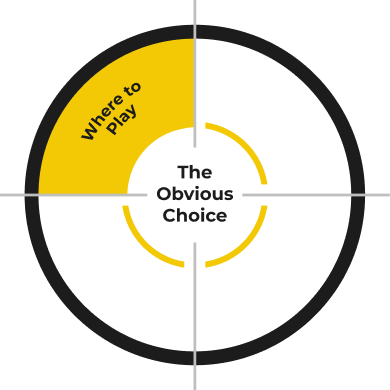
Step 2: Where Will You Play?
Where you play is as much art as science.
I wish I could say it’s as simple as picking a target market and a marketing channel. But no matter how you approach it, there’s an awkward trial-and-error phase until you find where you play best.
Start by answering five questions:
- Who's your ideal customer? Define the group that loves your product for what it is today.
- What problem do you solve? Identify the meaningful problem your business addresses.
- What's your core product? Focus on the product that drives most of your revenue.
- What are your primary marketing channels? Choose the main channels that generate traffic and signups.
- What geography do you target? Concentrate on regions with the most ideal customers.
Be specific. Avoid the temptation to be everything to everybody. Paubox realized they could win the market by focusing solely on email compliance.
When you’re not intentional about where you play, you spread yourself too thin. An army trying to fight multiple battles always gets destroyed by an army focused on a single beachhead.
To clarify which marketing channels to pursue, read Traction: How Any Startup Can Achieve Explosive Growth by Gabriel Weinberg and Justin Mares. This book is one of the best at outlining what marketing channels make the most sense for your business.
Your Turn (To Fill In)
Once you know where to play, it’s time to create a game plan for winning.
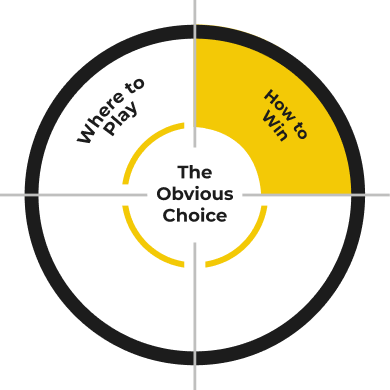
Step 3: How Will You Win?
Starting a business has never been easier, so competition is fierce. Copying your product isn't hard.
So, what makes your business hard to copy? Moats.
When I lived in Chiang Mai, Thailand, they had an ancient moat that surrounded the entire city in a square. This gave defenders two huge advantages:
- Offenders had to swim across the water.
- Then they had to climb the walls.
Whoever tried to invade the city was at a serious disadvantage.
A moat works the same way in business. It gives your company true defensibility and makes you hard to copy.
You can and should build more than one moat over time. Ideally, you have three. A competitor might be able to copy one moat, but copying all three is nearly impossible.
There are countless potential moats, but these are 15 of the best:
Differentiation Moat: Offer a unique product or service that fulfills customer needs in a distinct and valuable way. This could involve innovative features, superior quality, focusing on a specific niche, or a combination of factors.
Cost Leadership Moat: Become the low-cost provider in your industry while maintaining acceptable quality standards. Achieve cost advantages through economies of scale and efficient operations.
User Experience Moat: Create a seamless and intuitive user experience (UX) and extend that same level of thought and care throughout the customer journey. Understand customers’ needs and preferences to design seamless, personalized interactions and build long-term loyalty.
Network Effects Moat: Network effects occur when the value of a product or service increases as more people use it. Examples include social media platforms like Meta, where more users make the platform more valuable for each user. You can see network effects at companies like Webflow, WordPress, Miro, and Canva, where armies of users create templates for others.
Operational Efficiency Moat: Streamline your internal processes and optimize resource allocation to improve productivity and reduce costs. Efficient operations lead to better profitability, faster delivery times, and improved customer satisfaction.
Branding and Reputation Moat: Build a strong brand that resonates with your target audience. Cultivate a positive reputation by consistently delivering on your promises, providing exceptional products or services, and actively engaging with your customers. A notable brand can command customer loyalty, trust, and premium pricing.
Distribution Moat: An extensive distribution network or exclusive access to key channels, strategic partnerships, and alliances creates barriers for competitors. It allows businesses to reach customers more effectively and control the availability of their products or services.
For example, when your app is one of the first in the Shopify or Android app stores, you get the lion's share of the downloads, and, over time, your app gains the most reviews and attention, which is hard to replicate.
We benefited from this in the early days of PLG. We wrote a lot of great content on the subject before people were talking about it. Over time, we gained a ton of backlinks and authority around the topic, generating traffic that’s hard for new entrants to copy.
Speed and Innovation Moat: Rapid innovation is one of the most underrated moats. It’s not the big that eats the small… It’s the fawst that eats the slow. It’s also a great book written by Jason Jennings and Laurence Haughton on how to use speed as a competitive advantage. You can stand out if you break into a stagnant industry.
Pricing Moat: A unique pricing strategy that aligns with customer success can give you a strong competitive edge. For example, you could offer your product for free and cover costs through sponsorships, charge only when users get value by taking a percentage of each transaction, or, like Basecamp and Flodesk, avoid charging for additional users, unlike most companies.
Free Moat: Just having a free product experience for users is a start, but you can take this even further by creating more free products subsidized by your core product(s). Expand into adjacent markets and disrupt them by promoting your product for free to capture more potential users and demand for your other products. For example, ConvertKit, an email marketing tool, created a free landing page tool to make it easier for creators to capture signups.
Switching Cost Moat: A business can create high switching costs for customers through contractual obligations, integration with other systems, or data lock-in. Designing your software to create switching costs for customers can reduce churn. For instance, Alina Vandenberghe, co-CEO at Chili Piper, reduced churn by 35% for organizations with three or more integrations by integrating their platform with other tools.
Proprietary Moat: Patents, trademarks, copyrights, and trade secrets protect a company's intellectual property and provide a competitive advantage by preventing others from replicating or using proprietary technologies or brands. For instance, we developed the ProductLed System™ as our proprietary process to help software founders scale their self-serve revenue faster.
Engagement Moat: A vibrant brand community and active user engagement creates a loyal customer base and word-of-mouth marketing. Businesses that create a sense of belonging, encourage user-generated content and facilitate community interaction develop strong moats.
Expansion Moat: The main way to ensure you can spend the most to acquire a customer is by making the most per customer in your industry. This could be because each customer eventually buys more than one product from you, or you have a revenue model and high customer loyalty that grows customers’ lifetime value over time.
HubSpot is a great example of winning with expansion. You start with their free CRM and sales tools when you’re getting your first few customers. Then, when you have a good number of contacts, you start paying for their Marketing hub, and when you have a sales team, you can upgrade to their Sales hub. When you have too many customers to deal with, you can upgrade to their Service hub. One $50/month customer can eventually turn into a $5,000/month one.
Founder Brand Moat: Whether you decide to build in public or share content consistently on social, building a founder brand moat is hard to copy. Do you want to do business with a company where you feel like you know the founder or go with a faceless competitor? Adam Robinson from RB2B.com, Dave Gerhardt from Exit Five, Guillaume Moubeche from Lemlist, Jason Fried from 37signals, and Olly Meakings from Senja do an incredible job here.
Let me share four common scenarios of how you can build moats:
Be the low-cost leader in your market. Southwest Airlines decided to win through Cost Leadership and Operational Efficiency. These two moats complement each other: Lower costs bring in more customers, while operational efficiency preserves profitability.
Go upmarket. Consider making Differentiation, Customer Experience, and High Switching Costs your strengths. With these three, you’ll better serve enterprise customers with your unique, differentiated solution and keep them with exceptional customer experience and high switching costs.
Become the dominant market leader. Consider building moats around Cost Leadership, Operational Efficiency, and User Experience. A great user experience drives operational efficiency (i.e., fewer support tickets and demos) and enables you to sell your product at a lower price with healthy margins. To keep the dominant market leadership position, your product must be better, faster, and cheaper than alternatives. These three moats do just that.
Disrupt a stagnant industry. Consider winning with a Free moat, Speed, and Cost Leadership. You can create a vacuum for unsatisfied customers typically over-served by the current enterprise solutions. (Hello, Canva versus Photoshop.) When you enter a stagnant industry with speed, incumbents can’t keep up.
One of the fun parts about developing moats is that each can and should complement the others. It should feel like you’re building a winning recipe. Individually, they’re not that special. But together, they create an unstoppable combination that packs a real punch.
Here’s an example from Paubox:
It’s important to note that you can and should build more than one of these moats over time. Each creates a barrier to entry, making it harder for competitors to copy what you do.
And most importantly…
Creates a competitive advantage for you to win as a business.
Yet, you don’t want to focus on building too many moats simultaneously. I recommend starting with one or two moats at a time, and once you’ve built them up, consider adding another.
Your Turn (To Fill In)
One important thing to point out here is that a moat is something you regularly need to maintain. It’s not something you set and forget. For instance, if you have a Differentiation Moat with a couple of unique features but a competitor copies them, it’s only a matter of time before your Differentiation Moat evaporates as customers see fewer differences between your offering and the competition.
As you map out which moats will help your business win, remember this is a theory on how you’re going to win. The goal is to gain confidence about how you will win and ensure that you have the right capabilities to do so.
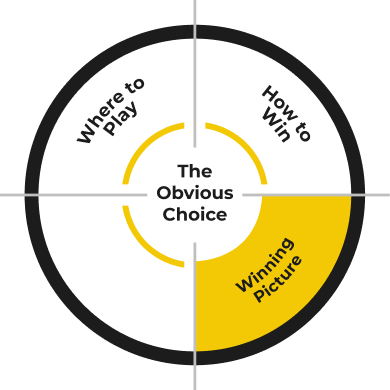
Step 4: What Is Your Winning Picture?
If your team has a different definition of winning, what are the odds you’re going to win?
Slim to none.
Let’s take a page from sports teams at the elite level.
The National Football League (NFL) has the Superbowl. Cyclists have the Tour de France. Tennis has Wimbledon.
If you’re a professional athlete, winning at those events is the endgame.
If you’re playing to win, you must have an endgame.
Yet, in business, that endgame is often vague for your team.
The most common endgames are:
- Exiting the business
- Initial Public Offering (IPO)
- Profitability and financial success
- Social impact and corporate responsibility
- Customer impact
If your endgame is “to leave a legacy,” that’s not super specific. Your endgame needs to be SMART, as in Specific, Measurable, Achievable, Relevant, and Time-Bound.
That way, the rest of your team can understand the objective and know whether you’re getting closer to achieving it.
Here are a few more specific examples:
- To reach $100M in revenue by the end of 2040.
- To exit the business for $60M in the next five years.
- To serve 10,000 customers in the next five years.
- To transition the company to 100% employee ownership by 2032.
- To build a community of one million engaged users by 2030.
For your timeline, pick something further out than three years but less than 10 years.
Your Turn (To Fill In)
Now that you know your endgame, paint a picture of what winning looks like.
1-Year Picture
In one year, what does success look like for your business? How much revenue? Profit? What does the team look like? RPE?
By investing time in building your 1-Year Picture, you’ll align your team, encourage big thinking, and create focus.
Start with identifying where you want to be across the Top Outcomes: revenue, RPE, and profit.
Choose three Top Goals for the year. These are directional and should be SMART.
For example, a Top Goal for the year at ProductLed is to launch this book and sell 5,000 copies.
Keep it simple.
Here’s an example:
A reward is optional but boosts motivation and gamifies goals. Something at stake creates an incentive for the team to go the extra mile. We'll dive deeper into this in the Team Component, but for now, add a placeholder and see if it increases your drive to achieve the winning picture.
A good 1-Year Picture will give you a high-level overview of what the business looks like without getting bogged down.
Your Turn (To Fill In)
Once you have your 1-Year Picture, paint a picture of what your business will look like in the next quarter.
Quarterly Picture
The main difference between the 1-Year Picture and Quarterly Picture is that everything in the quarter should get you closer to supporting your 1-Year Picture.
Here’s an example:
Your Quarterly Goals should directly support your Annual Goals.
Your Turn (To Fill In)
Now that you're aligned on the Quarterly Picture, it’s time to define what winning looks like this month.
Monthly Picture
There's a saying: "Great years come from great quarters. Great quarters come from great months. Great months come from great weeks, and great weeks come from great days." While we won’t go that granular, aligning your team around what winning looks like each month is a powerful step. This increases your chances of hitting quarterly and annual goals.
The key difference between the Quarterly Picture and Monthly Picture is focus. Focus drives massive progress, and a focused team will always outperform an unfocused one.
Here’s how it works: start by deciding on the Top Focus for the month. Keep it simple and stick to one. Then, identify the Top Monthly Projects that directly support achieving that focus.
Make sure all of your resources are aligned to these projects, and that the team fully supports them. Here’s an example:
Your Turn (To Fill In)
You'll update your winning picture every month in the Process Component, so you always know what success looks like and can stay focused on achieving it.
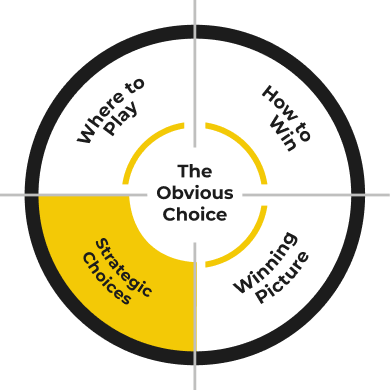
Step 5: What Strategic Choices Must You Make?
What you don’t pursue is just as important as what you do pursue.
Some strategic choices are sacrifices. You won't make progress if you don't say no to good ideas, products, and even teammates.
The answers to two strategic questions will have an outsized impact on your business:
- What are your core values?
- What are the core capabilities your business needs?
Each has a cascading effect. Let’s break down how to identify them.
Core Values
Your core values aren’t just a slogan. You should hire and fire based on core values. Your core values should directly support your how-to-win strategy.
Currently, only 23% of employees believe in their organization's core values.8 By aligning your values with your company strategy, you create a trustworthy foundation, reinforcing your unique approach to serving the market.
For instance, at ProductLed, we help our clients succeed with PLG. We couldn’t do this effectively without our core value of simplicity. This value is central to who we are and helps us better serve clients.
What are the three qualities your company needs to serve your ideal customers better than others? Aim for three. Less is more. Most people forget a long list.
Your Turn (To Fill In)
If you’re stuck, ask yourself what bothers you about how some companies treat you. Your core values may simply be the opposite of what frustrates you.
With core values in place, you can identify the capabilities you need to succeed.
Capabilities
A capability directly supports your ability to win.
Say you want to be an Olympic sprinter. You need capabilities for:
- Exceptional Speed: Cover short to medium distances at high velocity.
- Strength and Power: Have strong quadriceps, hamstrings, glutes, and calf muscles to generate powerful strides and maintain a fast pace.
- Technical Skills: Master proper running technique, including stride length, arm swing, foot strike, and breathing. Efficient running form maximizes speed and reduces the risk of injury.
Capabilities differentiate a wannabe Olympian from a real one. An Olympic runner shouldn’t build the capability to bench press more than prime Arnold Schwarzenegger—that’s just extra muscle to lug around with each step.
Your capabilities are how you create your moats. Take two people with the same how-to-win strategy; the person who develops the right capabilities will always win. Ask yourself: What do we need to be fantastic at to build our moats? Commit to developing two to three capabilities to support each.
For example, Paubox is going to win with their incredible customer service. To do that, they need the capability to offer incredible support at all times, in all forms, to all users.
Drill it down further by asking three additional questions:
- What new capabilities do we need to develop?
- What existing capabilities do we need to double down on?
- What existing capabilities are no longer needed?
That last question is the toughest. It’s never easy letting team members go when their capabilities are no longer essential.
Yet if you hold onto them, you’re carrying around extra weight you no longer need. In the long-term, you’re also doing them a disservice by keeping talent that could thrive in another environment. Everyone deserves a work environment in which their capabilities shine.
Your Turn (To Fill In)
Let’s tie everything together with a few supplementary strategic choices.
Supplemental Strategic Choices
These choices paint the middle of a bullseye bright red, so it’s obvious where to focus.
Most people think of very tactical decisions like, “test our Meta Ads.” That’s not a strategic choice. A strategic choice that supports that tactical decision might be to double down on Meta as the core marketing channel.
The difference? The latter involves saying no to other marketing channels. Strategic choices are all about what to say “no” to. One of the easiest ways to finalize your strategic choices is to go through these three questions from the Bullseye Strategy Framework.
1. What strategic choices must you make based on your where-to-play strategy?
Each customer you target outside your where-to-play strategy distracts your team. I was helping a leadership team develop their where-to-play strategy, and we decided to focus on SMBs. Yet the CEO kept signing enterprise customers because they paid the big bucks.
When I talked with the team, they told me those enterprise customers generated 95% of the support issues and took up 90% of the development time because of custom contracts. Without knowing it, the CEO was sabotaging his company.
Eventually, the CEO decided to stop signing enterprise deals that required custom development work so the business could focus on the fast-growing SMB market.
2. What strategic choices must you make to double down on your how-to-win strategy?
To lean into your three moats, what do you need to double down on or say no to?
Paubox has a Differentiation Moat based on its patented IP for sending encrypted emails. They made the strategic choice to lead with marketing their email suite, rather than forms or texting products.
3. What strategic choices must you make to achieve your 1-Year Picture?
Should you kill certain initiatives? Do you need to reallocate resources to fund your new strategy? You might cut certain capabilities to invest in new ones.
Your strategic choices become your anchor when new initiatives pop up. There’s no ambiguity about where to focus, and you can make decisions much more quickly.
Your Turn (To Fill In)
Rolling Out Your Winning Strategy
Creating your strategy is the easy part.
Rolling it out is the hard part. As James A. Robinson and Daron Acemoglu detail in Why Nations Fail, any new change requires creative destruction.
Let there be creative destruction.
If you don’t shake up your business, someone else will. All businesses that last more than a decade need to cannibalize themselves and reinvest profits from the core product into a different future.
As Jason Fried, founder of 37Signals, shared with me on the ProductLed Podcast, the CEO's main job is to introduce risk into the business. Everyone else's job is to manage and mitigate that risk.
Your strategy is nothing more than a theory on how you’re going to win. If you have 100% confidence, you waited too long. Your competitors know it, too.
Get the rest of your team aligned on your strategy. The first step is to put it all together in a one-pager. We call this a One-Page Endgame (OPE).
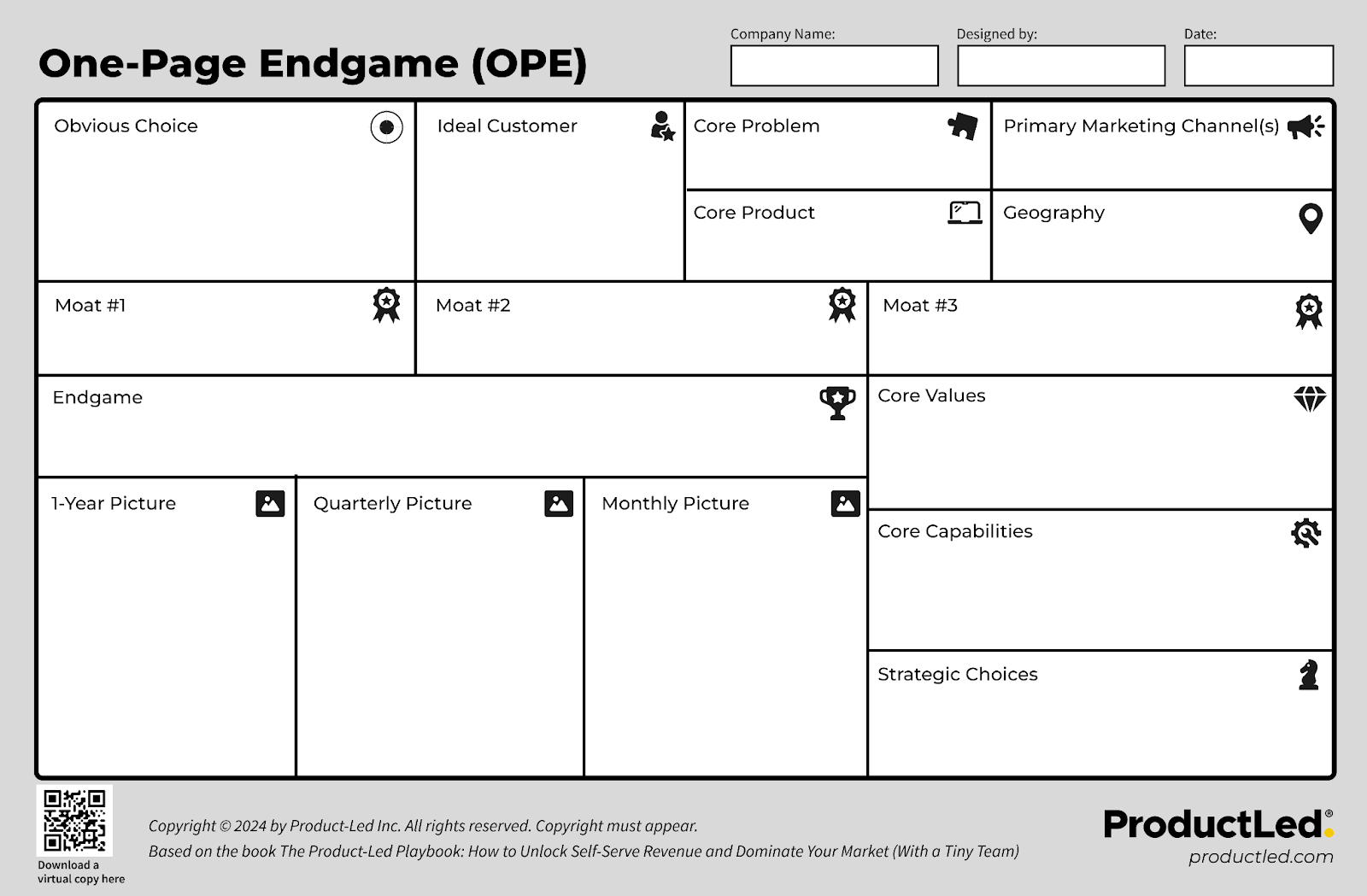
Share your OPE with everyone who:
- Has to act on it.
- Will be affected by changes in it.
- Could offer valuable feedback.
Your OPE is a high-level overview of the direction of your business. Explain how you arrived at the strategy and how your business will change.
🎁 Action Tool: One-Page Endgame (OPE) Canvas
Head on over to ProductLedPlaybook.com and download your one-page endgame template. Use it to communicate to the rest of the team what
the strategy is, how and why you arrived at it, and its implications.
Finally, be sure to review it frequently. We’ll cover exactly how to do this in the Process Component.
While a winning strategy is a critical component to a successful product-led motion, even the best strategies underperform without a deep understanding of your ideal user.
Actionable Takeaways
- A well-defined strategy provides a clear direction and aligns the entire team's efforts toward a common goal. Trying to do everything dilutes efforts, saps resources, and diminishes results.
- Moats create a competitive advantage that makes your business hard to copy.
- If you’re playing to win, everyone must understand your endgame.
- Building the right capabilities ensures you can support your chosen moats.
- Regular communication and review of your strategy keeps it relevant and aligns the entire team.