
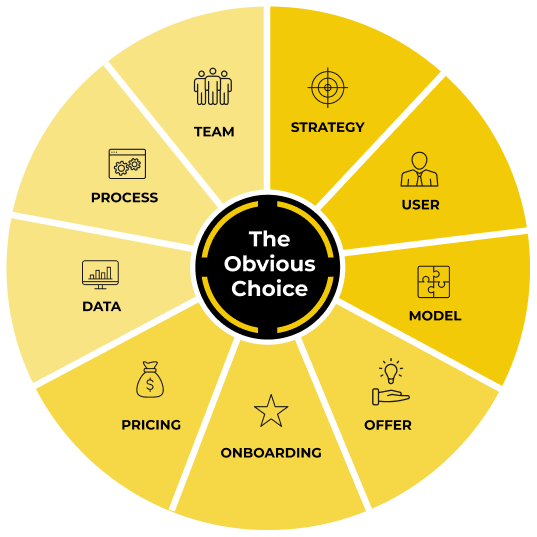
The Elite Team Flywheel is a four-phase method for building a lean, elite team in a product-led company, where the product does the heavy lifting and every role is essential. Its phases have you design the team with an accountability chart, audit fit and performance, set incentives for individuals and the team, and develop one skill per direct report every month.

Rate yourself from 1 to 10.
Userflow hit $5M ARR with just three employees. (And, no, they didn’t have any contractors–I asked.) That’s over $1.6 million in revenue-per-employee (RPE).
A high RPE is a hallmark of great product-led companies. Why? Because the product does all the heavy lifting—from onboarding to value creation, support, and upgrades.
It’s also why product-led companies can afford to hire as a last resort. By implementing all the prior components, you solve most problems with your product.
Over time, your product becomes your best employee—your best salesperson, support rep, and marketer. However, to become the obvious choice in your market, you must have an elite team.
Like a top sports team, an elite team is lean, with only essential roles. Each member is highly skilled, works well together, focuses on results, and constantly improves. But most product-led companies can’t afford to hire top talent with proven experience (at least in the early days). You need to build a team that can grow and evolve as your company scales.
I won’t cover hiring strategies here, but I highly recommend reading Who: The A Method for Hiring by Geoff Smart and Randy Street for insights on recruiting top talent.
By the end of this component, you'll know how to design an elite, lean team, raise performance standards, and quickly level up your existing team. Let me introduce you to the Elite Team Flywheel (ETF).
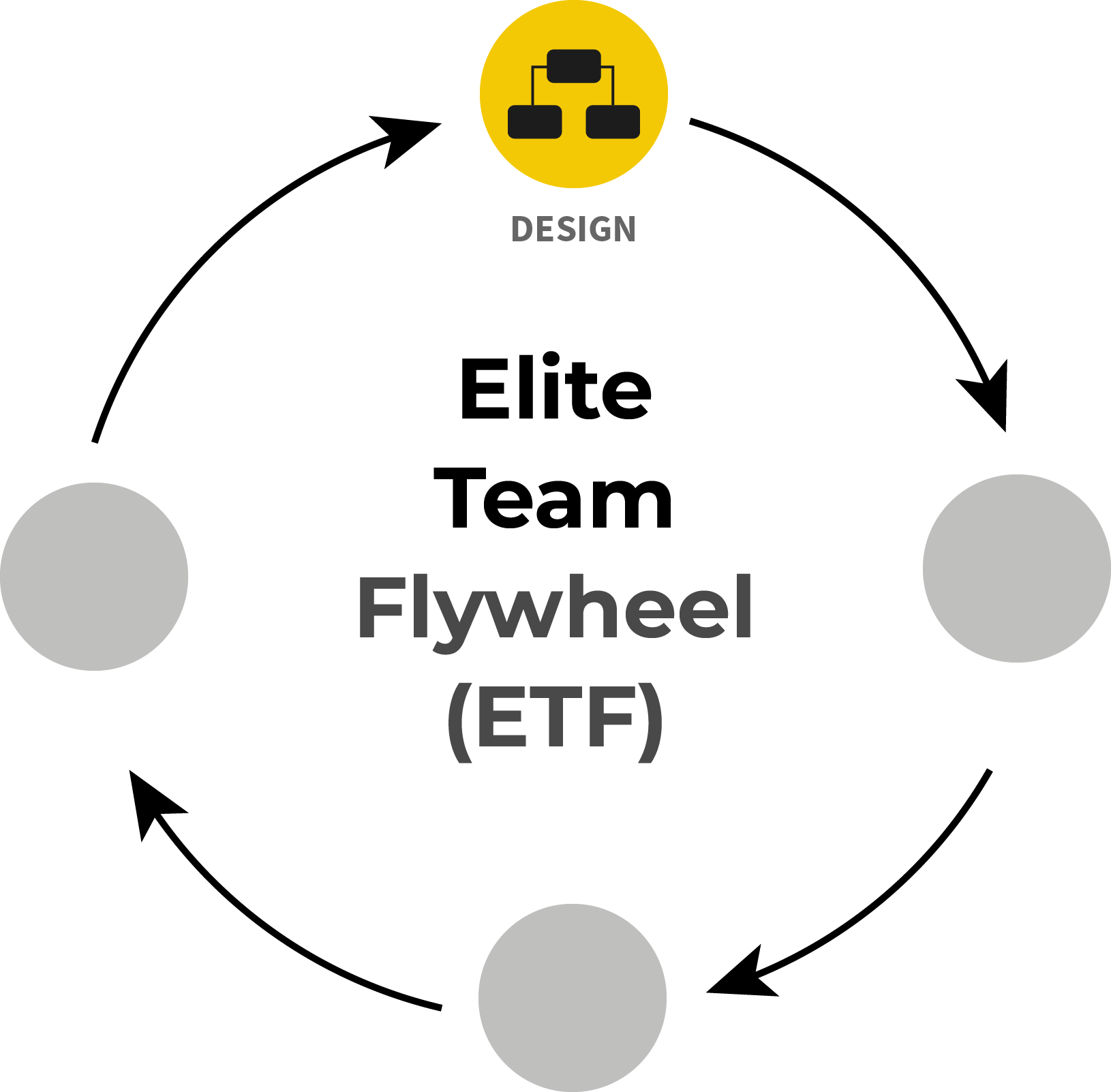
Phase 1: Design the Team
Start designing your team with an accountability chart. An accountability chart is a visual tool that defines roles, responsibilities, and reporting relationships.
It’s similar to an organizational chart but with one distinction: One person can own more than one job. For instance, your Head of Product might also be the Head of Finance, as well as the website manager.
Without breaking down each job, you’ll look to hire expensive unicorns who can do many things. Finding someone great at social media advertising, operations, and finance, for example, is hard compared to finding someone to handle just social media advertising.
Traction by Gino Wickman introduced me to accountability charts. It was a game changer for our business. We knew who was accountable for what and realized that underperformance was almost always because someone was doing too many jobs.
Build your chart from the top down. In EOS®, they recommend unbundling the CEO job into two roles:
- The Visionary is the person with the creative ideas. They set the vision and establish the business's values, strategy, and culture.
- The Integrator is the COO or CTO-type who approaches the business systematically. An Integrator turns the vision into reality.
In solo-founder companies, the same person wears the Visionary and Integrator hats. However, as the company grows, these often become separate jobs—very few people can be a true Visionary and brilliant Integrator.
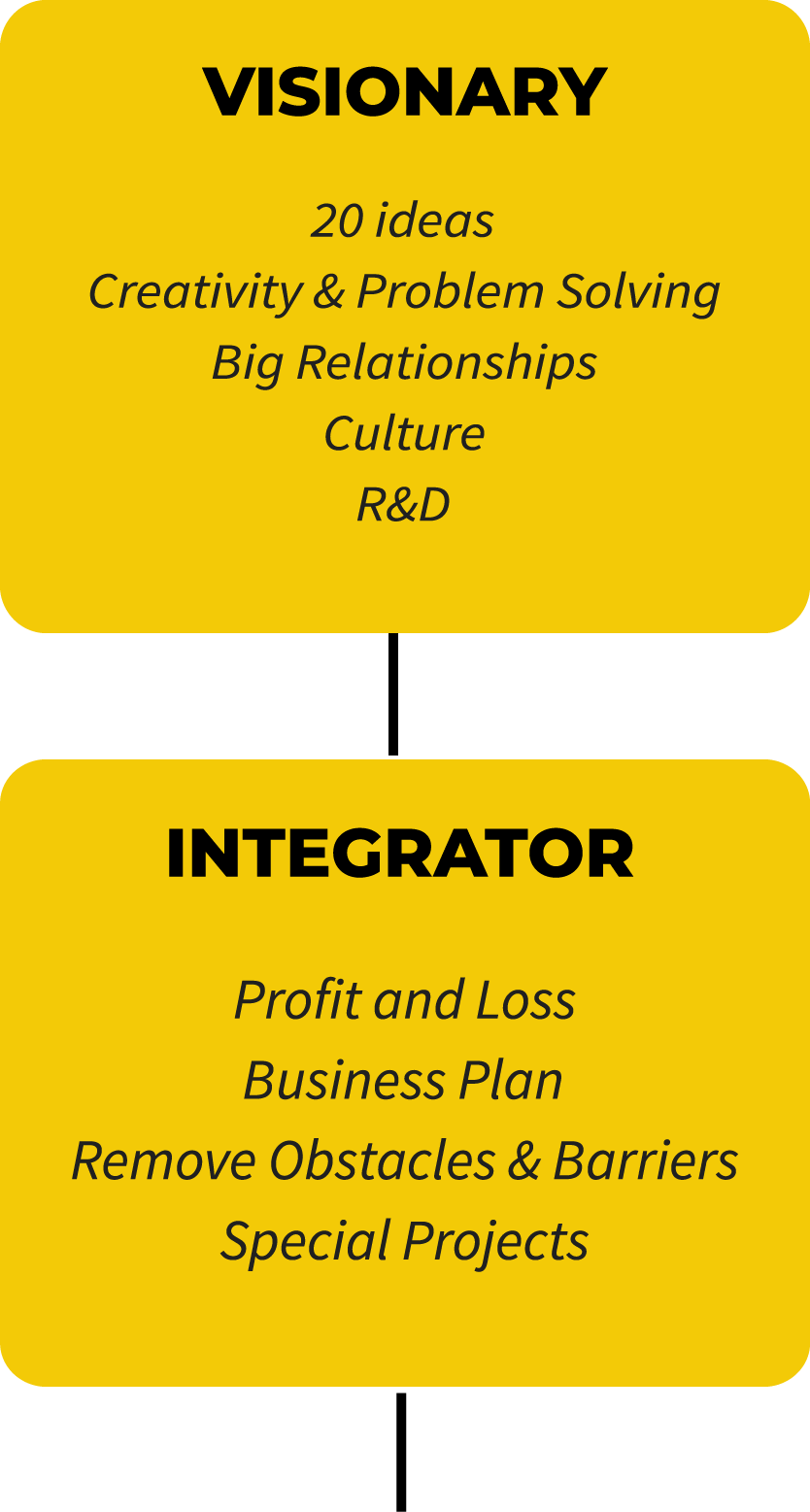
Who is the Visionary, and who is the Integrator on your team?
Your Turn (To Fill In)
Next, list the other main jobs required to help your business grow. For most product-led companies, this is someone in charge of owning the GTM motion and product.
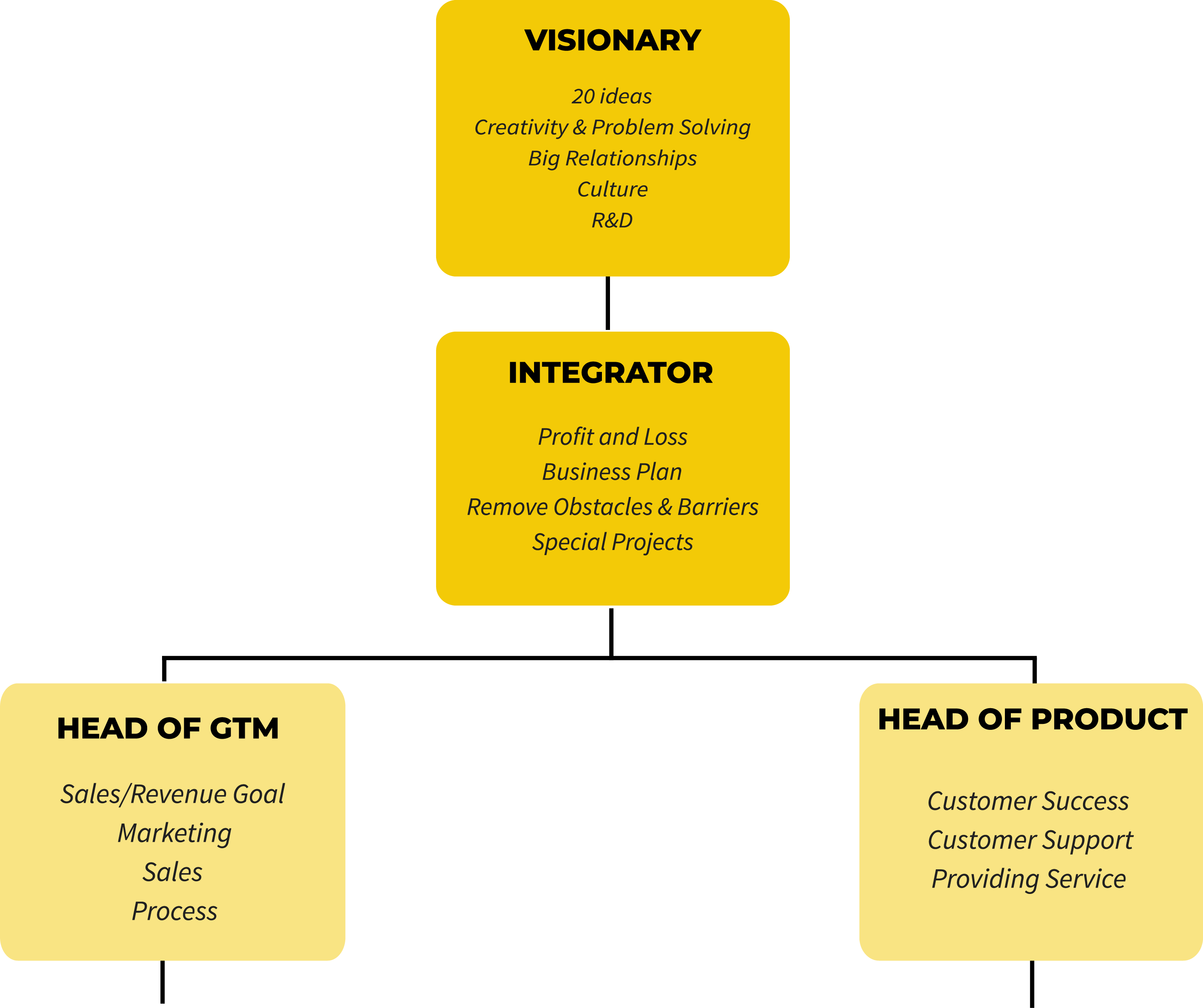
These are the most important areas of a product-led business. Your GTM leader gets the product out into the market while your Head of Product crafts the product around your customers' needs.
These don’t have to be your leadership roles, but it’s a simple place to start.
Your Turn (To Fill In)
Once you’ve identified your leadership team, go a layer deeper and list all the supporting jobs.
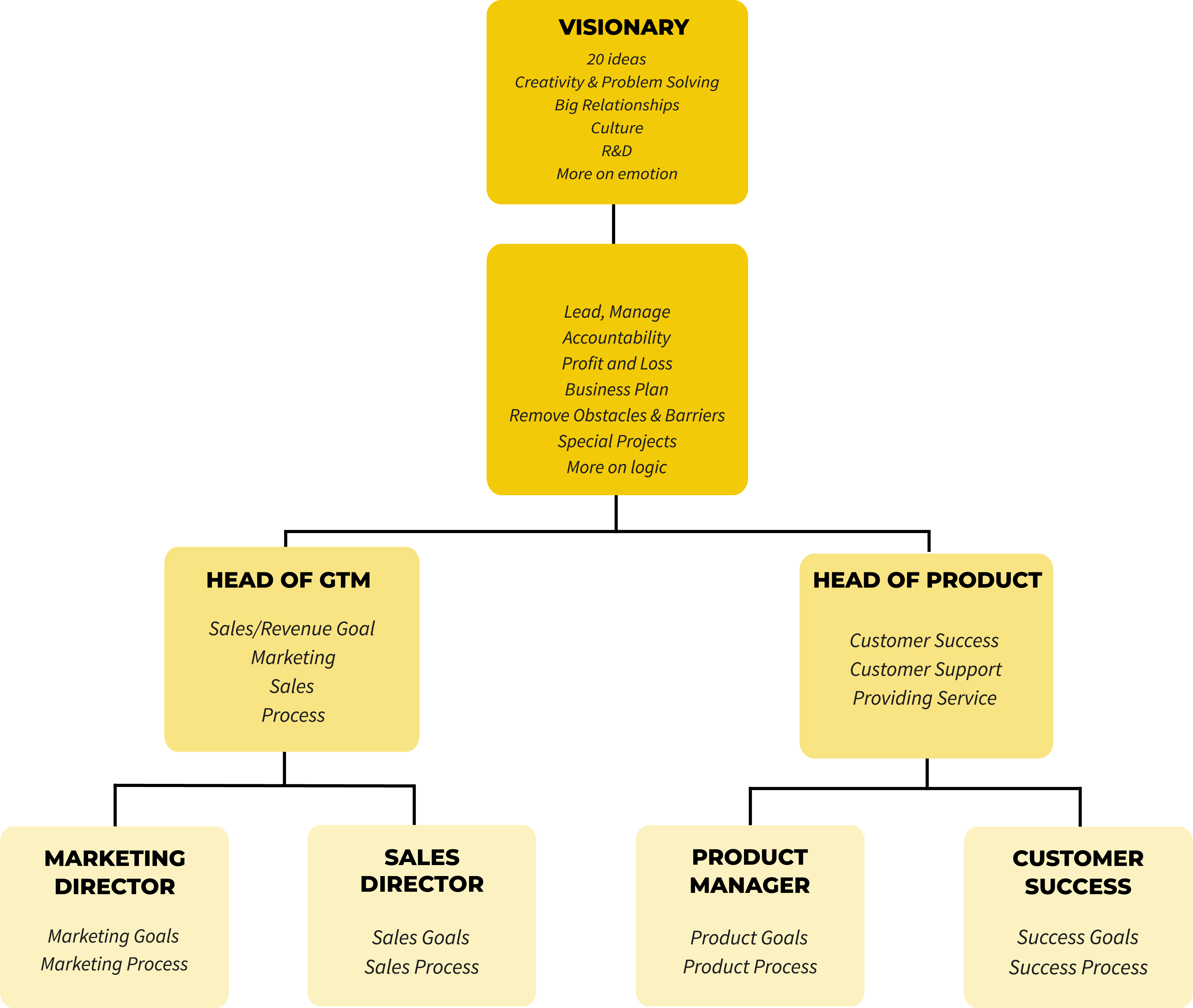
Don’t get caught up in titles; they’re for reference only. What matters is what you put below—specifically, the responsibilities assigned to each job. This keeps the ego out of the activity.
Ensure the core capabilities you identified in your OPE are well represented. If not, build these capabilities out soon to bring your strategy to life. You may also realize that you have capabilities on your accountability chart that you no longer need.
🎁Action Tool: Accountability Chart Template
You can grab our free template to build out your accountability chart at ProductLedPlaybook.com to understand the responsibilities of your team.
Design a Lean Team
Of all the listed jobs, which are required?
One of my favorite triage tools is the 3T system from Mike Michalowitz, author of Clockwork. Here’s what each T stands for:
- Trash: You can safely eliminate the job without impacting anything. Never worry about this again.
- Transfer: This job is important but needs to be transferred. Who can do it better?
- Treasure: This job is critical to the business and needs to be protected. How can you dedicate more time to it?
Each step leads to pruning. Analyze your jobs based on these three Ts.
You should eliminate 10 to 20% of jobs that are no longer required. Like a sports team, each role needs to be 100% intentional. Having three goalies is silly, but how often do you have two or three people doing a job that should be handled by a specialist?
Review your accountability chart during every SAM to clarify who owns what and eliminate jobs.
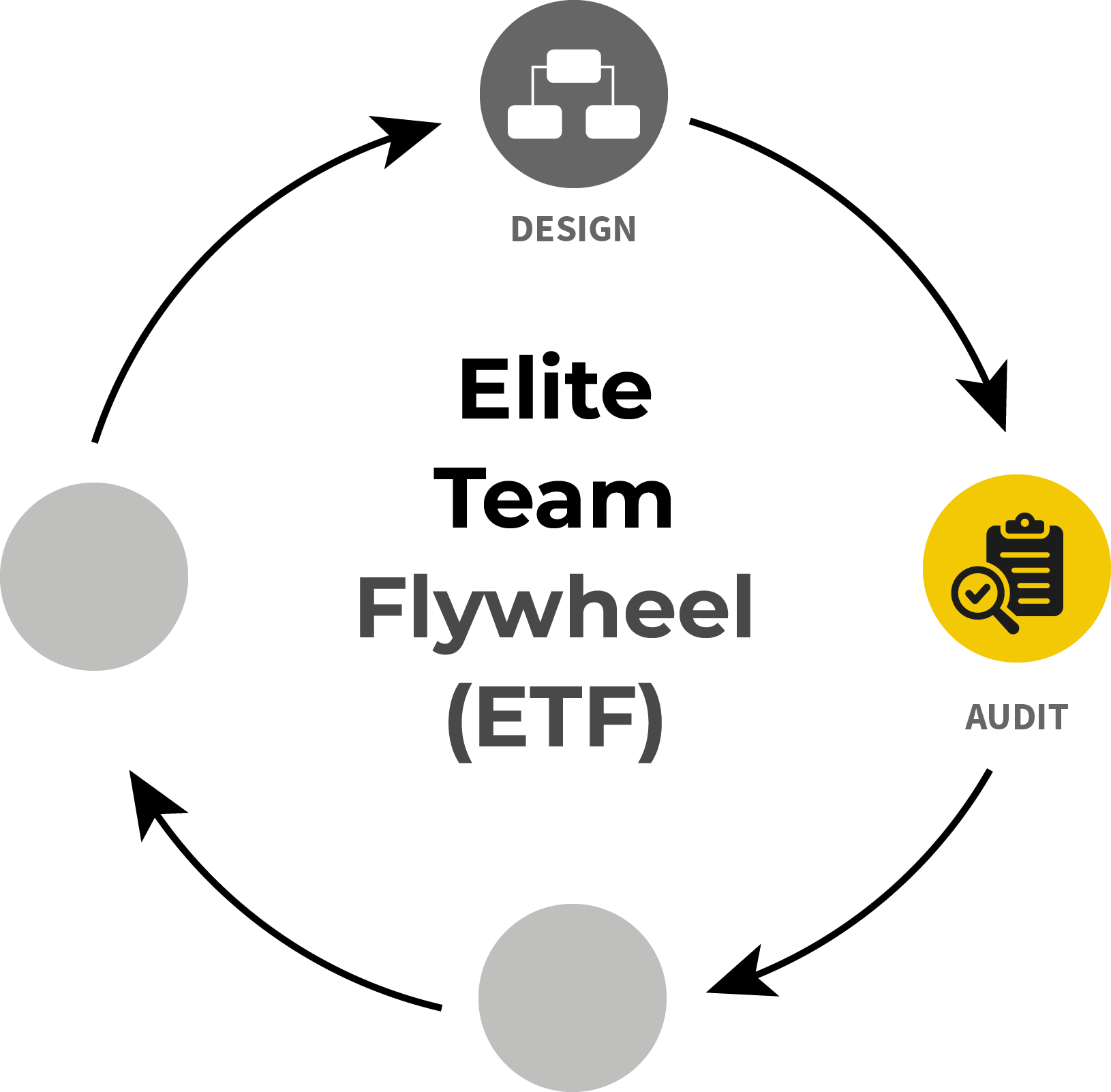
Phase 2: Audit the Team
Auditing your team can feel scary, but it’s necessary to raise the bar for performance. There are two ways to do it.
Like a computer virus scan, there’s a quick scan and a full performance scan. One checks the most important stuff; the second checks everything. Having both options allows you to address team issues faster.
Quick Audit
The quick audit makes hiring and firing decisions 10x faster.
Use the core values from your OPE to build your quick audit criteria. Do you want someone on your team who doesn’t align with your core values?
Create a checklist to analyze each employee and contractor to see if they meet your core values—always, sometimes, or never.
You can use the quick audit at other times, too:
- Ask it in an interview: Can you give me an example of how you embody X core value?
- Use it as a checklist to decide which candidate best fits a new role.
- Complete it in the first week or two of hiring a new team member to validate they embody your core values.
- Review it before a new employee’s probationary period ends.
- Assess it when you think someone is not the best fit for your team.
Let’s run three employees through a quick audit.
Say your core values are Simplicity, Energy, and Drive.
To simplify the scoring, use (+) to indicate always, (+/-) to indicate occasionally, and (-) to indicate never.
Sarah rarely has good energy and complicates tasks. She has two areas where she never embodies the core values and is an okay fit in the other. She likely should be let go.
Josh, on the other hand, is a mediocre fit in all core values. He doesn’t meet the criteria, so he should be let go, too.
Melissa is almost a perfect team player. You might decide to coach her on managing her energy, but other than that, she’s a great fit.
You might also have some non-negotiables to add to this list, like Integrity. That is up to you and the type of organization you want to build. The goal is to raise the bar for your team, so making choices about who to keep is absolutely part of this activity—and it’s the hardest part.
If you’re still unclear about who to keep on your team, complete a more thorough performance audit.
Performance Audit
Your quick audit helps you identify who’s a fit for your team. Always run the quick audit before a performance audit, as you can quickly screen out folks who are a bad fit.
The performance audit takes time to complete but gets to the bottom of performance issues.
Use it when:
- You have someone on the team who is underperforming.
- You want to raise the bar on your team’s performance and proactively address performance issues.
- Someone owns more than three jobs.
One of the biggest challenges with assessing performance is that one person might be doing five jobs. They’re great at one, okay at three, and below standard on another. This is common at resource-strapped startups—everyone’s wearing multiple hats.
As an organization grows, it’s normal for employees to shed jobs as the standards for each gets more focused.

To analyze someone’s performance fairly, you need to audit each job. It’s unfair to let someone go simply because they’re wearing too many hats.
Use these four key markers to determine whether someone is right for each job:
- Motivation: Do they really want the job?
- Results: Do they consistently hit their targets?
- Skills: Do they have the required skills to do their job?
- Capacity: Do they have the capacity to do this job?
Pick one person and one job they do. Do this with the team member so you can understand all their jobs.
Let’s go back to Melissa since she passed the quick audit.
She currently has three jobs:
- Social media manager
- Copywriter
- Email marketer
Social media management represents most of her time, so audit that job first. She’s highly motivated, gets results, and has the skills required, but surprisingly, she doesn’t have the capacity to dedicate enough time to it.
For her copywriting job, you learn that she’s motivated to do it and occasionally gets results but lacks the skill to do it effectively. She doesn’t have much capacity to do this job well either.
For her email marketing job, you learn that she’s not motivated to do it, and although she generates results and has the skills, she still lacks capacity.
Use (+) to indicate yes, (+/-) to indicate occasionally, and (-) to indicate no.
Melissa could delegate the email marketing job to a more motivated team member and train them, freeing her to focus on social media management and copywriting.
She lacks the necessary skills to succeed as a copywriter, so you can put a training plan in place to level her up. It makes sense to invest because she’s genuinely motivated to get better.
Our graphics designer at ProductLed is a perfect example of how well this can work. She started helping our team with administrative tasks but mentioned she’d like to learn more about graphic design. She has blown us away over the past two years with her skills. Every week, she gets better at her craft.
When someone is motivated, they quickly build skills, dedicate more time to the job, and deliver results.
Before you complete a performance audit, I challenge you to complete one for yourself. Odds are, you’re doing too many jobs and aren’t the right person for all of them.
Your Turn (To Fill In)
You’ve set the performance bar. Now raise it.
Raise the Bar for Performance
Your audit reveals high performers and mediocre ones. What you decide to do will be different in every business, but here’s a decision tree to make this part easier:
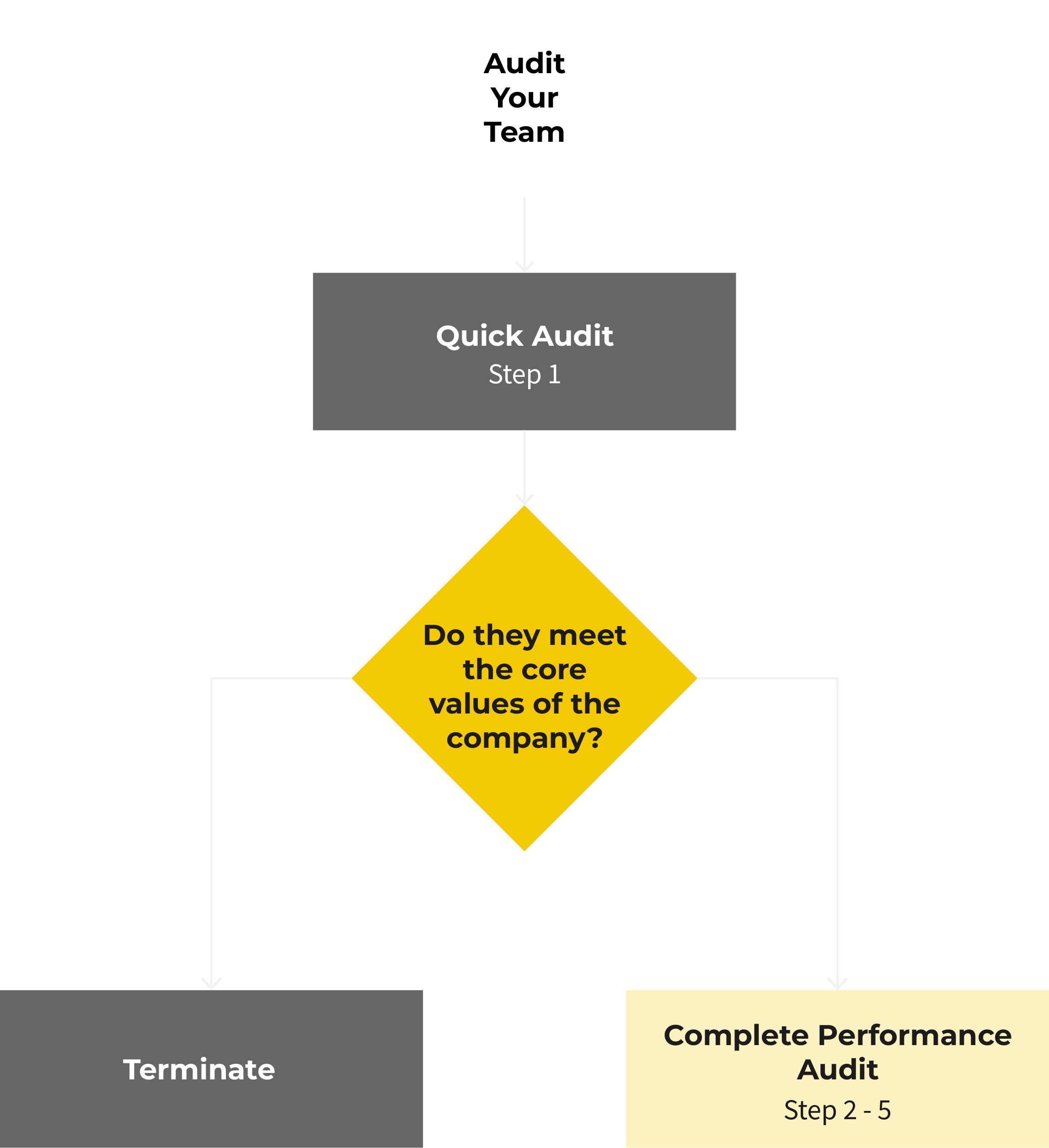
If someone doesn’t align with your core values, you need to make the tough call and remove them. If they meet your core values, then move on to the performance audit.
If you go through this decision tree and consistently audit your team, you quickly raise the standards and build a high-performance culture.
Yet even if you do all these things, you might still have underperforming A-players. Why? The incentives aren’t right.
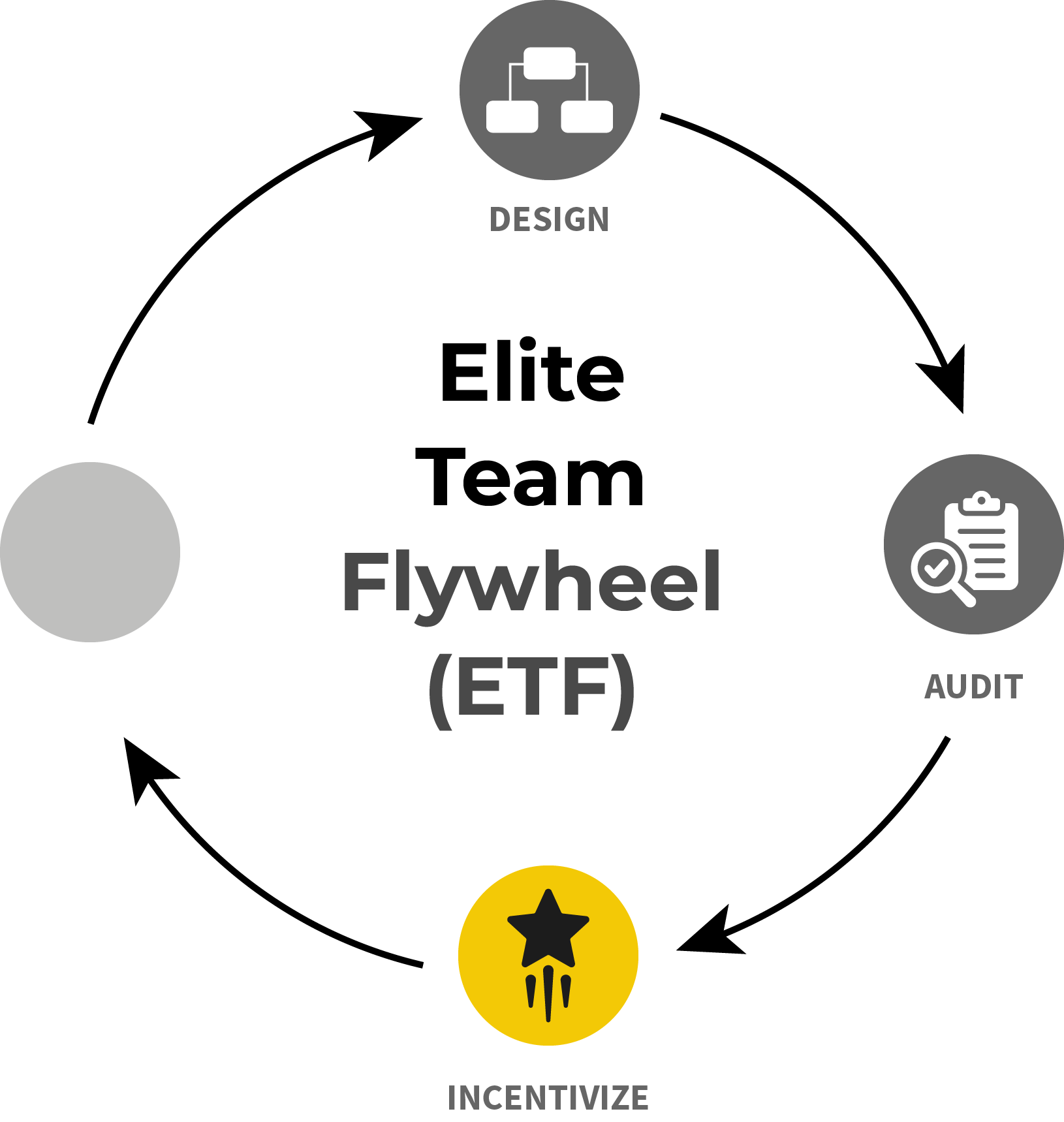
Phase 3: Incentivize Peak Performance
Peak performance starts with smart incentives. Motivated individuals build a motivated team.
There are endless ways to incentivize—many of them overly complex. I’ll focus on one: unlocking motivation.
Incentivize Individuals
Assuming you pay a decent wage and have good benefits, how do you unlock the peak performance of every individual on your team?
Ask them a question: What is your 5-year vision?
You may need to help them crystalize this vision.
- What do you want to be earning?
- What do you want to be doing?
- What does your ideal work/life balance look like?
- What does success look like?
The minute you can align their vision with what they’re doing everyday, your “employee” is no longer working for you. They’re working for themselves.
You unlock a whole new level of productivity in them. They’ll go the extra mile to push their vision forward because it benefits both of you. Win-win.
When you critique them, tie it back to their vision and how improvement will help them realize it faster.
This can also have the opposite effect. Sometimes, when an employee is clear on their vision but it doesn’t align with the company, you have to part ways. But at least you know why and can create a transition plan that works for everyone.
Ask each of your direct reports about the big vision for their career that excites them. Keep checking in to help them craft that vision.
Incentivize the Team
In your OPE, you unpacked the endgame for your business.
This is the equivalent of winning the Super Bowl for your company. When football teams win the Super Bowl, it’s a big deal. Yet when most companies hit their endgame, it’s a secret—and the founder might be the only winner.
Elite teams are different in that they love to win. You design an elite team to make your endgame a reality. What’s the incentive for your team to smash your quarterly or one-year winning picture? To achieve the endgame?
Let’s say you have a profit target of $1 million. Would your team be more incentivized to hit that target if 10% of that profit was shared in a team profit pool? Of course!
You also need markers of progress. For instance, if your endgame is serving 10,000 customers in the next five years, what happens at 1,000 or 5,000 customers? This can be a one-time reward (e.g., a company retreat in an exotic location) or a recurring incentive (e.g., profit sharing).
What makes winning great is that something is at stake. If you don’t win, you lose out. If you win, you unlock something you didn’t have before.
When you master incentives, you:
- Align your entire team with the company’s success.
- Increase employee engagement.
- Improve retention rates.
- Attract top talent.
- Boost team collaboration.
This creates a culture in which everyone aligns with the company’s top goals and has skin in the game to achieve their individual goals.
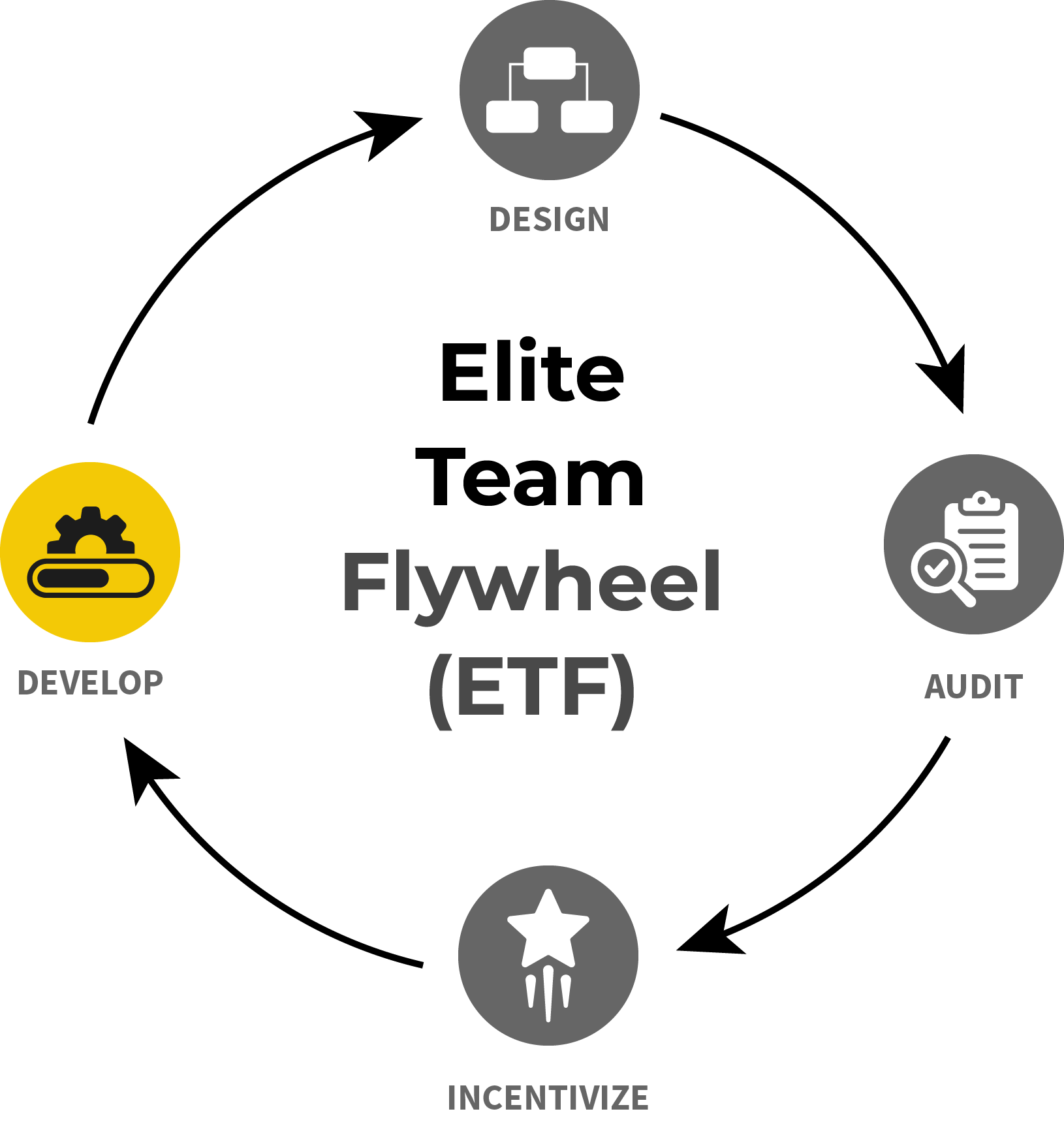
Phase 4: Develop Unstoppable Capabilities
In your OPE, you identified key capabilities your business needs to win. These can't be outsourced—they must be built and developed in-house.
What makes capabilities unstoppable is constant growth within the teams that own them. Neglecting to train top talent is a missed opportunity. Without new skills, your team will plateau. The best teams always invest in upgrading their capabilities.
Team development is one of the most underrated leadership skills. It’s more than just offering feedback or book recommendations. Passive, ad hoc “development” won’t take a team from great to elite. That requires active development of every team member.
You can do this during a one-on-one every month. These are 30-minute meetings between you and each of your direct reports. It’s where you can have open discussions about challenges they’re facing and help them blast through any barriers. But it’s more than just getting a pulse on what’s going on.
It’s important to make the space to understand professional ambitions. This ensures what they are working on aligns with that direction. Plus, it builds rapport.
Develop Each Individual on the Team
Elite teams are great at their jobs and get better every month.
You already know each individual’s dream of career success. They’re already getting better because they’re passionate about it and show a natural inclination. An individual skill development plan pours gasoline on that fire.
During the first one-on-one of each month, identify one critical area to develop. As with your company, focus on one area that will accelerate growth.
If they don’t know where to get started, help them uncover the right opportunity:
- How did you do last month qualitatively? What do you think you can improve on?
- Here are the metrics for last month. What do you see across your metrics and targets?
- What skill do you need to work on this month? What's the best way I can help you?
Once you identify what to develop for each direct report, identify one resource to help them develop in that area.
Identify One High-Impact Resource
The resource could be a book, a course, or a certification. The type of resource doesn’t matter as long as it’s effective training.
Ideally, the individual should identify this resource, as they’ll be more motivated to engage with training that genuinely interests them. However, if you have a proven resource, recommend it. The value of this step is identifying a resource for them to use, which gives you a clear “done, not done” verdict at the end of the month.
If it’s an area you both need to develop, do it together. For instance, when writing this book, Laura, our Director of Content, and I took the course Write Useful Books together, which helped us gain valuable skills. But hey, we’ll leave it up to you—did it work? Is this book actually useful?
Once you’ve got your resource, coach them throughout the process.
Support Them to Develop This Skill
At every weekly one-on-one with your direct report, ask them how the training is going. This acts as an important trigger to prioritize the training and shows that you’re taking their skill development seriously.
If you have advanced skills in the training topic, coach them on how to improve by giving some examples of how they can master it. This alone is extremely valuable and accelerates skill development faster than anything else.
To boost accountability, make completion of these high-impact resources a personal project for employees, decide them in MFMs, and review progress in WAMs.
Use the Employee Performance Dashboard to audit, incentivize, and develop each team member.
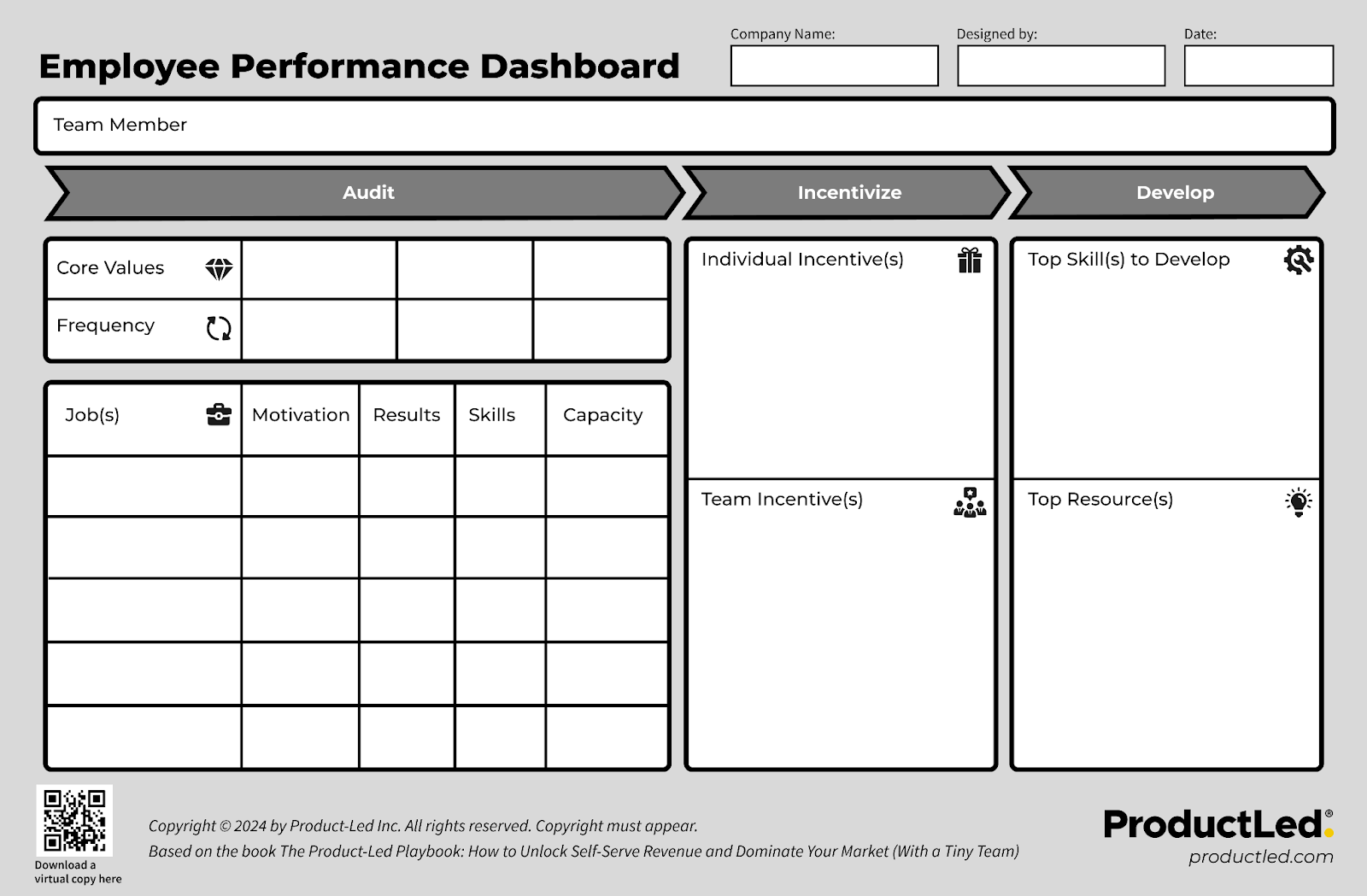
🎁Action Tool: Free Employee Performance Dashboard Template
Get your free Employee Performance Dashboard at ProductLedPlaybook.com.

Go all in on product-led growth.
Get three complementary playbooks to turn your product into your biggest growth engine. Read or listen anywhere, on your own or with your team.
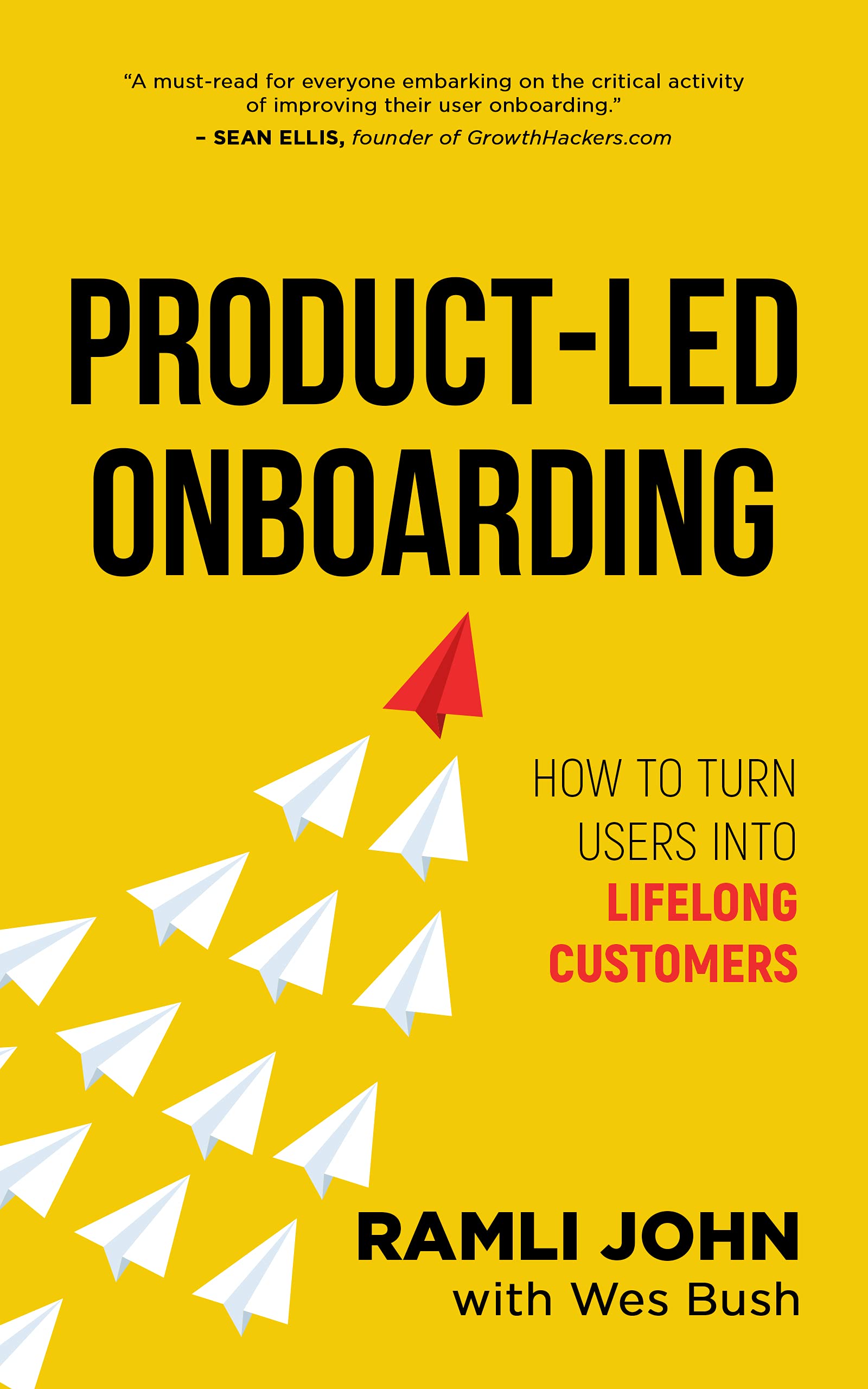
Take {book} with you.
- Download the PDF and EPUB
- Listen to the full audiobook
- Read or listen on your preferred device
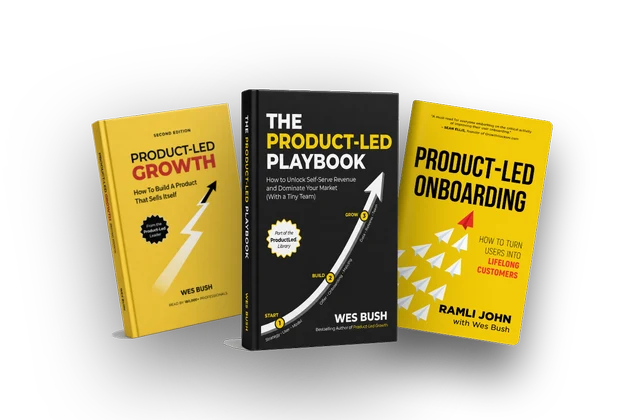
Get the complete ProductLed Library for $10 more.
- Product-Led Growth
- The Product-Led Playbook
- Product-Led Onboarding
- All three as PDFs, EPUBs, and audiobooks
- Wes Bush AI to help you apply what you learn
For individual use.
Get all three books
Give your team a shared playbook for growth.
- Everything in the three-book bundle
- Access for everyone on your team
- Each teammate chooses how to read or listen
- Wes Bush AI for every teammate
One purchase. Unlimited teammates.
Get the team bundlePrefer print? Get a paperback on Amazon →